
Butterfly Life Cycle — a step-by-step lesson for grown-up and child
This lesson takes the whole journey at once — egg, caterpillar, chrysalis, butterfly — and teaches it as a four-chapter story your child can sequence, draw and retell, ending with the word that names the magic: metamorphosis.
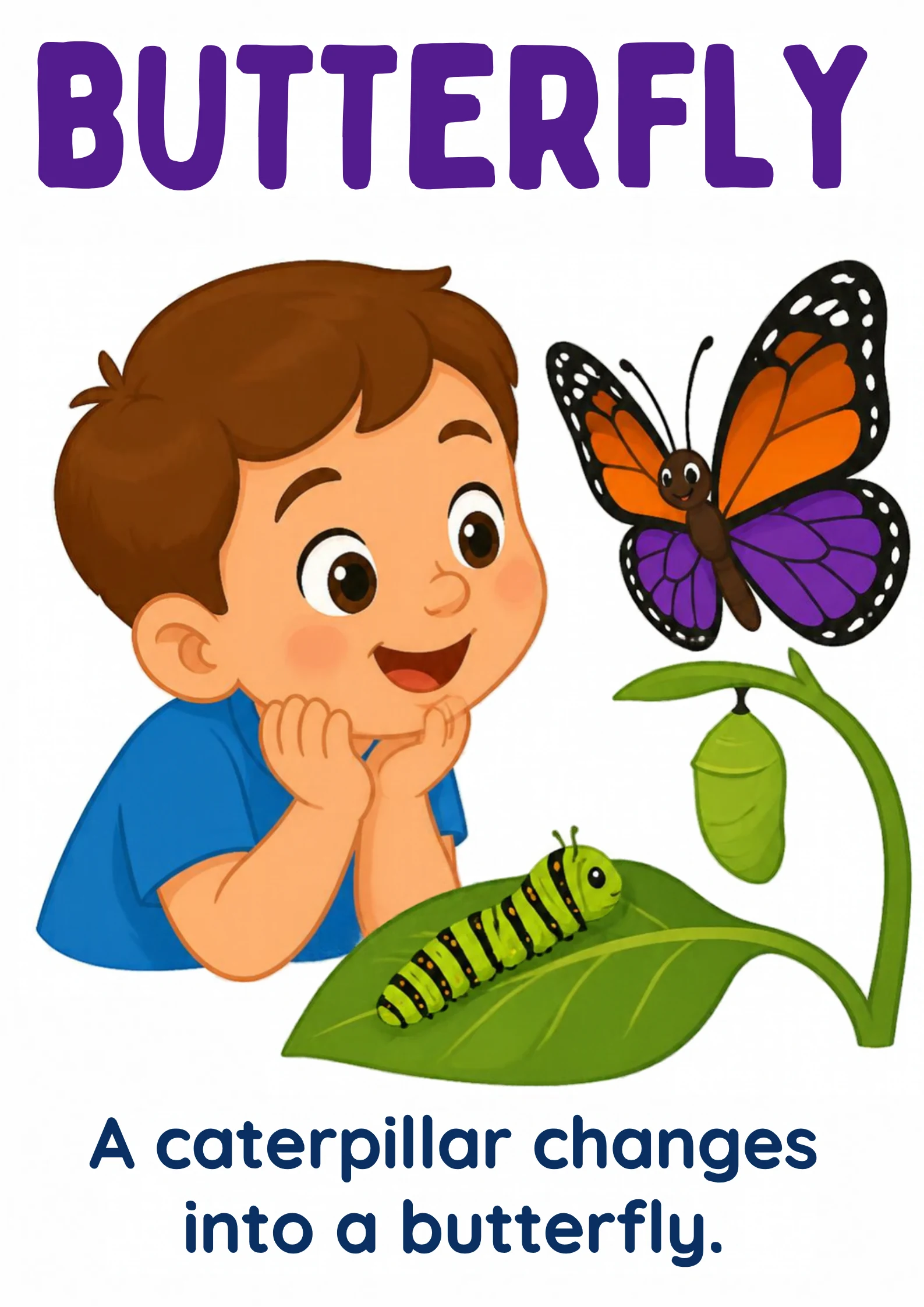
What is this?
A butterfly changes form four times in one life: egg, then caterpillar, then chrysalis, then winged adult. Inside the chrysalis, the old caterpillar body dissolves and rebuilds as something with wings.
What does it mean?
Metamorphosis means "changing shape" — and the chrysalis is where the quiet work happens: nothing is wasted, the old body is rearranged into a new one. Change in nature is not instant; it is staged, and every stage has a job.
What does the child need to know?
The chrysalis looks still but is working hard inside — scientists who peeked found the caterpillar turns almost to liquid before rebuilding. A hatched butterfly’s wings start crumpled and must fill and dry before the first flight.
Why this matters
This is the most dramatic change your child can actually find in a garden, which makes it the perfect first life cycle. Sequencing the four stages builds ordering skills, and the story carries a quiet message: big change is natural, and slow stages count too.
What it teaches
Sequencing and retelling (four chapters in order), vocabulary building (a real science word), comfort with transformation stories — tadpoles and seeds will reuse the pattern — and drawing as a thinking tool.
Words to learn
eggcaterpillarchrysalisbutterflychangewings
Say this to your child
“"A butterfly has four chapters. Egg, tiny and round on a leaf. Caterpillar, eating everything. Chrysalis, hanging like a sleeping bag while its body rebuilds inside. Then butterfly — new wings, new life. The word for that big change is metamorphosis."”
Step by step
- Show the card and hunt the three characters on the leaf: caterpillar, chrysalis, butterfly. Which one is missing from the picture? The egg — that is chapter one.
- Walk the story with one finger: first the egg on the leaf, then the munching caterpillar, then the quiet chrysalis, then the wings.
- Tell the chrysalis secret: it looks like nothing is happening, but inside, the caterpillar is rebuilding its whole body into a butterfly.
- Draw the wheel: four circles on paper, one for each stage — your child fills them and then retells the story round and round.
- Learn the big word: metamorphosis. Clap it out — me-ta-mor-fo-sis — and let your child own it.
Look closer at the picture
Ask your child: how many stages can you find on the leaf in the picture? Which stage is the caterpillar, and which is the chrysalis? Does the butterfly look new or old? What is the child watching for?
Ask your child
"What are the four stages, in order?" "What happens inside the chrysalis?" "What is the big word for changing shape?" "Which stage do you think takes longest?"
What your child can say or do
"Me-ta-mor-fo-sis!" — said at full volume, often. "The chrysalis is a sleeping bag, not a shell." Your child may line up four toys to show the four stages, or retell the wheel starting anywhere and insist it still works.
Out in the real world
The pattern repeats all over nature once your child knows to look: tadpoles become frogs, seeds become plants, and mealworms in a pet shop turn into beetles. Same shape of story — start small, change completely — in garden after garden.
Try it together
Stage race: four corners of the room — egg (curled tiny), caterpillar (wriggle-crawl), chrysalis (stand still, arms wrapped), butterfly (flap and fly). Call the stages in any order and let your child transform on the spot. Then backwards!
Understanding check
Ask: "Name the four stages in order. What happens inside the chrysalis? What is metamorphosis?" Egg-caterpillar-chrysalis-butterfly, rebuilding, change = landed.
Parent tips
Let your child draw the wheel BEFORE hearing the story and guess what happens between stages — the wrong guesses ("the caterpillar takes a nap") make the truth land harder. Go chrysalis-hunting under leaves and along fence rails; they hide in plain sight, looking like tiny dried leaves.
This lesson pairs with the Butterfly Life Cycle flashcard in the library — print it, show it, keep it on the fridge. Back to Science, Nature & Discovery (Class 31).