
Butterfly Begins as a Caterpillar — a step-by-step lesson for grown-up and child
This lesson starts the butterfly story at the beginning — a tiny egg on a leaf hatches into a hungry crawler — and gives your child the garden habit that matters: find a caterpillar, look closely, and leave it to its lunch.
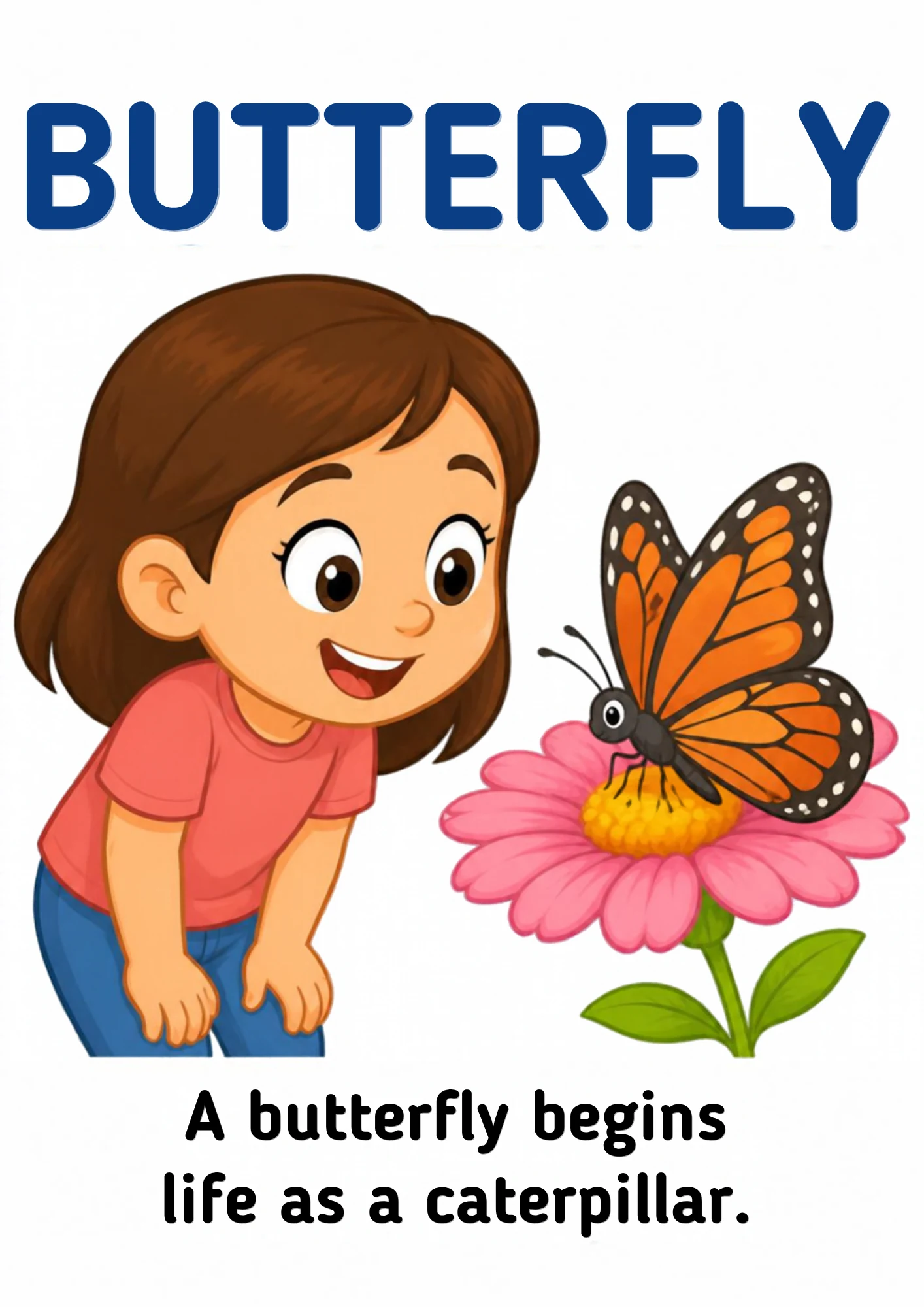
What is this?
A caterpillar is a butterfly’s baby stage: it hatches from an egg laid on a leaf and spends its days eating leaves and growing, shedding its tight skin several times before it is ready for the next stage.
What does it mean?
The caterpillar’s whole job is one word: grow. Every bite is stored for the big change ahead. That is why it never stops munching — it is a living lunchbox, packing away fuel for wings it does not have yet.
What does the child need to know?
Butterfly mothers lay eggs on the exact leaves their babies can eat. A caterpillar’s body is soft with rings called segments, and it grows so fast it must crawl out of its own skin again and again.
Why this matters
Knowing what caterpillars are DOING on leaves changes how a child treats them: not a toy to grab but a worker on a deadline. It also sets up the life-cycle idea — this card is chapter one of a story your child will meet again.
What it teaches
Gentle observation, impulse control (look, do not grab), the idea that animals have jobs at each stage of life, and story-sequencing instincts — beginnings, middles and endings.
Words to learn
caterpillarleafeggeatgrowbutterfly
Say this to your child
“"Every butterfly was a caterpillar first. The mother laid her egg on just the right leaf, and the baby’s job is simple: eat leaves, grow bigger, shed your skin when it gets tight. All that food is being packed away for the wings it will grow later."”
Step by step
- Show the card: what is resting beside the leaf, and what is the child watching? Name both — butterfly AND caterpillar — and ask how they could be connected.
- Tell the beginning: a butterfly laid a tiny egg on a leaf, and out crawled this caterpillar. Chapter one of a story.
- Explain the job: caterpillars eat and eat and eat — leaves are their only food, and growing is their only work.
- Hunt gently: look along and under garden leaves for nibbled holes and slow crawlers. Found one? Count its body rings, watch it munch if you are lucky — then leave it exactly there.
- End with the promise: this crawler is packing away fuel for wings. Chapter two comes next lesson.
Look closer at the picture
Ask your child: what is the child in the picture watching? Can you find the caterpillar AND the butterfly? Which one has wings? Which one has more legs? Where do you think the caterpillar is hiding on the leaf?
Ask your child
"What was the butterfly before it had wings?" "What does a caterpillar eat all day?" "Why does the mother lay her egg on a leaf?" "What should we do if we find a caterpillar?"
What your child can say or do
"Caterpillars eat and eat and eat!" "Do not grab it — it is growing!" Your child may check the same leaves on every garden walk, or retell the story backwards: "the butterfly’s mummy was an egg, no wait — the egg was the butterfly’s beginning!"
Out in the real world
Cabbage patches, nettles and hedge rows are caterpillar nurseries once you know to look for nibbled edges — those holes are breakfast evidence. Farmers know it too: caterpillars eat crops, birds eat caterpillars, and the garden keeps its balance.
Try it together
Munch game: cut a big green paper leaf, give your child a hole punch, and let them "eat" it like a caterpillar — punch, punch, punch. Then measure: how many punches until the caterpillar is full? Body-ring craft follows with a painted egg box.
Understanding check
Ask: "What is a caterpillar’s job? What does it eat? What do we do when we find one?" Eat-and-grow, leaves, look-and-leave = landed.
Parent tips
Caterpillar hunting teaches more with a rule of two hands behind the back — eyes do the touching. If your child begs to keep one, a leaf from the same plant in a jar with air holes is a short, honest visit; release it the same day.
This lesson pairs with the Butterfly Begins as a Caterpillar flashcard in the library — print it, show it, keep it on the fridge. Back to Science, Nature & Discovery (Class 31).