
Cloud — a step-by-step lesson for grown-up and child
This lesson lifts the weather into reach: clouds are crowds of tiny water drops floating high, and your child can make one on a cold window with a single breath — then read the sky, white for shape-finding, grey for rain incoming.
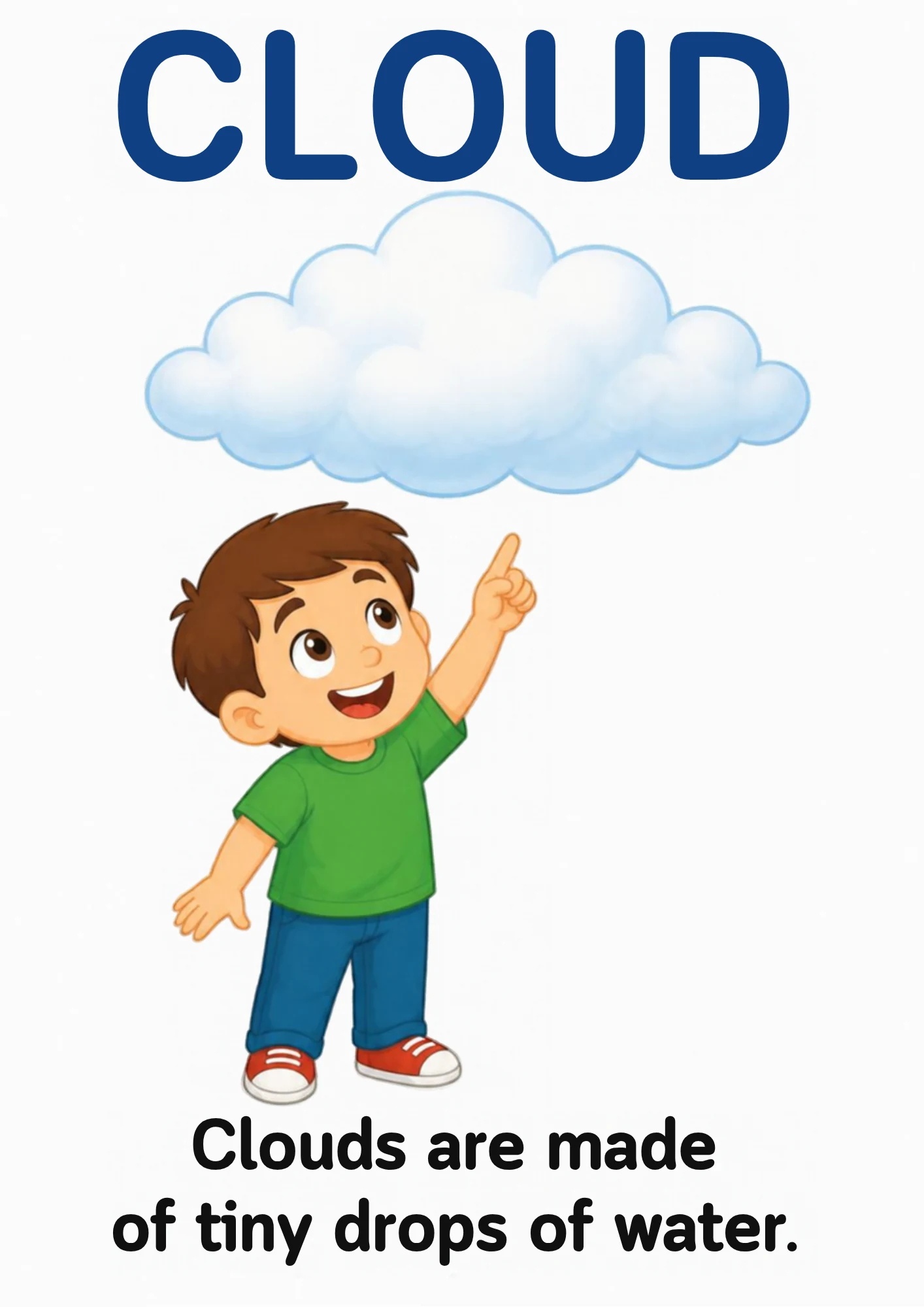
What is this?
A cloud is made of tiny drops of water floating in the air — so small that the air holds them up. When many drops crowd together, the cloud turns grey and heavy, and the drops join until they are big enough to fall as rain.
What does it mean?
Clouds are the sky’s visible water: the sun lifts moisture up as vapour, invisible, and crowds of drops are what it looks like when that vapour gathers high up. White means widely spread and light; grey means packed and ready to pour.
What does the child need to know?
A small-looking cloud can weigh as much as a herd of elephants — the drops are just spread across a huge space. Fog is a cloud that has come down to the ground, and you can walk through it. Cloud shapes shift constantly: the crowd is always moving.
Why this matters
Clouds answer "where does rain come from?" before it rains, and the breath-on-the-window trick makes the material touchable: your own breath carries water, and it turns to visible drops on cold glass — a cloud in miniature, made by your child.
What it teaches
Sky-watching as a daily habit, shape-finding imagination on moving clouds, cause-and-effect (crowded drops, grey, rain), and the breath experiment’s lesson that invisible water is real and everywhere — including inside us.
Words to learn
clouddropsfloatgreyskyfog
Say this to your child
“"A cloud is a crowd of tiny water drops floating high in the sky. Each drop is so small the air holds it up, but when the drops crowd close together the cloud turns grey and heavy — and then the drops tumble down as rain. Breathe on the window: you just made a baby cloud."”
Step by step
- Show the card: what is the child pointing at? Is the cloud big or small? Name it — a floating crowd of tiny water drops.
- Ask the stumper: clouds are heavy with water — why do they not fall? Because the drops are tiny and the air holds them up high.
- Make a mini-cloud: breathe on a cold window or mirror and watch the mist appear — your breath carried water, and the cold glass gathered it into drops.
- Read the sky together: white puffy clouds for shape-finding — a bunny, a boat — and grey-packed clouds for rain coming. Which is overhead today?
- Drop the fog fact: fog is a cloud that came down to visit. You can walk through a cloud — you probably already have.
Look closer at the picture
Ask your child: what is the child pointing at? Is the cloud big in the sky? What shape does the cloud look like to you? Can you find more clouds — or is the sky nearly clear?
Ask your child
"What are clouds made of?" "Why do clouds float instead of falling?" "What does it mean when a cloud turns grey?" "What did your breath make on the window?"
What your child can say or do
"Clouds are made of tiny drops — elephants’ worth!" "I made a cloud on the window with my breath!" Your child may read the sky out loud every morning — "grey today, rain incoming" — or blow on cold windows on purpose to grow mist.
Out in the real world
Clouds are the daily forecast your child can read: the white-building day for kite flying, the flat grey blanket for wellies, the fog walk to nursery where the world goes soft. Shape games on a picnic blanket, grey-watching before a walk — the sky is the toy.
Try it together
Cotton-wool sky: glue cotton balls onto blue paper — stretched thin for wispy clouds, bunched high for towering ones, pressed flat and grey-tinted for rain clouds. Then lie back on the rug and find shapes in each other’s cotton clouds before checking the real sky.
Understanding check
Ask: "What are clouds made of? Why do they float? What does grey mean?" Tiny water drops, the air holds them, rain is coming = landed.
Parent tips
Morning is best for cloud watching — shape-hunting works before the day fills up. The window-breath trick needs genuinely cold glass; on warm days, a fridge-chilled mirror does it. Grey-sky days get a bonus: fog is the walk-through cloud your child can finally touch.
This lesson pairs with the Cloud flashcard in the library — print it, show it, keep it on the fridge. Back to Science, Nature & Discovery (Class 31).