
Rain — a step-by-step lesson for grown-up and child
This lesson turns a rainy day into the point: rain is the sky returning the water the sun lifted up, and your child can watch the whole trip from the window — then map the puddles it leaves behind and learn that this water has been round this loop forever.
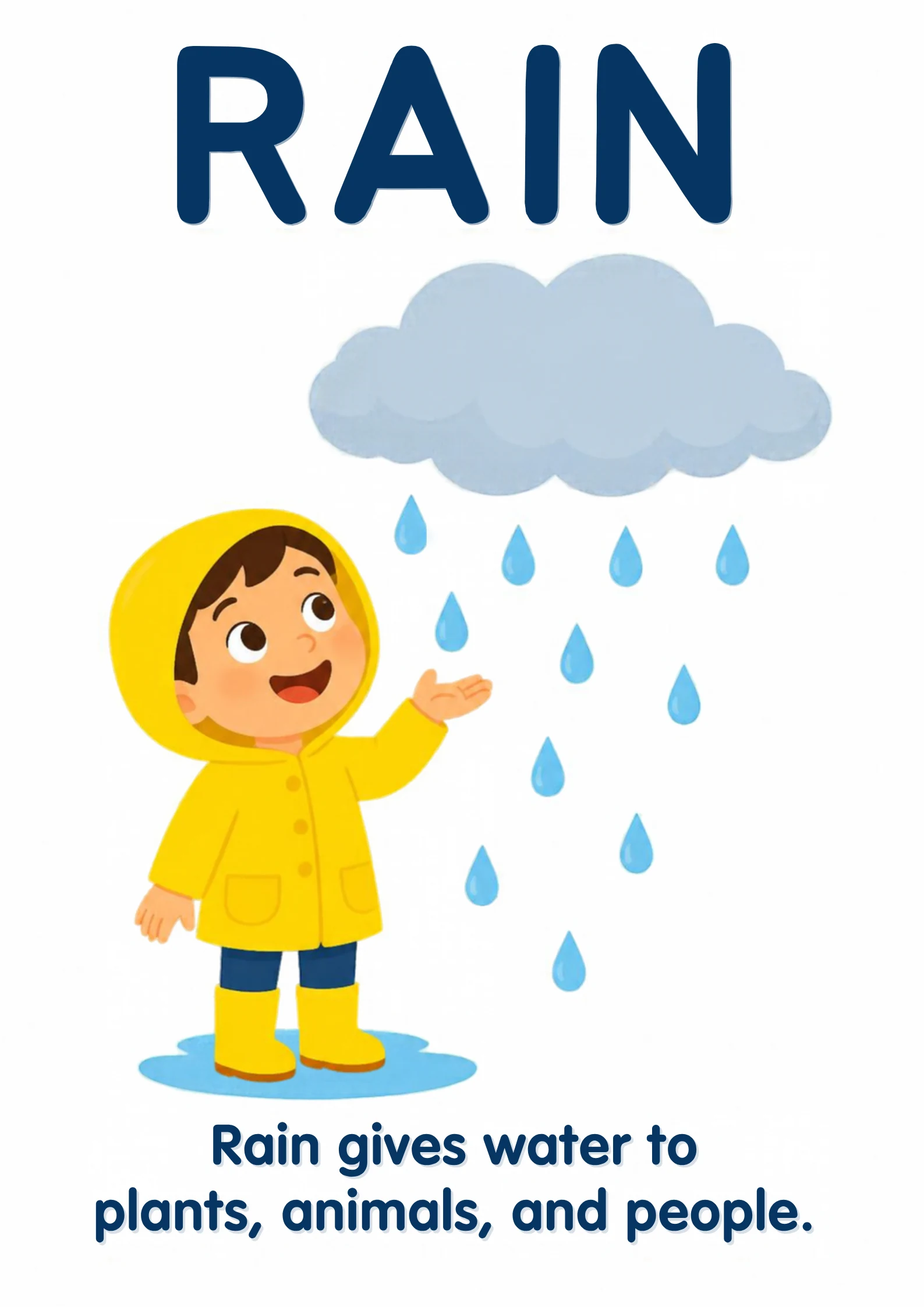
What is this?
Rain happens because sunshine lifts water up — out of seas, puddles and plants — as vapour too small to see. High above, the vapour gathers into clouds; when the drops inside grow heavy, they fall as rain, watering everything below before the trip starts over.
What does it mean?
Rain is not the sky leaking — it is one step of a loop: up as vapour, along in clouds, down as drops, away in rivers and puddles, and back up again. The water falling today is the same water that has been going round this planet since long before us.
What does the child need to know?
Vapour is water you cannot see — it is floating past right now. A rainy-day drop once splashed on dinosaurs: the loop is that old. Rain lands as drips, drops or downpours, and every puddle is the sky’s delivery, waiting for the sun to lift it back.
Why this matters
The water cycle answers the question every child asks — where does rain come from? — honestly and simply, and it makes rainy days purposeful: the garden is being watered, the puddles are a map, and the window is the weather station.
What it teaches
Understanding a circular story (a loop with no beginning or end), weather vocabulary and reporting, observation from a fixed post (the window), and the deep-time wow: same water, dinosaurs, today.
Words to learn
rainclouddropsvapourpuddleheavy
Say this to your child
“"Sunshine lifts water up out of the sea and the puddles — as vapour, so small you cannot see it. Up high it gathers into clouds, and when the drops get heavy the sky lets them go: rain! Puddles form, the sun lifts them up again, and the whole trip starts over. That water has been going round for ages."”
Step by step
- Show the card: what is the child wearing, and where is the rain coming from? Find the cloud — the rain’s delivery van.
- Tell the loop: sunshine turns water into invisible vapour that floats up, clouds gather it, and when the drops inside get heavy, down it comes. Up, along, down, around.
- Report from the window: how heavy is the rain — drips, drops, or pouring? Say it like a weather reporter on TV.
- Map the puddles after: which is biggest, which dries first, and where did the water go when the sun came back? Up — again.
- Land the deep fact: this exact water has been round the loop for millions of years — the rain outside once splashed on dinosaurs.
Look closer at the picture
Ask your child: what is the child wearing — a raincoat, or a sun hat? Where is the rain falling from? Can you find the cloud? Is the child watching the rain or running away from it?
Ask your child
"Where does rain come from?" "What is vapour?" "What happens to a puddle when the sun comes out?" "How heavy is the rain today — drips, drops or pouring?"
What your child can say or do
"The rain is the water coming back down!" "My puddle got lifted up — I saw it dry!" Your child may deliver window weather reports every wet morning, jump puddles while announcing "the clouds got heavy", or comfort a grey day: "the garden is getting its drink."
Out in the real world
The loop is visible all week: kettle steam, damp pavement drying after rain, fog on the bathroom mirror — water, changing place and form. Once your child owns the loop, rain stops being a cancelled plan and becomes the most interesting thing the sky does.
Try it together
Water-cycle in a bag: with a grown-up, tape a zip bag with a splash of water high on a sunny window. Mark the water line. Over days, drops climb the bag wall — evaporated up, gathered at the top, and raining back down when heavy enough. The whole loop, hanging in the sun.
Understanding check
Ask: "Where does rain come from? What lifts the water up? What happens to puddles in the sun?" Clouds, the sun, they dry back up = landed.
Parent tips
Keep the window post safe and warm — rain watching is an inside sport, with wellies saved for the puddle map afterwards. If thunder joins the rain, come inside and leave the counting to the grown-ups — the loop story keeps for the next dry day.
This lesson pairs with the Rain flashcard in the library — print it, show it, keep it on the fridge. Back to Science, Nature & Discovery (Class 31).