
Rock — a step-by-step lesson for grown-up and child
This lesson starts the cheapest science hobby on Earth: rock collecting. Your child gathers five stones, breaks the all-rocks-are-grey assumption, and sorts a pocketful by feel, weight and shine — classification practice with a museum that fits in a shoebox.
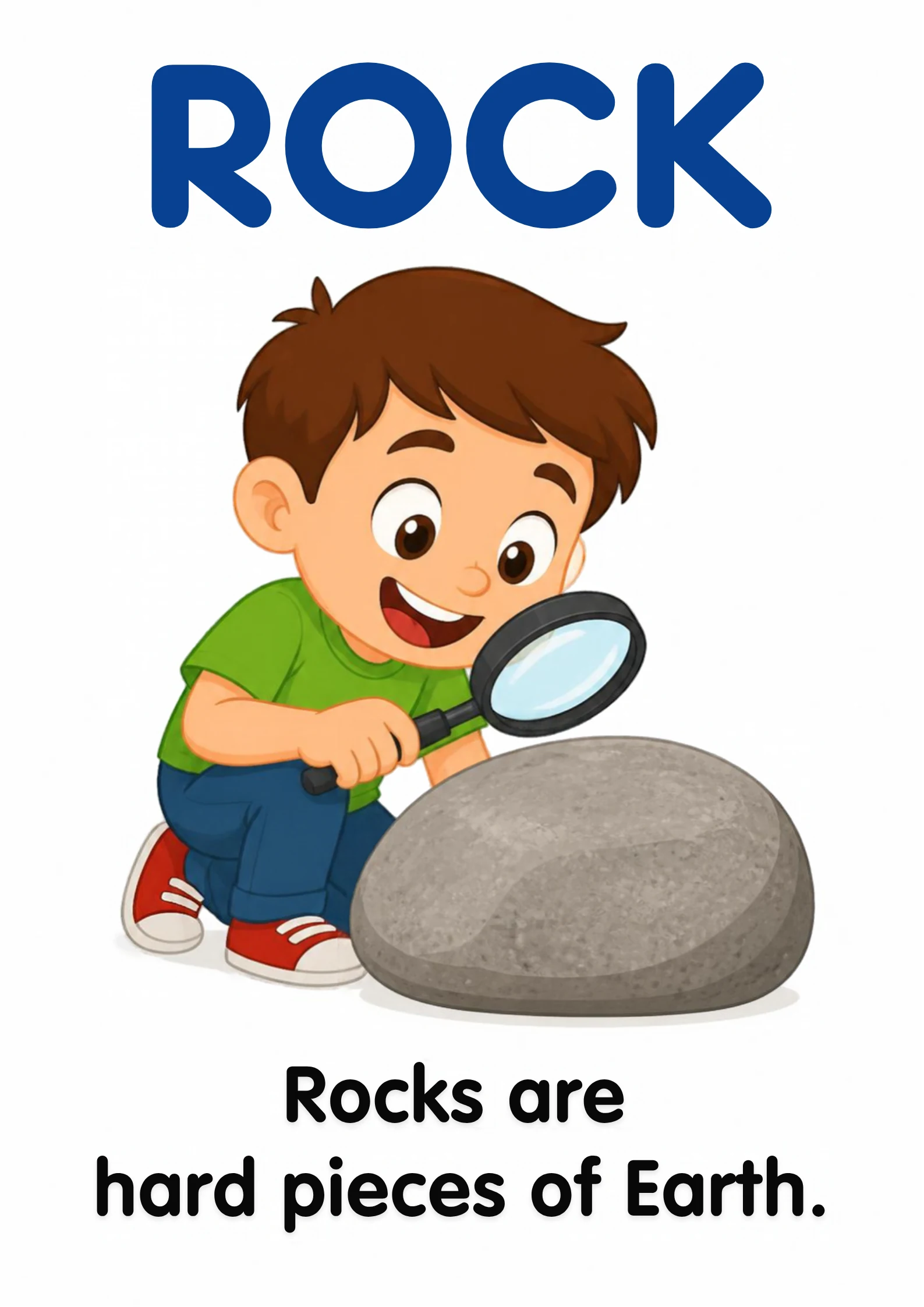
What is this?
Rocks are hard pieces of Earth itself — the ground is made of them. Some rocks cooled from hot melted rock, some were pressed in layers over ages, and pebbles are rocks that water and weather rolled smooth. Inside many rocks, sparkling specks called minerals hide.
What does it mean?
Rocks are not all alike — they differ in color, texture, weight and shine, and sorting those differences is real science. Every pebble is a story: a sharp rock sanded round by years of waves, rain and rolling until it fits perfectly in a small palm.
What does the child need to know?
Rocks come from different recipes: cooled lava, pressed mud layers, and minerals that sparkle when the light catches them. A smooth beach pebble took ages to tumble round. Geologists — rock scientists — read those clues to tell Earth’s story.
Why this matters
Rock sorting is classification practice with instant feedback: bumpy or smooth, heavy or light, grey or sparkly — and no two collections match. It also grounds your child literally: the ground under everything has names, histories and surprises.
What it teaches
Classification by properties (color, texture, weight, shine), close looking with a magnifier, collecting and caring for a set, and the long-time idea — smoothness that takes years, layers that take longer.
Words to learn
rockpebblesmoothhardmineralsort
Say this to your child
“"Rocks are pieces of the Earth itself — the whole ground is made of them. Some came from hot melted rock gone hard, some were pressed in layers, and every smooth pebble was rolled round by water over years and years. Look inside: those sparkling specks are minerals, the ingredients rocks are cooked from."”
Step by step
- Show the card: what is the child examining, and what are they looking through? Is the rock smooth or bumpy? Name the tool — a magnifying glass.
- Break the assumption: are all rocks grey? Hunt for pink, white, speckled, striped — rocks are Earth’s mixed recipe box.
- Collect five: parks, paths, beaches — five different stones, each one chosen for a reason. Why THIS one?
- Sort your own way: by color, by feel, by weight, by shine — then re-sort by a new rule. Scientists sort and re-sort all the time.
- Look close: specks that sparkle are minerals, the ingredients inside. And the smoothest pebble? Water rolled it round for years before your child found it.
Look closer at the picture
Ask your child: what is the child examining? What are they looking through? Is the rock smooth or bumpy? What color is the rock — grey, or something else?
Ask your child
"What is a rock a piece of?" "How did the smooth pebble get so smooth?" "What are the sparkling specks inside rocks called?" "How many ways can you sort your five rocks?"
What your child can say or do
"Minerals are the sparkles inside!" "My pebble got smooth from the waves rolling it!" Your child may start a shoebox museum with labelled favourites, sort every gravel patch on the walk, or hand you the heaviest rock and ask you to guess its weight.
Out in the real world
Rocks are the floor of childhood: driveways, riverbanks, the beach, the gravel by the school gate. The collection grows every trip, and the sorting never ends — by weight, by shine, by which one looks most like a potato. Museums upgrade it later; the habit starts now.
Try it together
Pebble-washing day: rinse and brush the collection in a basin, lay it out on a towel, and sort into trays — sparkles, stripes, smoothest, heaviest. Then a tumbler demo: a jar, a splash of sand and one sugar cube, shaken gently, shows edges wearing round like the sea does it.
Understanding check
Ask: "What are rocks pieces of? What made the pebble smooth? What are the sparkles called?" Earth, water rolling it, minerals = landed.
Parent tips
Set a pick-up limit before the walk — five is plenty — and a display box after. A cheap magnifying glass doubles the pleasure: sparkles, stripes and sand-grains are all hiding in plain pebbles. Say yes to the pocketful; the collecting instinct is the science.
This lesson pairs with the Rock flashcard in the library — print it, show it, keep it on the fridge. Back to Science, Nature & Discovery (Class 31).