
Ice — a step-by-step lesson for grown-up and child
This lesson makes states of matter touchable — literally: one substance, two shapes, back and forth on demand. Your child freezes water, melts it again, and runs the melt race that shows cold making solid and warmth setting it free.
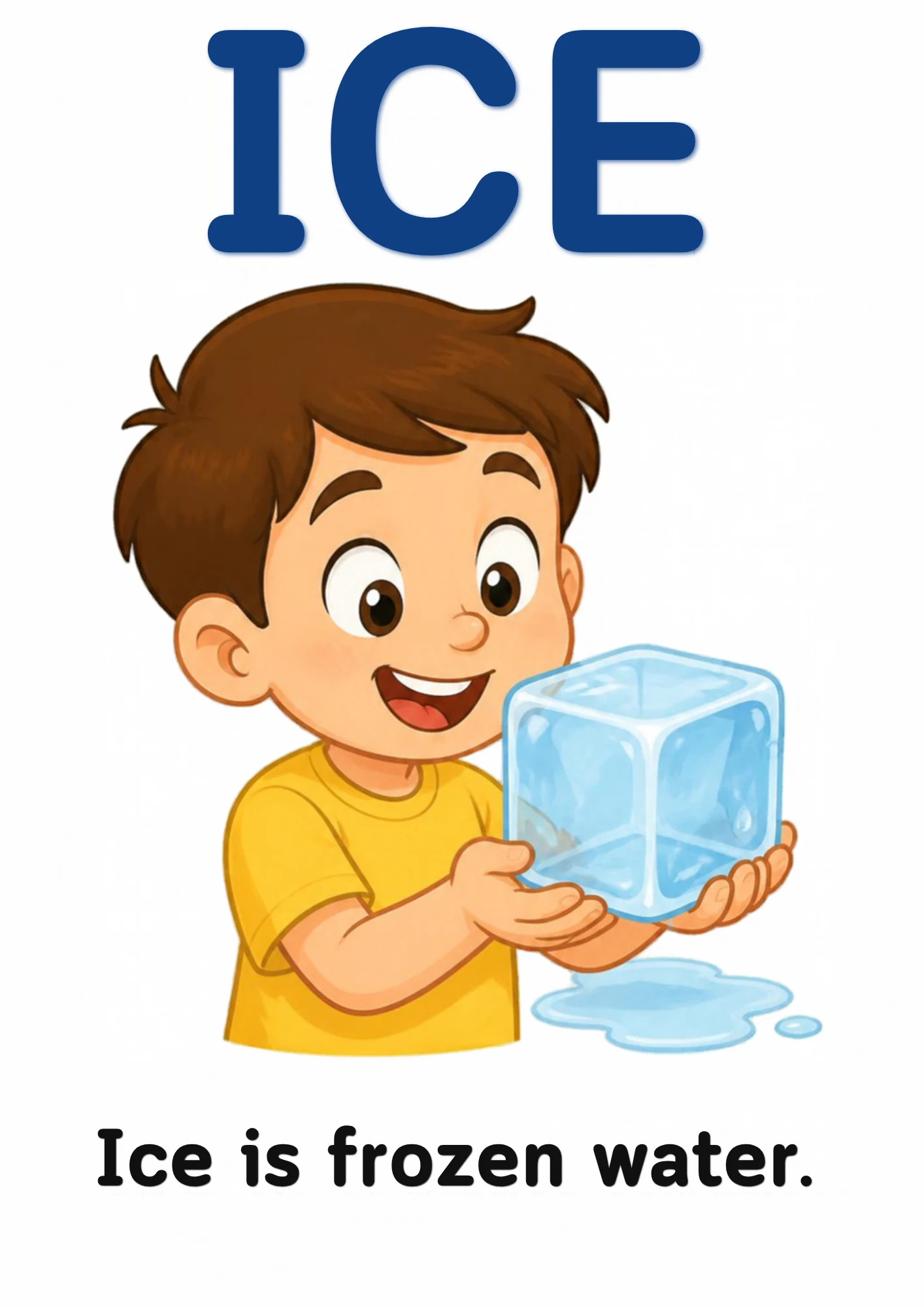
What is this?
Ice is water that got so cold it froze into a solid — the same water, wearing a hard shape. Add warmth and the ice gives up, melts, and turns back into liquid water. Cold freezes, warmth melts; back and forth as many times as you like.
What does it mean?
One substance, two costumes: water is a liquid that pours, ice is the same water standing still. Nothing is lost in the change — a vanished ice cube is a puddle in disguise, which is why melting is not disappearing, just changing back.
What does the child need to know?
Water is the everyday thing that shows up in all three forms: solid ice, liquid water, and invisible vapour in the air. Ice floats in your drink because frozen water puffs up slightly bigger than it was. Freezers make ice by stealing heat; warm hands give it back.
Why this matters
Ice is the friendliest states-of-matter lesson there is: your kitchen can run it daily, the change is visible, fast and reversible. It builds cold-warm causality — temperature as a cause with visible effects — and the conservation idea that stuff does not vanish.
What it teaches
Cause-and-effect with temperature, reversible-change thinking (freeze and melt, freeze again), prediction and fair testing in the melt race, and vocabulary — solid, melt, freeze — that will carry through every later science lesson.
Words to learn
icewaterfreezemeltcoldwarm
Say this to your child
“"Ice is just water that got very, very cold — the same water, frozen into a hard little shape. Hold it in your warm hand and the warmth melts it back into water: it did not disappear, it changed its costume! Cold freezes, warmth melts, and you can run the trick all day."”
Step by step
- Show the card: what is the child holding? Does it look cold or warm? Name it — water’s hard, frozen costume.
- Run the freeze: fill a tray with water, pop it in the freezer, and check an hour later. Same water — where did the wobble go?
- Explain the trade: cold freezes water solid, warmth melts it back. Nothing disappears — a "vanished" cube is a puddle in disguise.
- Race the melt: one cube on a warm palm, one on a cool plate — which gives up first? Why? Warmth is the melt-maker, so the palm wins.
- Find the puddle under the loser and ask where the ice went: it changed back. Freeze it again tonight — the show repeats forever.
Look closer at the picture
Ask your child: what is the child holding? Does the ice cube look big or small? What do you think the ice feels like — bumpy, smooth, slippery? Where do you think the child got it?
Ask your child
"What is ice made of?" "What melts ice back into water?" "Where did the ice cube go when it vanished?" "What does the freezer do to water?"
What your child can say or do
"The ice didn’t vanish — it melted back into water!" "My hand is a melt-machine!" Your child may run melt races on every warm surface, rescue cubes from the freezer to "free" them, or explain that winter puddles are "just water wearing its cold costume".
Out in the real world
Ice works everywhere: drinks clinking in summer, frost on the grass in winter, the freezer’s cold boxes on picnics. Melting is daily too — ice lollies drip, frost fades off the car windscreen, and snowman puddles tell the same story every January.
Try it together
Ice treasure rescue: freeze small toys into a tub of water, then hand your child a cup of warm water and a spoon to excavate them. Warmth melts, tools chip, treasures pop free. Afterwards, leave one chunk on the plate and watch it confess: it was water all along.
Understanding check
Ask: "What is ice? What does warmth do to it? Where does a melted cube go?" Frozen water, melts it, back to being water = landed.
Parent tips
Freeze treasure tubs the night before — the rescue buys twenty focused minutes, and the warm-water spoon teaches control. Keep the melt race fair: same-size cubes, started at the same moment. Your palm wins, but the cool plate teaches the patience half of warmth.
This lesson pairs with the Ice flashcard in the library — print it, show it, keep it on the fridge. Back to Science, Nature & Discovery (Class 31).