
Spider — a step-by-step lesson for grown-up and child
This lesson turns spider webs from spooky into clever: a net designed by an animal, strung between plants, that catches the spider’s dinner without one single chase. Fear shrinks fast when engineering takes its place.
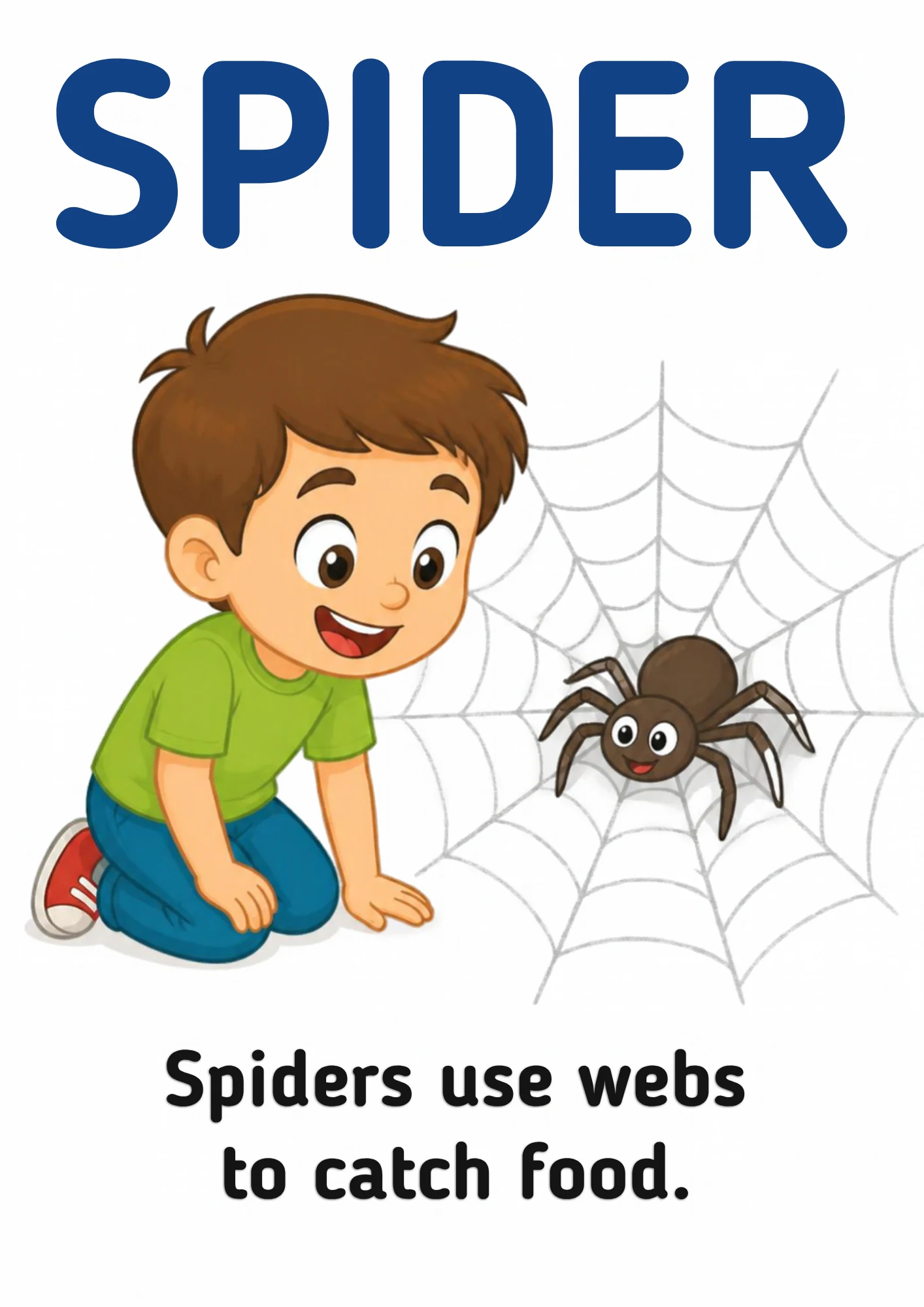
What is this?
A spider web is a net made of silk — a thread the spider’s own body spins. The sticky spirals catch flying insects; the spider feels the shake through its legs and knows dinner has landed.
What does it mean?
The web is the spider’s fishing net and dinner bell at once: it catches food AND rings the news. Silk comes from the spider’s own body, thread by thread, which makes a web one of the few tools an animal builds from itself.
What does the child need to know?
Spiders have eight legs, so they are arachnids — not insects, which have six. Silk is astonishingly strong for its weight, and some spiders rebuild the whole trap daily — eating the old one first to recycle the material.
Why this matters
Webs make engineering visible: spokes, frame, spiral — a child can see the design. Learning that spiders eat pests (flies, mosquitoes) flips the fear script: the web is a helpful trap, and the spider is night-shift pest control.
What it teaches
Respectful distance from small creatures, design thinking (parts with jobs: frame, spokes, trap), the insect-versus-arachnid sorting idea, and courage that grows from understanding rather than avoidance.
Words to learn
spiderwebsilklegsstickycatch
Say this to your child
“"A spider makes its own thread — real silk, from its own body. It builds the spokes first, then a spiral sticky enough that flying insects get stuck. When something lands, the web shakes like a doorbell, and the spider comes out to collect its dinner."”
Step by step
- Show the card: who is sitting in the middle of the net, and what is the child looking at? Count the spider’s legs together — how many?
- Explain the plan of a web: strong spokes first, like a bicycle wheel, then the sticky spiral wound round and round.
- Hunt for a web in the early morning or after rain, when dew drops make every thread shine. Look with eyes only — the web took hours to build.
- Sort it out loud: spiders have eight legs, flies and bees six. Eight means arachnid, and arachnids spin silk.
- Close with the good-deed idea: the fly a web catches is one less fly in the kitchen. The spider is the garden’s quiet cleaner.
Look closer at the picture
Ask your child: where is the spider sitting? What is the child in the picture doing — touching the web or looking? Can you see the lines of the web crossing like a wheel? How many legs can you count on the spider?
Ask your child
"What is a web made of?" "How many legs does a spider have?" "What happens when a fly lands in the web?" "Are we allowed to touch a web? Why not?"
What your child can say or do
"The web is the spider’s dinner bell!" "Eight legs — arachnid, not insect!" Your child may hunt for webs every dewy morning, or gently warn guests that the garden web took the spider all night to build, so hands off.
Out in the real world
Webs appear where food flies: window corners, garden gates, hedge gaps, bicycle frames left overnight. Once your child can name the wheel pattern, a walk becomes a web safari — and empty webs are evidence the builder is nearby.
Try it together
Be the spider: tape or string a "web" between chair legs, then throw paper-fly balls at it — which stick, which fall through? The sticky-zone idea lands hard. Then your child repairs the broken web with new string, feeling how fiddly silk work is.
Understanding check
Ask: "What do spiders build webs from? How many legs? What happens when food lands?" Silk, eight, the web shakes and the spider comes = landed.
Parent tips
Dew or drizzle is the web-hunter’s friend; midday sun hides the threads. If a web is built across a doorframe, leave it one day and watch the spider repair it — better than any worksheet on engineering.
This lesson pairs with the Spider flashcard in the library — print it, show it, keep it on the fridge. Back to Science, Nature & Discovery (Class 31).