
Wind — a step-by-step lesson for grown-up and child
This lesson cracks the hardest idea a preschooler meets — invisible things are real — with the friendliest possible evidence: the wind. Your child cannot see air, but they can see everything it pushes, feel it on their face, and hold a streamer up to catch it working.
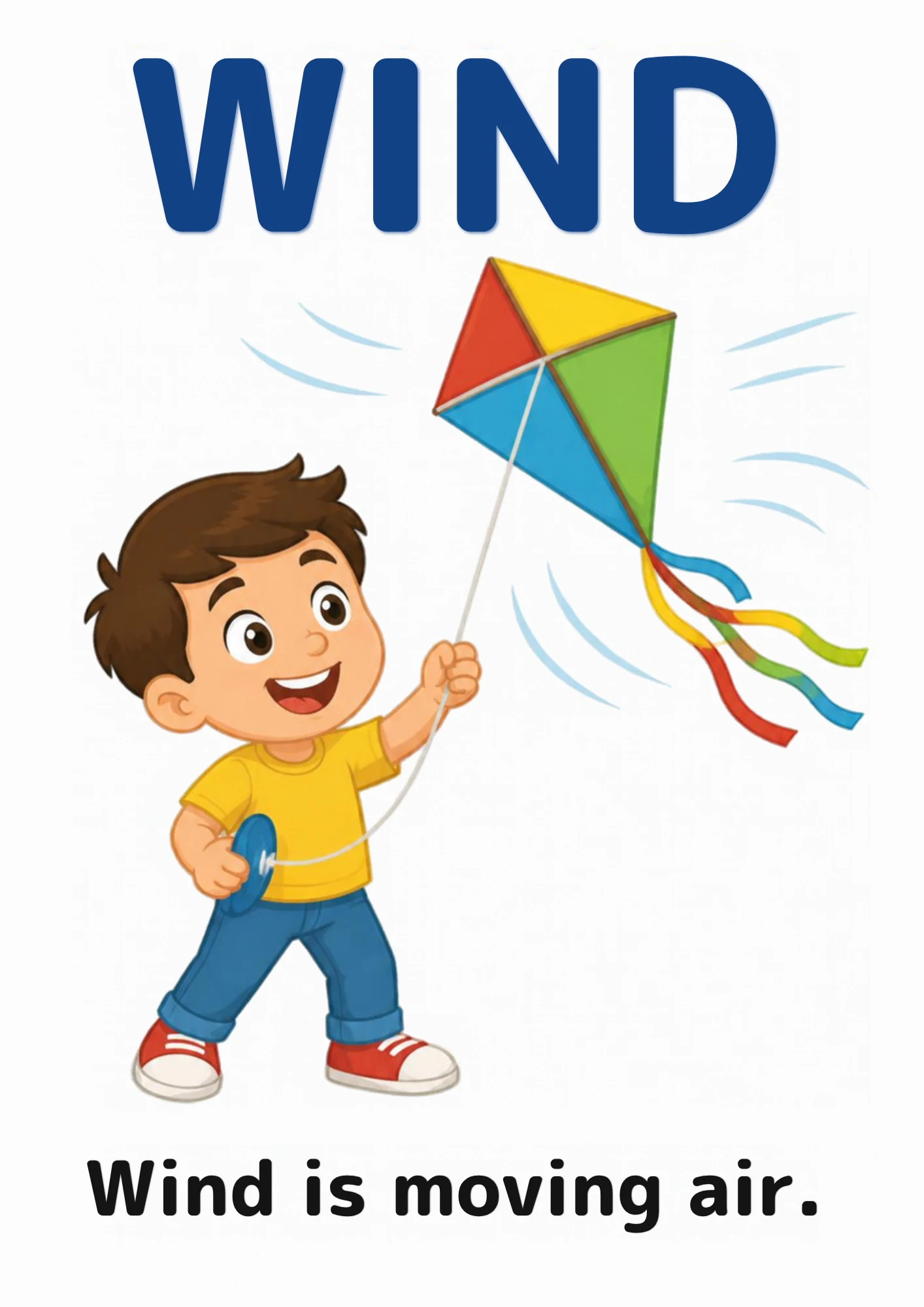
What is this?
Wind is air on the move. Air itself stays invisible, but everything it pushes gives it away: kites lifting, leaves tumbling, flags snapping, hair flying, washing swinging. A gentle breeze is a small push; a gust is a big one.
What does it mean?
You cannot see the wind, but you can see what it does — that is evidence, the scientist’s way of knowing something without eyes on it. Still air is real too: it is what your child is breathing right now, and it only shows itself when it moves.
What does the child need to know?
Moving air does real work: it pushes boats with sails, spins windmills, dries the washing and lifts kites high. A paper streamer hangs limp in still air and streams flat when the wind blows — a wind meter made from one strip of paper.
Why this matters
Wind teaches proof-by-effect: how do you know something invisible is there? Watch what it moves. That habit — evidence over eyesight — transfers to sound, gravity and germs later, and it makes every windy walk a science field.
What it teaches
Evidence-based reasoning (seeing effects, not the thing), weather awareness, cause-and-effect at speed (gusts come and go), and physical play — leaning into wind, catching leaves, feeling pushes on cheeks and chest.
Words to learn
windairpushbreezekiteleaves
Say this to your child
“"Nobody has ever seen the wind — but we can see everything it pushes! Kites lift, leaves tumble, flags flap, your hair goes everywhere. When you feel a push on your face, that is air moving past. Even still air is real: you are breathing it in and out right now."”
Step by step
- Look at the card: what is the child holding, and what is lifting the kite? Trick question — can you SEE the wind itself?
- Set the detective case: the wind is invisible, so how do we know it is there? Because we can see everything it pushes.
- Play the moving hunt: outdoors, tally five things the wind is pushing — leaves, flags, hair, washing, clouds. Count them out loud.
- Make the meter: a paper streamer on a stick — hanging means still air, streaming means the wind is working. Test it high and low.
- Feel the proof: stand into the breeze, cheeks out. The push you feel is air, and air is real even when it stands still — you are breathing some right now.
Look closer at the picture
Ask your child: what is in the child’s hands? Is the kite going up or coming down? What do you think is lifting the kite? Can you see the wind itself anywhere in the picture?
Ask your child
"What is the wind made of?" "How do we know the wind is there if we cannot see it?" "What did your streamer do in still air?" "What can strong wind push — a leaf or a boat?"
What your child can say or do
"I cannot see the wind but I can see it PUSHING!" "Still air hangs my streamer down." Your child may appoint themselves official wind reporter on every walk, hold paper streamers out on the balcony, or explain that wind is "air on the run".
Out in the real world
Wind signs are everywhere once you are the detective: drying washing, rustling hedges, dust drifting down the street, clouds racing overhead. Windmills and sailboats are the big-league versions — moving air doing heavy work, exactly like your child’s kite.
Try it together
Wind duel: hold a feather race — who can blow their feather across the table using only breath-wind? Then fan-test: paper plate fans, curtain waves, a huffing-puffing relay. Finish outside on the next gusty day with a homemade streamer on a stick.
Understanding check
Ask: "What is wind? How do we know it is there? What did the streamer show?" Moving air, the pushes we can see, still or streaming = landed.
Parent tips
The streamer meter is the keep-forever tool — tape one to the garden fence or balcony rail and your child reads the wind over breakfast. Gusty days are kite days; still days are feather-breath days. Both are the same lesson at two speeds.
This lesson pairs with the Wind flashcard in the library — print it, show it, keep it on the fridge. Back to Science, Nature & Discovery (Class 31).