
Diving — a step-by-step lesson for grown-up and child
This lesson teaches diving where every real diving lesson starts: on dry land, making the shape — arms squeezing ears, body straight as a pencil — long before any water is near.
What is this?
Diving is entering the water hands first, body straight and tight, so the splash is tiny and the entry is clean. From the poolside hop to the ten-metre tower, every dive is the same beautiful shape in the air.
What does it mean?
The pencil shape is a body-control marvel: straight arms squeezed to ears, tight tummy, pointed toes, held while the whole body moves. It is gymnastics’ shapes with courage added — and it is 100% teachable on the carpet.
What does the child need to know?
Your child needs three diving ideas: the shape is a pencil — arms locked past the ears, body long, toes pointed; hands enter FIRST and the rest of the body follows through the same hole; and diving only ever happens in DEEP water, where a grown-up says it is allowed.
Why this matters
The pencil shape doubles as the safest fall in sport and the proudest pose on the poolside — and building it on cushions makes the courage grow at home, at four, with zero water risk.
What it teaches
Body alignment under movement (the straightest line the body ever makes), courage sequencing — shape, hold, commit — plus the deep-water-only rule that keeps diving safe.
Words to learn
divingpencilstraightentrysplashdeep waterbrave
Say this to your child
“"Diving is entering the water like a dart! Arms squeeze your ears, body straight as a pencil, tippy-toes — hands go in FIRST and the whole body follows through the same little hole. Splash? What splash! And the diving rule: only in DEEP water, only when a grown-up says — shallow water is where heads bump. Say the rule with me."”
Step by step
- Show the card: "This is diving — going into the water hands first, straight as a pencil."
- Build the pencil: arms up, hands together, squeeze them past the ears, body tall, tummy tight, tippy-toes. Hold three counts. That shape IS the dive.
- The entry order: hands first — the pencil goes in the water like a dart, not like a starfish flop.
- Dry-land dive: stand on a cushion "platform," make the pencil, lean slowly forward, and fall straight as a dart onto the sofa. Shape held all the way down, every time.
- Say the deep-water rule, then play the dive-school game below: "diving is for deep water, with a grown-up."
Look closer at the picture
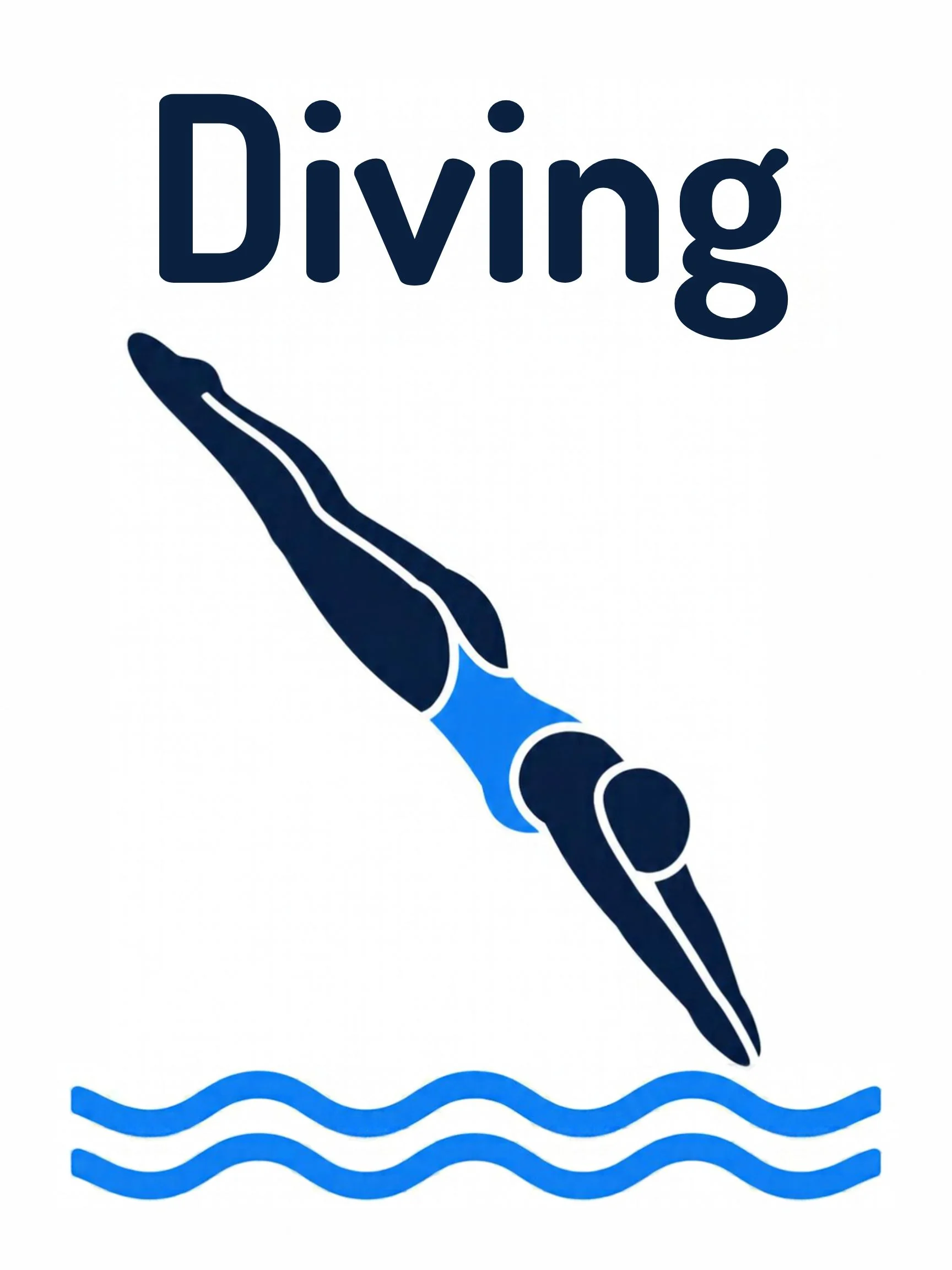
On this card the word "diving" stands big at the top with the pool’s scene below — the diver straight as an arrow above the water exactly as the entry looks from the poolside.
Ask your child
"What shape does a diver make?" "What goes into the water first?" "Where is diving allowed — shallow or deep water?"
What your child can say or do
Your child might say: "Pencil shape — arms past my ears!" "Hands first, then whoosh!" or the safety vow: "Only deep water, only with a grown-up!"
Out in the real world
Diving lives at every pool with a deep end — and on the Olympics’ most beautiful screens. Watch one slow-motion dive together and find the pencil: arms past ears, toes pointed, one straight line from fingers to splash.
Try it together
Dive School (dry land): cushion platform, sofa "water." Make the pencil, hold it, lean, dive straight — held the whole way. Score the shape, not the landing: straight arms past ears? Toes pointed? Then the pool, someday soon, returns a dart-clean entry the shape already knows.
Understanding check
Ask: "What shape is the dive? What enters first? Where is diving allowed?" The pencil, the hands, deep water with a grown-up — three answers and the shape is ready.
Parent tips
Never rush the water part — the cushion dive holds the whole lesson, and children who own the shape on land find it again in the pool the first time a teacher says pencil. The deep-water rule is non-negotiable and belongs in every repetition, out loud.
This lesson pairs with the Diving flashcard in the library — print it, show it, keep it on the fridge. Back to Sports & Movement (Class 37).