
Swimming — a step-by-step lesson for grown-up and child
This lesson teaches swimming in three dry-land pieces — kick, reach, bubble — so that the pool, when it comes, is a reunion instead of a surprise.
What is this?
Swimming is moving through water: legs flutter-kick, arms windmill-reach, and the face learns to blow bubbles instead of breathing in. It is a sport, a life skill, and the number one safety skill a small person can own.
What does it mean?
Water is a whole new world for a body: it holds you up, slows you down and gets up your nose. Breaking swimming into three dry-land pieces lets the body learn each one where it is calm — the water then just joins the pieces together.
What does the child need to know?
Your child needs three swimming ideas: the kick comes from the HIP, small and fast — splashy little flutters, not big slow stomps; the arms are windmills — big slow circles that reach far; and the mouth blows bubbles — out into the water, never in.
Why this matters
Swim schools across the US, Canada, Australia and NZ all start the same way — kick, reach, bubble — because those three pieces ARE swimming. And the safety rule sits underneath every lesson: water is fun WITH a grown-up, never alone.
What it teaches
Hip-driven kicking, cross-pattern arm circles (the crawl pattern), breath control (blowing out is a real self-regulation skill), and the safety habit of checking for the grown-up before every splash.
Words to learn
swimmingkickreachbubblegogglesfloatwater safety
Say this to your child
“"Swimming is how we move through water! Little fast kicks from your hips — splish splash splish. Big windmill arms that reach far far forward. And when your face goes in — blow bubbles OUT, big breath first. And the most important rule in the whole world of water: we NEVER swim without a grown-up. Never never. Say it with me."”
Step by step
- Show the card: "This is swimming — moving through the water."
- The flutter kick: lie on the tummy on a bed or mat, legs out — little fast kicks from the HIP, splashy as a dolphin tail. Ten seconds of kicking to a song.
- The windmill arms: standing, big slow arm circles that REACH as far as they can — reach, pull, reach, pull. Then both arms take turns like a wheel.
- The bubble: practise on dry land — big breath in, hum and blow OUT slowly. In the bath: chin in, blow bubbles. Mouth out-in, never in-in.
- Say the safety rule together, then play the swim-school game below: "never swim without a grown-up."
Look closer at the picture
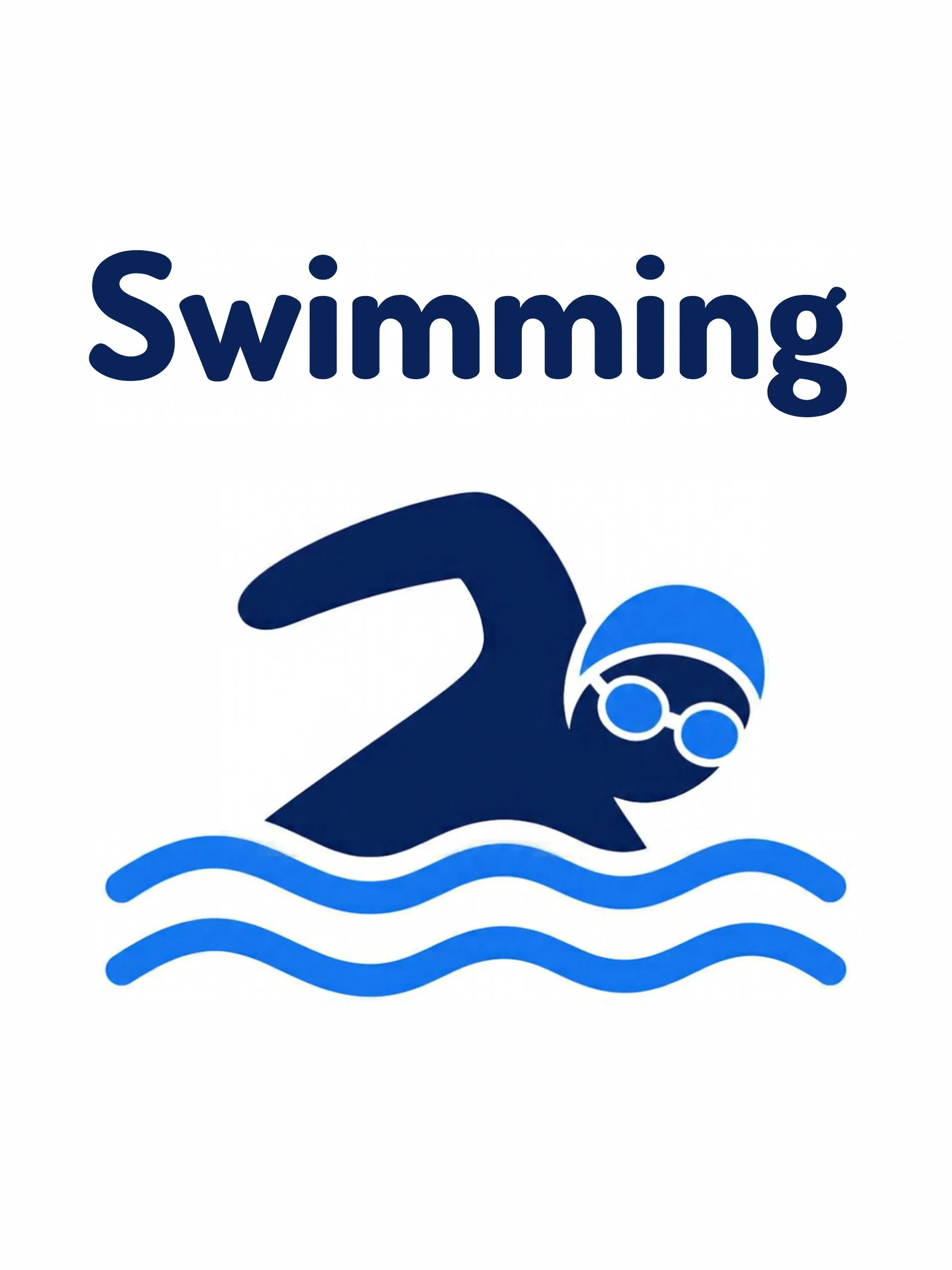
On this card the word "swimming" stands at the top in big letters with the water’s scene below — the swimmer, the goggles and the blue exactly as a lesson day at the pool looks.
Ask your child
"Where does the kick start — knees or hips?" "What shape do the arms make?" "What do we blow in the water?" "And who do we NEVER swim without?"
What your child can say or do
Your child might say: "Kick kick kick — splashy!" "I blowed bubbles!" or the safety vow: "Never without a grown-up!"
Out in the real world
Swimming lives at pools, beaches, lakes and the bathtub. Visit the pool and hunt for the three pieces in real swimmers: flutter kicks, windmill arms, bubble streams. The bathtub is the nightly training ground — bubbles on command.
Try it together
Swim School (dry land): towel "towelie" on the head, then the three stations — flutter kick lying down, windmill arms standing, bubble-breath humming. Then the bath or shallow pool: kick the water wild, blow three bubbles, float like a starfish with grown-up hands under the back. Every session ends with the rule, whispered like a spell: never swim without a grown-up.
Understanding check
Ask: "Where does the flutter kick come from? What do the arms draw? What do we blow? Who do we never swim without?" Hips, windmills, bubbles, a grown-up — four answers and the water is a friend.
Parent tips
Blowing OUT is the skill inside the bubble — children who can hum-and-blow on land transfer it to water within a visit. And let the goggles do their magic: a child who can see underwater stays twice as long, learns twice as fast.
This lesson pairs with the Swimming flashcard in the library — print it, show it, keep it on the fridge. Back to Sports & Movement (Class 37).