
Fencing — a step-by-step lesson for grown-up and child
This lesson teaches fencing’s real secret: it is a footwork sport wearing swords. The stance, the steps and the one big lunge carry the whole first lesson — the poking can wait a year.
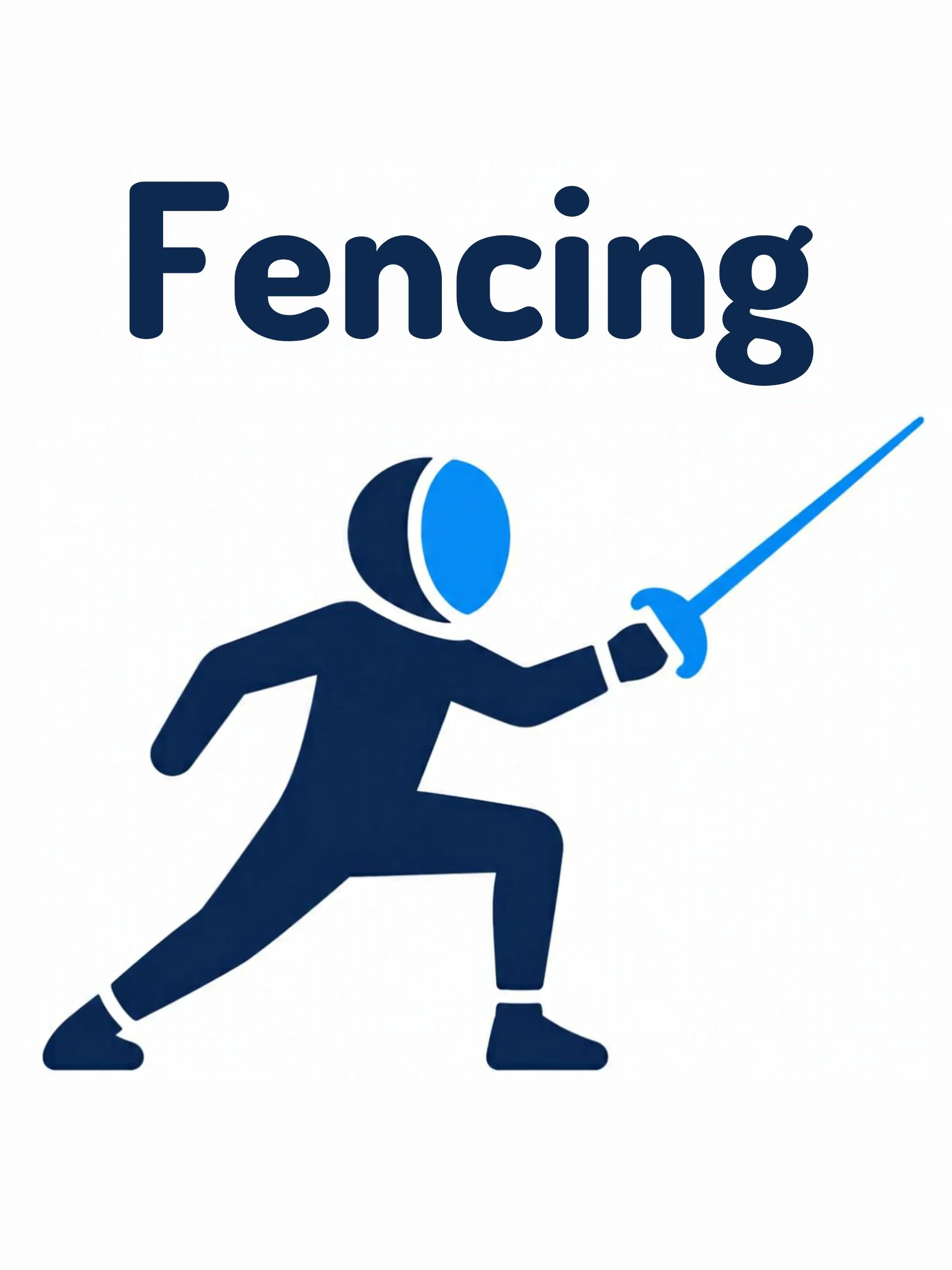
What is this?
Fencing is one-on-one sword play with masks and thin bending blades: en garde stance, advance and retreat on the feet, and touch the opponent’s jacket with the tip to score. It is chess at sprint speed, wrapped in extraordinary politeness.
What does it mean?
Fencing’s footwork is its treasure: side-on stance, quick small steps, balance held while moving fast — the same footwork boxers, tennis players and basketball defenders all borrow. The sword is almost a prop; the feet are the lesson.
What does the child need to know?
Your child needs three fencing ideas: en garde — side-on, knees bent, sword up, mask on; the feet do the fighting — advance forward, retreat back, small quick steps; and the lunge is ONE big step with the front foot and a long arm — then straight back to en garde.
Why this matters
A pool-noodle duel makes the sport safe, and the etiquette makes it extraordinary: fencers salute before and shake hands after, every bout, forever. The manners are not decoration — they are the sport.
What it teaches
Side-on stance under movement, advance-retreat footwork (a rhythm skill), the lunge — one big coordinated step-and-reach — and the salute-and-handshake ritual.
Words to learn
fencingen gardeadvanceretreatlungemasksalute
Say this to your child
“"Fencing is the polite sword game! Mask on, en garde — side-on, knees springy, sword up. The feet do the fighting: advance… retreat… quick little steps. Then ONE big lunge — step and reach, touch the target — and back to en garde. And before every bout we salute, and after we shake hands. Fencers are the politest sword-fighters in the world."”
Step by step
- Show the card: "This is fencing — the sword game with masks and manners."
- En garde: side-on, feet in a comfortable L, knees bent, noodle-sword UP, mask (or helmet-pretend) on. Hold the stance — it should feel springy.
- The footwork: ADVANCE — front foot steps, back foot follows. RETREAT — back foot steps, front follows. Small quick steps, up the hallway and back.
- The lunge: front foot BIG step, arm reaches long — touch the cushion-target — then straight back to en garde. One lunge is one whole firework.
- Play the noodle duel below and close with the salute: "en garde, advance, LUNGE — and always salute."
Look closer at the picture
On this card the word "fencing" stands at the top in big letters with the strip’s scene below — two masked fencers and their crossed thin swords exactly as a bout looks.
Ask your child
"What do the feet do — big stomps or quick small steps?" "What is the one big step called?" "What do fencers do before and after every bout?"
What your child can say or do
Your child might say: "En garde!" "Advance, advance, LUNGE!" or the fencer’s manners: "We salute first — and shake hands after!"
Out in the real world
Fencing lives at clubs and school gyms — and on Olympic screens where the footwork is easiest to see. Watch one bout together and ignore the swords entirely: watch the FEET. Quick small steps, always springy.
Try it together
Noodle Duel: two pool-noodle swords, cushion-target between the fencers. Round one: footwork only — advance and retreat, mirror each other, no touching. Round two: one lunge each at the cushion, back to en garde. Round three: the mask-on duel — gentle noodle touches on the sword or target only, never people — then the salute and the handshake. Salute first, shake after: the ritual IS the sport.
Understanding check
Ask: "What is the stance called? What do the feet do? What is the one big step? What happens before and after?" En garde, advance and retreat, the lunge, the salute — four answers and the strip is open.
Parent tips
Footwork rounds outnumber duelling rounds three to one — the feet are the curriculum. And noodle touches land on swords and targets ONLY; the rule is stated before round one and honoured by the grown-up’s own noodle first.
This lesson pairs with the Fencing flashcard in the library — print it, show it, keep it on the fridge. Back to Sports & Movement (Class 37).