
Judo — a step-by-step lesson for grown-up and child
This lesson teaches judo’s two first skills — the gentle grip and the soft fall — because judo literally means "the gentle way," and its best gift to a four-year-old is knowing how to fall without hurt, for life.
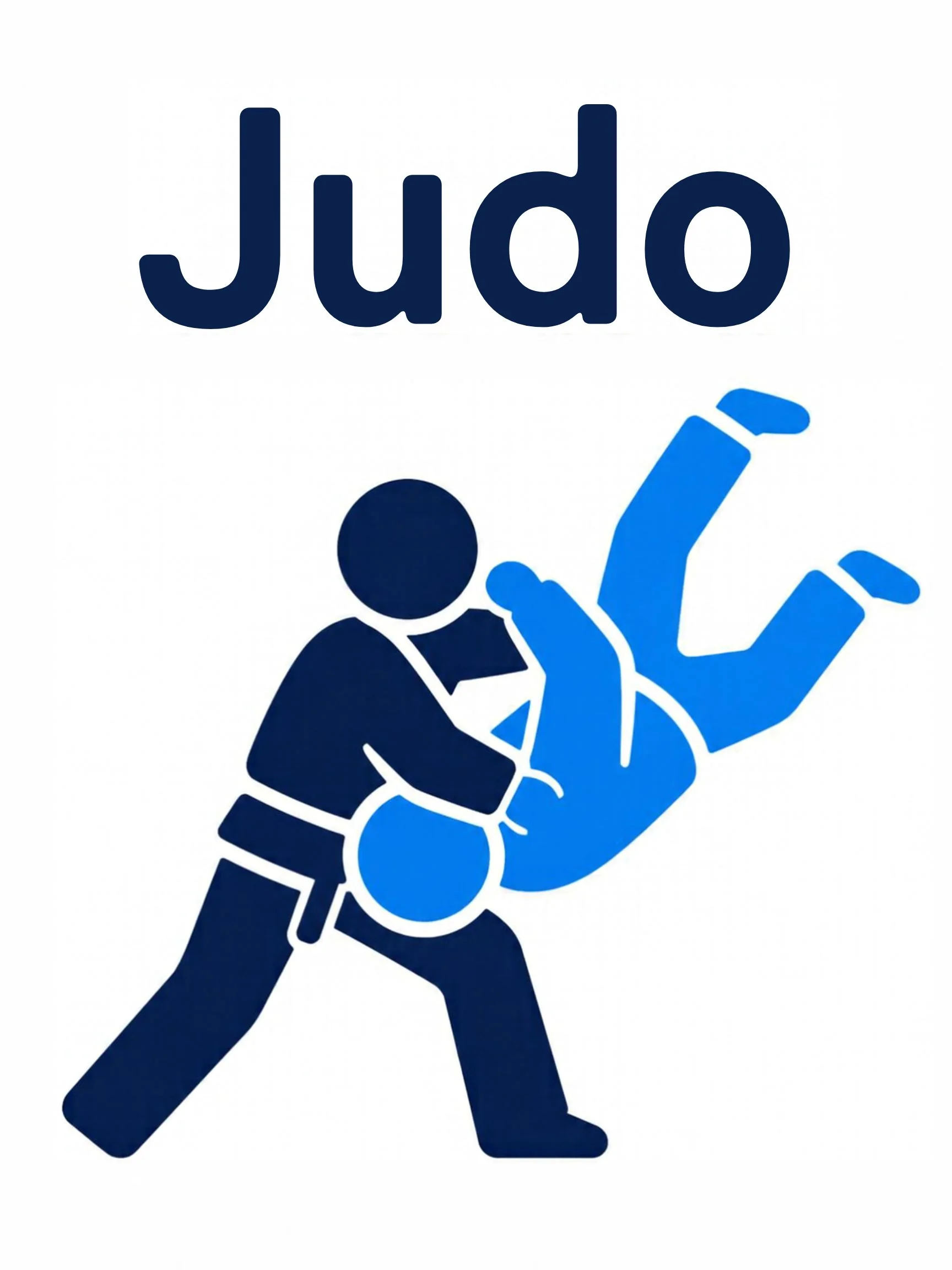
What is this?
Judo is a mat art from Japan: partners in white suits grip each other’s jackets, step, balance and unbalance — and the most practised skill of all is falling SAFELY, slapping the mat like a starfish.
What does it mean?
Judo flips the fear: every beginner learns to FALL before learning to throw. The break-fall turns the scariest part of moving into a party trick — and it transfers to skating rinks, skateboards and slippery floors forever.
What does the child need to know?
Your child needs three judo ideas: the bow comes first — respect to the partner and the mat, every session; the grip is gentle — sleeve and elbow, holding a friend, not a rope; and the break-fall is the starfish — roll back, arms slap wide, soft and loud.
Why this matters
"The gentle way" is the whole philosophy in two words: maximum effect with minimum effort, respect before everything. For four-year-olds, judo is manners, balance and safe falling in white pyjamas.
What it teaches
Safe falling (the break-fall is a lifelong injury-prevention skill), gentle-grip partner work, static and moving balance, and the respect ritual — bow first, always.
Words to learn
judogentlegripbalancebreak-fallmatbow
Say this to your child
“"Judo means the gentle way! We bow first — to our partner and the mat. We grip the jacket soft — sleeve and elbow, like holding a friend. We step and balance like tall trees. And the best trick in judo is falling SOFTLY — roll back, arms out wide, SLAP the mat like a starfish. Everyone falls; judoka are the ones who fall well."”
Step by step
- Show the card: "This is judo — the gentle way on the mats."
- The bow: hands slide to the knees, small bow to the partner. Every judo session starts here — respect first, always.
- The grip: hold a partner’s sleeve and elbow (or their jacket shoulders) — firm as holding a friend’s hand, gentle as holding a bird.
- The break-fall: sit on a mat or bed, roll back one small roll, arms SLAP wide like a starfish — slap! Loud and soft at once. Three falls, giggling.
- Play the balance games below and close with the bow: "grip gentle, fall soft, bow first."
Look closer at the picture
On this card the word "judo" stands big at the top with the mat’s scene below — two partners in white suits gripping jackets exactly as a randori looks.
Ask your child
"What does judo mean?" "What comes first, every session?" "How do judoka fall — hard or soft like a starfish?"
What your child can say or do
Your child might say: "The gentle way!" "I gripped the sleeve soft!" or the proudest one: "SLAP — I break-fell like a starfish!"
Out in the real world
Judo lives in clubs across Japan, France, Brazil and every Olympic Games — and its break-fall lives in every swim school’s safety roll and every skateboarder’s first tumble. The gentle way is everywhere once you can see it.
Try it together
Starfish Fall School: on a bed or mat — sit, roll back, arms SLAP wide, giggle, repeat. Then the jacket-grip walk: partners grip sleeve-and-elbow and walk a slow circle, one leading, one following, roles swapped on a clap. Finish with tall-tree balance: one foot, arms wide, three counts — and the closing bow. Gentle, every step.
Understanding check
Ask: "What does judo mean? What do we do first, every session? How do we fall?" The gentle way, the bow, soft like a starfish — three answers and the mat is a friend.
Parent tips
Make the fall the STAR, not the throw — four-year-olds who can break-fall beautifully are ready for everything else at their own pace. And never skip the bow: it costs three seconds and carries the whole philosophy.
This lesson pairs with the Judo flashcard in the library — print it, show it, keep it on the fridge. Back to Sports & Movement (Class 37).