
Soccer — a step-by-step lesson for grown-up and child
This lesson teaches soccer the way four-year-olds actually meet it: foot meets ball, ball goes somewhere, and the somewhere gets steered — one gentle step at a time.
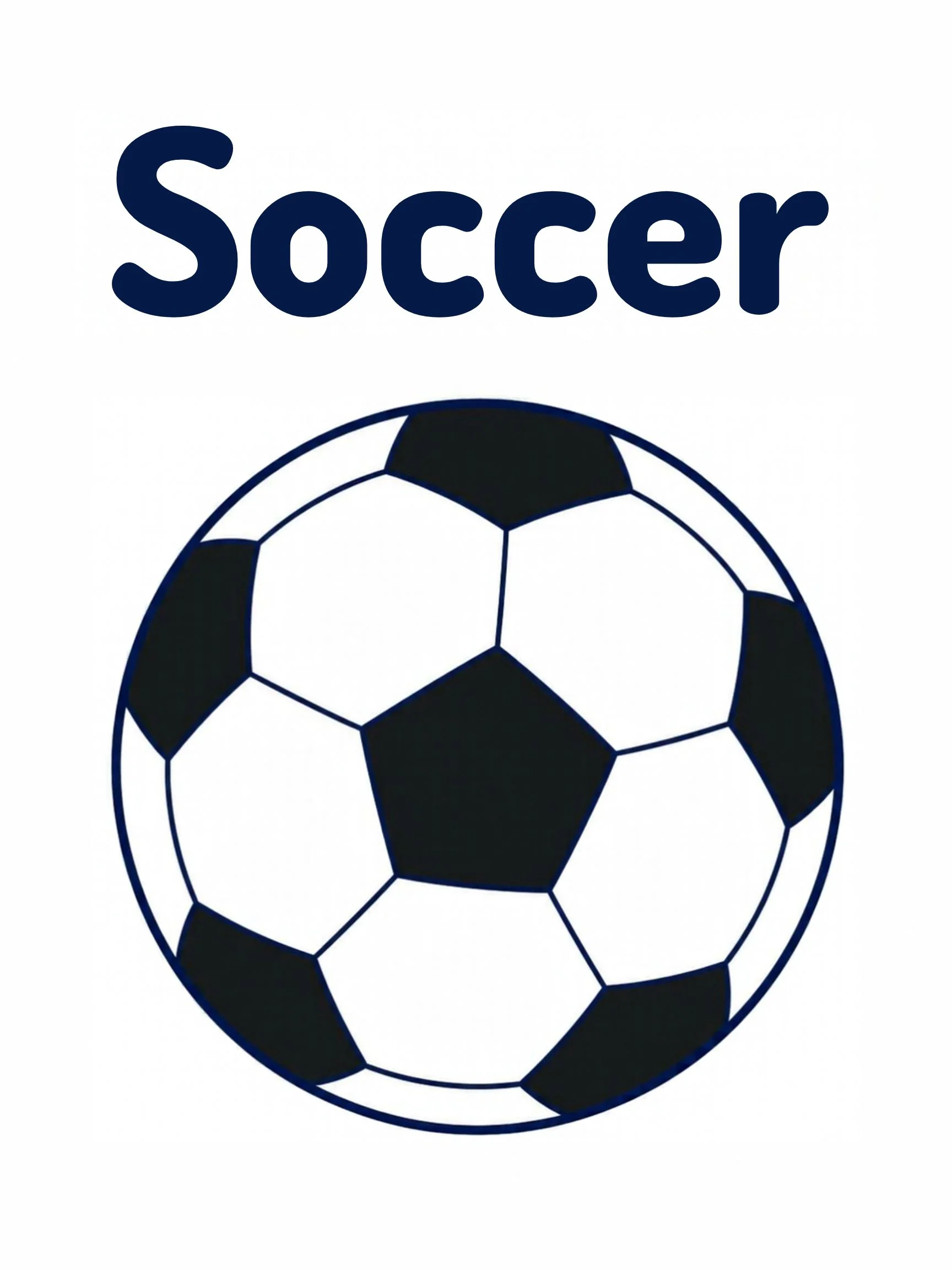
What is this?
Soccer is a team game played with one ball and mostly feet: kick it to a friend, dribble it down the field, and kick it into the net to score. Only the goalkeepers may use hands.
What does it mean?
For a small child soccer is the first sport where a tool is replaced by a body part: the foot must do what a hand would do — aim, carry, stop. That switch-on is why soccer is the world’s first sport for four-year-olds in almost every country.
What does the child need to know?
Your child needs three soccer ideas: the kick is a swing from the hip with the toe down; the OTHER foot plants beside the ball like a anchor; and the freeze-stop — one sole on top of the ball — is how players own the ball instead of chasing it.
Why this matters
Soccer opens this class because it is the most universal gross motor activity on the wall: a ball, a patch of ground, done. It is also the friendliest miss in sport — a ball that rolls away simply waits to be kicked again.
What it teaches
Kicking (the last of the big ball skills to mature), single-leg balance on the plant foot, steering a rolling object with taps — the dribble — plus turn-taking in the goal game.
Words to learn
soccerkickgoaldribblestopfieldteam
Say this to your child
“"Soccer is kicking the ball with your feet — hands stay home! Plant your strong foot next to the ball like a tree, swing the other one, toe down… and there it goes. And when the ball tries to run away? You put your foot on top and say FREEZE. The ball stops. The ball is yours."”
Step by step
- Show the card: "This is soccer — the game where feet do everything."
- Demo the kick slowly: plant foot beside the ball, swing the kicking leg from the hip, toe down, contact. Make the plant foot the star — "this foot stands still like a tree."
- Teach the freeze-stop: roll the ball gently, your child runs it down and puts one sole on top — freeze! Practise three rolls.
- First dribble: kick, walk, kick, walk — the ball stays a pet on a leash, never running away.
- Finish with the chair-goal game below and the takeaway sentence: "I kick, I stop, the ball is mine."
Look closer at the picture
On this card the word "soccer" sits in big letters at the top, with the game’s own scene below — the sport exactly as your child will meet it on the field, one ball, big grass.
Ask your child
"What do we kick the ball with in soccer?" "Can we pick it up?" "How do we stop the ball when it runs away?" "Where does a goal go in?"
What your child can say or do
Your child might say: "You kick it with your feet!" "No hands!" or the proud one: "I froze the ball — it stopped!"
Out in the real world
Any grass, any hallway, any ball. Point out soccer everywhere it lives: the park game on Sunday, the World Cup on the screen, the neighbour’s kid dribbling past the fence. One real "I kick like that too!" is worth ten drills.
Try it together
Freeze-the-Ball: you roll the ball gently across the room, your child chases it down and freezes it with one foot on top. Then swap — you freeze, they roll. Three freezes each, then the chair-goal opens and every freeze earns one shot. Roll, chase, freeze, shoot — the whole first soccer class, played.
Understanding check
Ask: "Which foot plants like a tree? What do we say when the foot lands on the ball? How many hands does a goalkeeper get?" Plant foot, freeze, two — three answers and the first lesson of the class is won.
Parent tips
If the kick keeps missing, shrink the ball, not the child: a size-1 mini ball or even a soft toy is easier to steer and builds the same swing. And never rush the hands rule — goalkeepers get hands, and today your child can BE the goalkeeper for one round, diving on the ball with both hands like the pros.
This lesson pairs with the Soccer flashcard in the library — print it, show it, keep it on the fridge. Back to Sports & Movement (Class 37).