
Surfing — a step-by-step lesson for grown-up and child
This lesson teaches surfing where every surf school starts: on the floor, doing the pop-up — the one jump that turns a paddler into a rider — long before the ocean gets a vote.
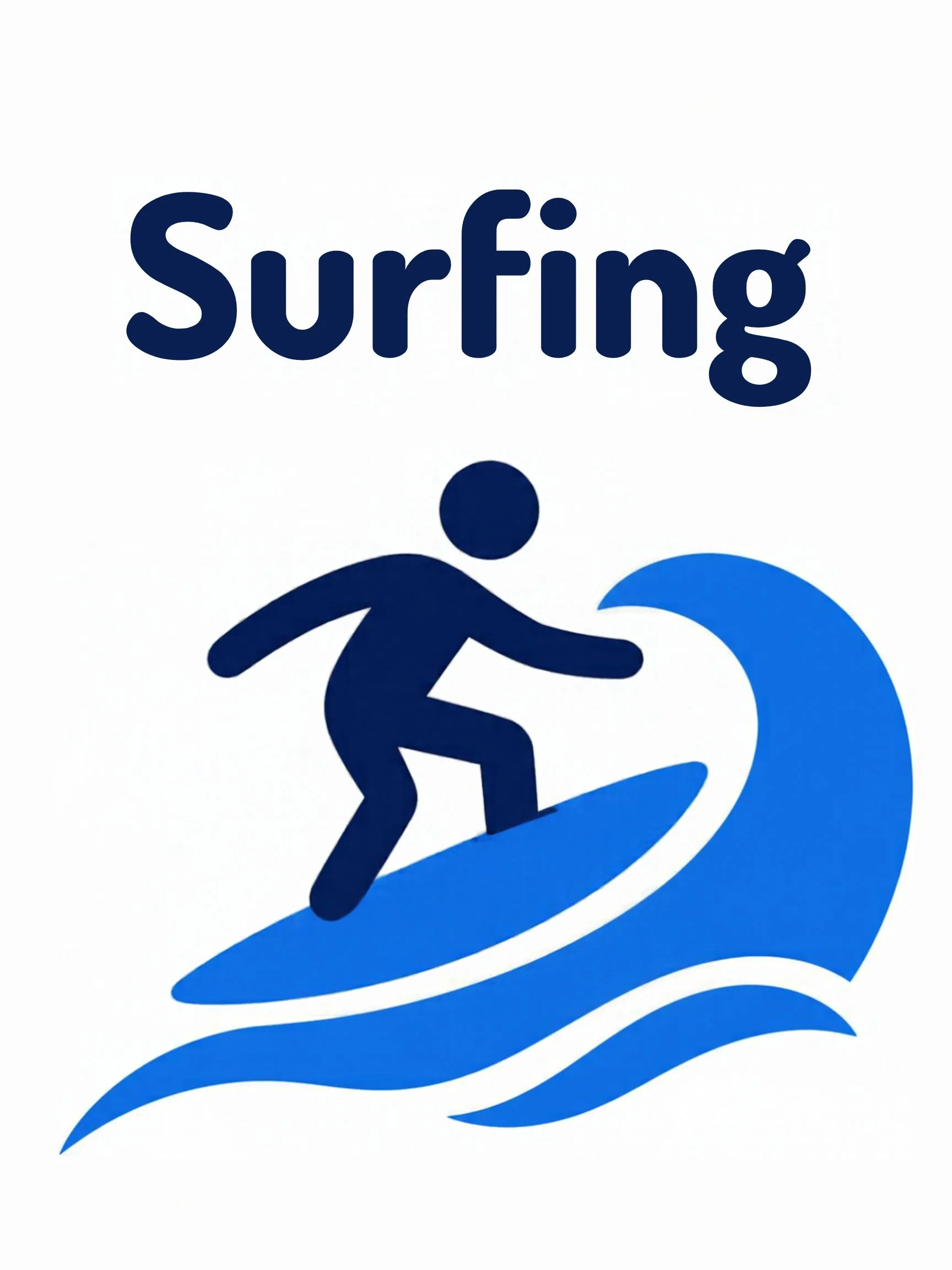
What is this?
Surfing is riding a board on a moving wave: paddle out past the break, turn, paddle hard as the wave lifts you, then POP UP to standing and ride it to the sand.
What does it mean?
The pop-up is a push-up that ends in a crouch — one explosive move from lying to standing. Practised on the carpet it builds the exact arm push, foot swap and low stance that real waves demand, with zero salt water required.
What does the child need to know?
Your child needs three surfing ideas: the pop-up is hands-down, feet-in, one hop — like a frog with a plan; the stance is sideways, knees soft, arms out like a tightrope walker; and the leash goes on the ankle first — the board is your buddy, never let it fly free.
Why this matters
Surfing is the balance card with adventure attached: the floor is never still, and the child who can pop up and hold a low stance on land owns the sport’s whole first lesson before the first wave.
What it teaches
Explosive push-to-stand (the pop-up is a genuine power move), low dynamic balance, side-on stance awareness, and the ocean respect that every beach family teaches: waves are strong, grown-ups watch, never turn your back.
Words to learn
surfingwavepaddlepop upstancebalanceleash
Say this to your child
“"Surfing is standing on the water! Paddle out with big arm reaches — paddle, paddle. When the wave lifts the board, POP UP: hands down, feet in, jump low! Knees soft, arms out, ride the wave all the way in. And the beach rules: the leash goes on your ankle so the board never flies away, and we always surf where the grown-ups watch."”
Step by step
- Show the card: "This is surfing — standing on a board on a moving wave."
- Paddle first: lie on the tummy, one arm at a time reaching far forward — paddle, paddle, paddle. This is how surfers travel.
- The pop-up: hands flat under the shoulders, push UP, jump the feet in and land LOW — knees bent, sideways stance, arms out. A frog with a plan. Ten pop-ups, slow ones fine.
- Hold the ride: once up, FREEZE in the low stance for three counts — that freeze is the ride.
- Say the beach rules, then play the wave game below: "pop up, ride low, leash on."
Look closer at the picture
On this card the word "surfing" is printed large at the top with the wave’s scene underneath — the rider on the board and the blue wave exactly as the ride looks from the sand.
Ask your child
"What do we do before the pop-up?" "Are the knees stiff or soft?" "What goes on the ankle, and why?"
What your child can say or do
Your child might say: "Paddle paddle — POP UP!" "I held my ride for three!" or the beach rule: "Leash on — the board is my buddy!"
Out in the real world
Surfing lives at every beach break in Australia, NZ and California — and kids’ board lessons start with exactly this carpet pop-up. Watch one surfer catch a wave together and call the three beats: paddle, pop, ride low.
Try it together
Cushion Waves: a wobbly cushion is the board, the carpet is the sea. Paddle on the tummy three reaches, pop up, hold the low stance three counts — RIDE! Then wobble the cushion gently with a toe while the surfer stays soft-kneed. Every fall is a wipeout, every wipeout is a laugh, every pop-up is the whole sport.
Understanding check
Ask: "What are the three beats — paddle, and then? Are the knees soft or stiff? What stops the board flying away?" Pop up and ride, soft, the leash — three answers and the wave is caught.
Parent tips
Do the pop-ups on carpet in socks — slides are the point, slips are the giggle. And teach the ocean’s golden rule early and forever: waves are stronger than everyone; we swim and surf only where the watching grown-up says.
This lesson pairs with the Surfing flashcard in the library — print it, show it, keep it on the fridge. Back to Sports & Movement (Class 37).