
Rowing — a step-by-step lesson for grown-up and child
This lesson teaches rowing’s three-beat stroke and its deeper lesson: the boat only moves when EVERYBODY moves — in time, all together, one crew.
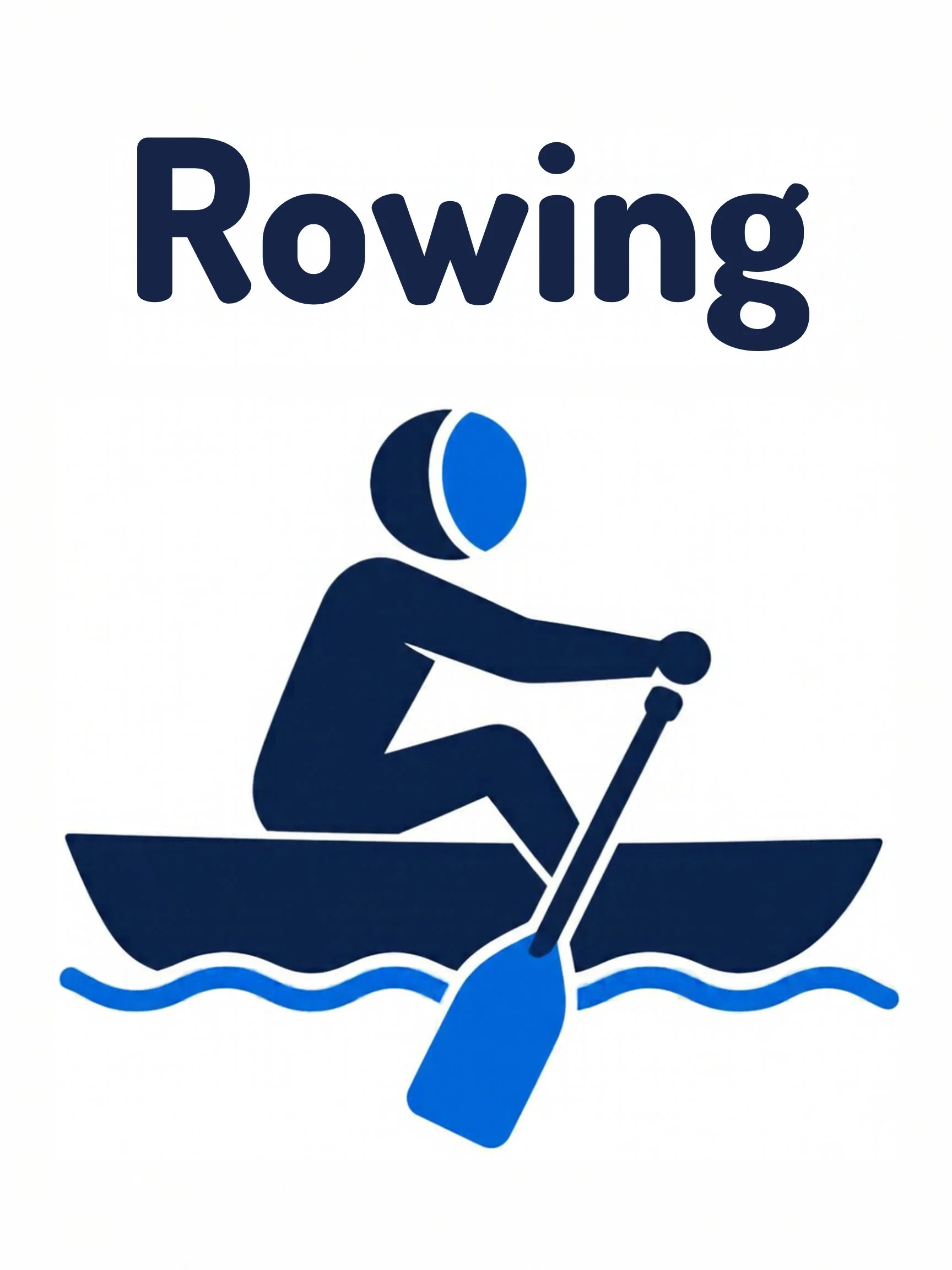
What is this?
Rowing is propelling a long thin boat with oars: legs push, body leans back, arms pull the water past — dip, pull, glide — over and over, facing backwards, in perfect time with the crew.
What does it mean?
Rowing is the wall’s one pulling sport: nearly everything else throws and pushes. And its rhythm is its rule — out-of-time strokes chop the boat, in-time strokes make it fly. Togetherness is not a bonus skill here; it is the engine.
What does the child need to know?
Your child needs three rowing ideas: the stroke has three beats — lean forward, pull back, glide; the legs start the power and the arms finish it; and the whole crew rows IN TIME — that is why rowers count out loud.
Why this matters
Pulling strength is the rarest skill on this wall, and crew rhythm is the purest teamwork game there is — two gifts in one boat, learnable on a carpet with a towel.
What it teaches
Pulling strength (rows are the mirror of every push), sequenced power — legs, body, arms — and synchronised rhythm with a partner, the earliest real crew experience.
Words to learn
rowingoarstrokepullcrewrhythmglide
Say this to your child
“"Rowing is the together game in a long thin boat! Lean forward, pull the oars back, and glide — lean, pull, glide. The legs push first, the arms finish, and everybody does it AT THE SAME TIME — that is why rowers count out loud: one, two, pull! When the crew is in time, the boat flies. When it is not — splashy chaos!"”
Step by step
- Show the card: "This is rowing — one boat, one crew, all together."
- The three beats: sit tall, LEAN forward, PULL back, GLIDE. Say it in a whisper-rhythm: lean… pull… glide…
- Leg power first: the push starts in the legs, the arms finish — legs, body, arms, in that order. Practise the order slowly.
- Backwards view: rowers face where they CAME from — ask why. (Because the pull is easier backwards! And the cox faces forward to steer.)
- Play the crew game below and close: "lean, pull, glide — all together."
Look closer at the picture
On this card the word "rowing" leads at the top in big letters with the water’s scene below — the long boat, the oars and the crew exactly as the race looks from the bank.
Ask your child
"What are the three beats of the stroke?" "Which way does a rower face?" "What happens if the crew rows out of time?"
What your child can say or do
Your child might say: "Lean, pull, glide!" "Rowers sit backwards — funny!" or the crew call: "All together — NOW!"
Out in the real world
Rowing lives on rivers in every school town — Oxford and Cambridge race it, Boston and Melbourne row it. Watch one eight glide past together and listen for the count: the boat has a heartbeat and it is the crew’s count.
Try it together
Crew Towel Row: sit on the floor facing a partner, both holding one towel or stick between you. Row in time: both lean forward, both pull back, counting "lean… pull… glide" — twenty strokes without dropping the rhythm. Then tug-of-water: gentle pulls against each other’s hold, feel the pull in the arms. In-time beats strong — that is the crew’s law.
Understanding check
Ask: "Name the three beats. Where does the power start? What must the whole crew share?" Lean-pull-glide, the legs, the rhythm — three answers and the boat flies.
Parent tips
Count EVERYTHING — the counting is the rhythm, and the rhythm is the skill. And keep pulls gentle in the towel game: this is rhythm training with strength sprinkled on top, not the other way round.
This lesson pairs with the Rowing flashcard in the library — print it, show it, keep it on the fridge. Back to Sports & Movement (Class 37).