
Tennis — a step-by-step lesson for grown-up and child
This lesson teaches tennis as one delicious trick: keep the ball in the air with a thing on the end of your arm — the rally grows out of that trick like a plant.
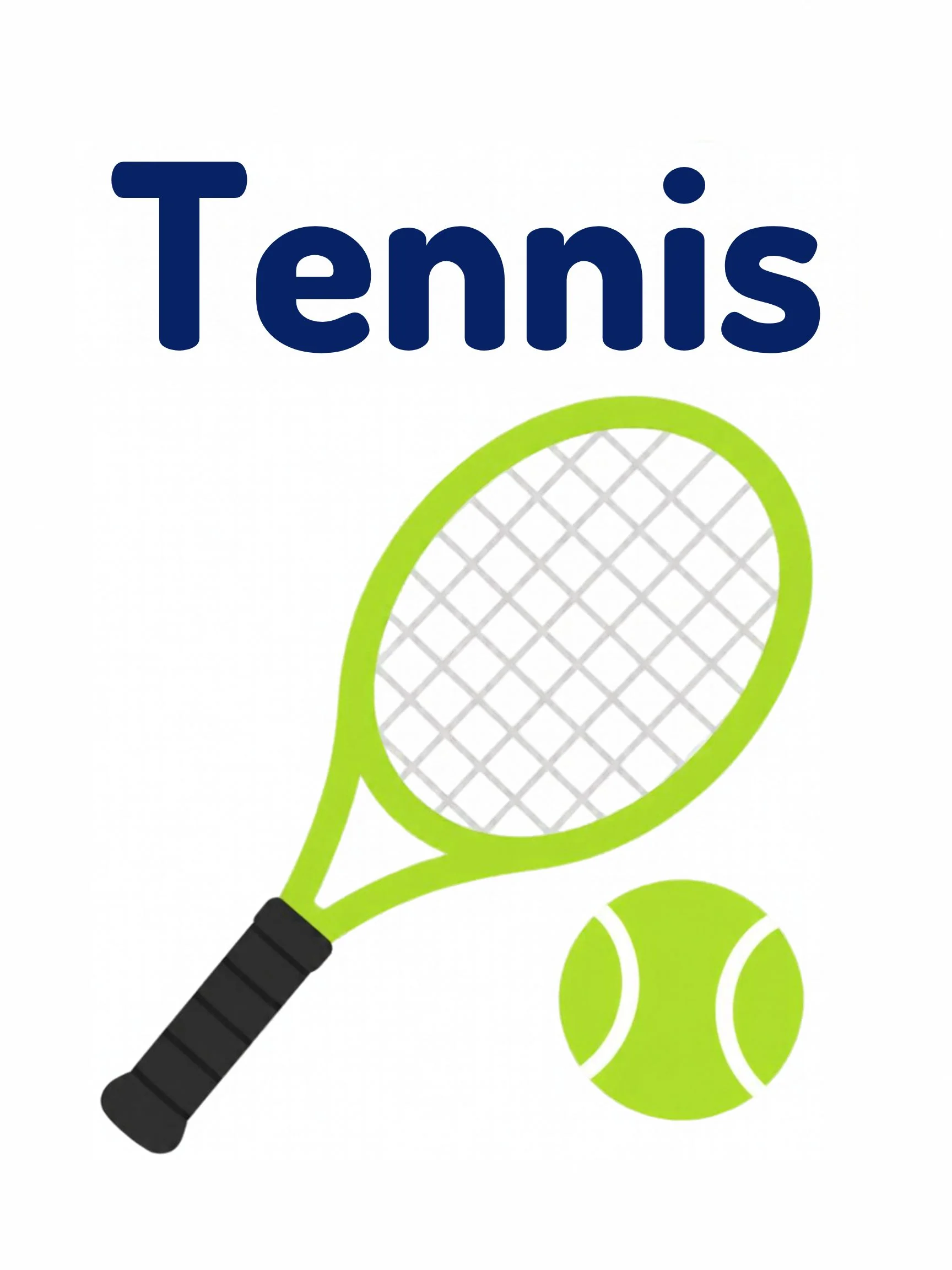
What is this?
Tennis is a net game played with rackets: hit the ball over the net, your partner hits it back, and the rally keeps going as long as nobody misses.
What does it mean?
Tennis is the first sport on the wall where the hand plays through a tool. The racket adds reach but subtracts direct touch — the brain must remap hitting, and once it does, every striking sport gets easier.
What does the child need to know?
Your child needs three tennis ideas: the racket face is a flat palm held out in front; the ball is TAPPED, not smashed — a high-five through the ball; and rallies are counting games, not winning games.
Why this matters
Tennis earns an early card because striking is one of the big fundamental movement skills and the balloon-first version needs no court, no net and no strength — just a floating thing worth chasing.
What it teaches
Striking with an implement, tracking a moving object through the air, side-on body position, and the patience of a rally that counts instead of competes.
Words to learn
tennisrackettapnetrallyovercount
Say this to your child
“"Tennis is the tap-it-over game! Your racket is a flat palm on a stick — tap the balloon UP, let it float, tap again. How many taps can we do? Then we turn our body side-on like a real player and tap it over the sofa-net to me. Ping! My turn. Ping! Your turn."”
Step by step
- Show the card: "This is tennis — the tap-it-over game."
- Make the palm-racket connection: hold your flat hand up — that IS the racket face. Now the racket holds the same palm for you.
- Tap-up drill: drop the balloon, tap it up with the flat face, let it fall, tap again. Count the taps together — every record is a party.
- Turn sideways: feet point at the wall, belly not the net — the sideways stand of every real rally.
- Play sofa-net rallies below and close: "flat palm, little tap, over it goes."
Look closer at the picture
On this card the word "tennis" leads at the top with the game’s scene under it — the racket, the ball and the net exactly as the rally looks from the court.
Ask your child
"What does the racket face look like?" "Do we smash or tap?" "What do we count in a rally?"
What your child can say or do
Your child might say: "My racket is a big flat hand!" "I tapped it seven times!" or the rally shout: "Ping — your turn!"
Out in the real world
Tennis lives at parks, clubs and TVs — and its tiny cousins live in every kitchen: a spoon and a pom-pom, a paddle and a balloon. Watch one rally together and hunt for the tap.
Try it together
Sofa-Net Rally: the sofa back is the net, the balloon is the ball. Stand two cushions apart, tap it over, partner taps it back. Balloon rallies last long enough to feel REAL — and when a rally reaches five, the whole room loses its mind. That is the moment tennis hooks a child for good.
Understanding check
Ask: "What is the racket face? Tap or smash? What does a rally count?" Flat palm, tap, taps — three answers and the rally has begun.
Parent tips
If the racket scares the game away, play hand-tennis first — the tap is the same skill without the tool. And pick the lightest racket sold: junior foam rackets are toys that happen to be real.
This lesson pairs with the Tennis flashcard in the library — print it, show it, keep it on the fridge. Back to Sports & Movement (Class 37).