
Easel — a step-by-step lesson for grown-up and child
This lesson teaches "easel" as the standing art station: paper clipped, arms up, big circles — the whole shoulder doing the work that writing will inherit.
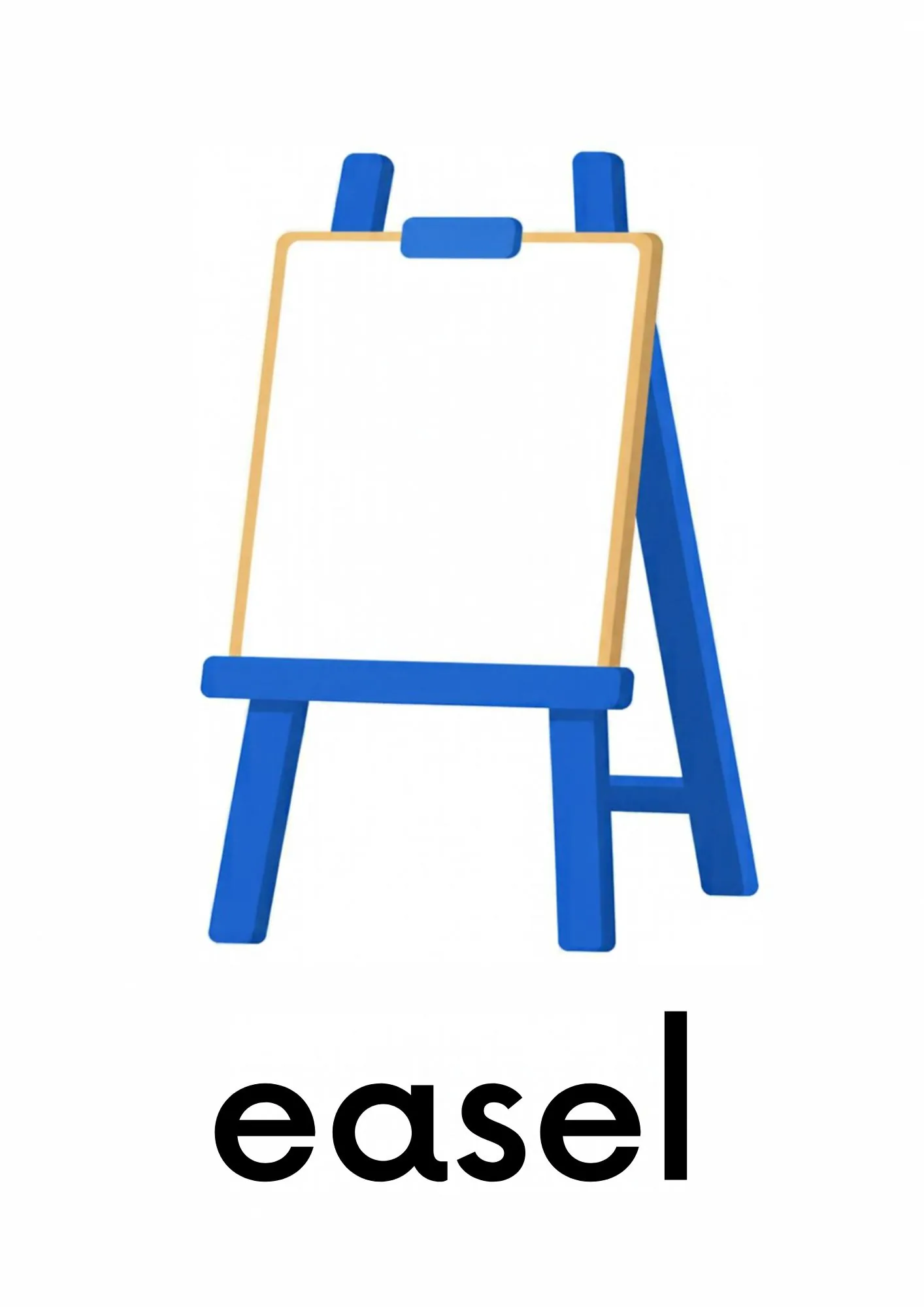
What is this?
An easel is the standing frame that holds paper upright for drawing — here, the blue A-frame with the clip, at exactly standing height.
What does it mean?
Vertical surfaces change the drawing: the shoulder leads, the wrist follows, and the big-muscle work now is the small-muscle precision later. The easel is pre-writing dressed as art.
What does the child need to know?
You need paper, the clip (or a fridge, or a big box wall) and the one rule: marks live on the paper. Everything else — color, subject, enthusiasm — belongs to the artist.
Why this matters
High-energy toddlers focus better on their feet. The easel lets the body wiggle legally while the hands and eyes work — focus and movement, finally on the same side.
What it teaches
Shoulder and arm strength, vertical wrist position (the writing position), up-down and circle strokes, and the boundary discipline of one surface.
Words to learn
easelclippaperdrawcirclesup high
Say this to your child
“"Easel! Stand up tall — time to draw. Clip the paper… click! Big circles — round and round! Up, down, side to side… your arms are the engine. Look what you drew!"”
Step by step
- Clip the paper together: "easel! Paper goes on — click."
- Stand side by side, crayons up: "big circles first!" Draw giant loops shoulder-high.
- Vary the direction: "up… down… round and round." Name the strokes as they happen.
- Trade surfaces: their half, your half — mirror each other’s marks.
- The gallery finish: step back three steps, admire loudly, "shall we keep it or make another?" The artist decides.
Look closer at the picture
On this card the word "easel" sits under a blue art easel holding a white sheet — the standing studio, ready for its first masterpiece.
Ask your child
"What is this?" (easel) "Draw a big circle!" "Where does the paper go?" (on the easel, clipped)
What your child can say or do
Your child might say "I draw!", fill the page with loops, or clip the next sheet themselves — the studio is now self-serve.
Out in the real world
Standing art hides in plain sight: fridge galleries, chalk walls, the whiteboard at the clinic. Any vertical surface is an easel with good PR.
Try it together
Wall Mural: tape a big paper sheet to the wall, artists take turns, one rule (paper only). The mural grows all week — a standing monument to the easel word.
Understanding check
Ask: "What is this?" (easel) "Where does the paper go?" (clipped on) "Show me a big circle!" — name, clip, circle: vertical art, unlocked.
This lesson pairs with the Easel flashcard in the library — print it, show it, keep it on the fridge. Back to Toddler Room.