
Picture Book — a step-by-step lesson for grown-up and child
This lesson teaches "picture book" as a pointing game: the child’s finger finds, the grown-up names, the book gets read again — and again — and the tenth read is the best one.
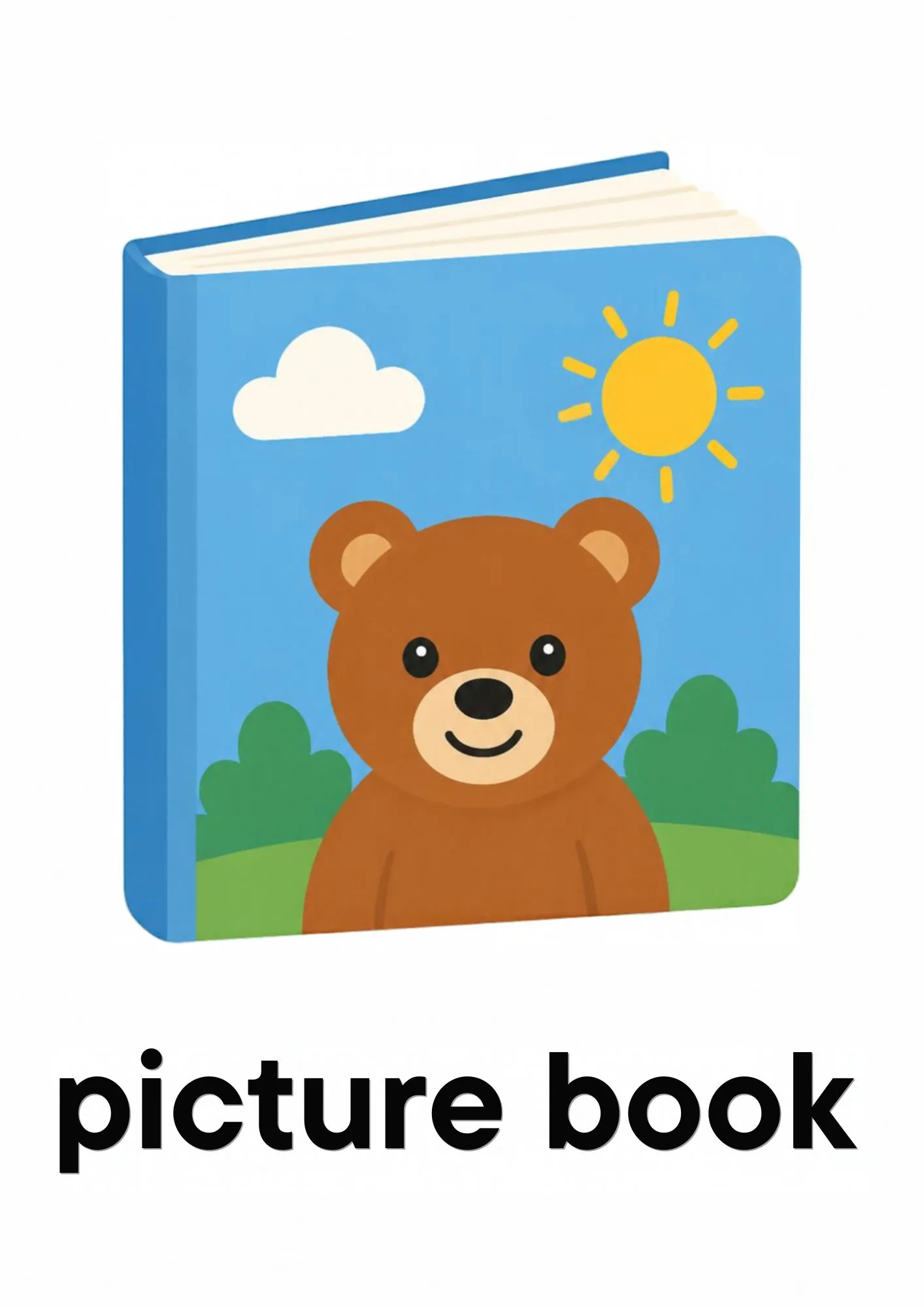
What is this?
A picture book is a book whose pictures carry the story — here, the one with the teddy on the cover — and at this age reading IS the pointing game played on its pages.
What does it mean?
Point-and-name builds vocabulary faster than any screen because the picture holds the meaning while the adult holds the voice. Repetition is not laziness — it is the curriculum.
What does the child need to know?
You need the book, a lap and the finger rule: the CHILD’S finger does the finding. The adult’s job is naming whatever the finger lands on — no agenda, no skipping ahead.
Why this matters
The tenth read of the same book is when the child starts "reading" it from memory — turning pages, naming the bear, finishing the lines. That is real reading, months before letters.
What it teaches
Vocabulary by pointing, book handling (page turning is a skill), attention stamina, and the book-love that everything later stands on.
Words to learn
picture bookbookpointpagereadagain
Say this to your child
“"Picture book! Let’s read. Open it up… point to something! Your finger says… a dog! Woof. Now a ball! Point again… What do you find? Read it again? Of course!"”
Step by step
- Cover first: "picture book! Look — a bear on the cover. Hello, bear!"
- Open together; the child’s finger leads: "where do you point?"
- Name what the finger finds: "a dog! A ball! A tree!" — no steering, just naming.
- Turn pages by the corner — let the page-turn be their skill, clumsy and cherished.
- The close: "finished… AGAIN?" Repeat at will. The tenth read is the goal, not the failure.
Look closer at the picture
On this card the words "picture book" sit under a book with a teddy bear on the cover under a sunny sky — a story waiting on the shelf’s friendliest face.
Ask your child
"Where is the bear?" "Point to the dog!" "Turn the page…" "Read it again?"
What your child can say or do
Your child might name a picture from memory, "read" aloud in babble-story, or bring the book as a request — reading, arriving early.
Out in the real world
Books live in every room and every bag. A book at breakfast, a book at the clinic: "picture book time!" The habit outruns the venue.
Try it together
Book Picnic: three books, one cushion, snacks for the grown-up. The child "reads" each to the audience — page turning, pointing, babbling narration. The critic’s favourite: the one read forty times.
Understanding check
Ask: "What is this?" (picture book) "Point to the bear!" "Turn the page!" — cover, point, turn: reading has begun.
This lesson pairs with the Picture Book flashcard in the library — print it, show it, keep it on the fridge. Back to Toddler Room.