
Small — a step-by-step lesson for grown-up and child
This lesson brings the pair’s second half: small, taught in a whisper with a curled-up body. Right after big, the contrast does the teaching — your toddler feels the difference in their own arms.
What is this?
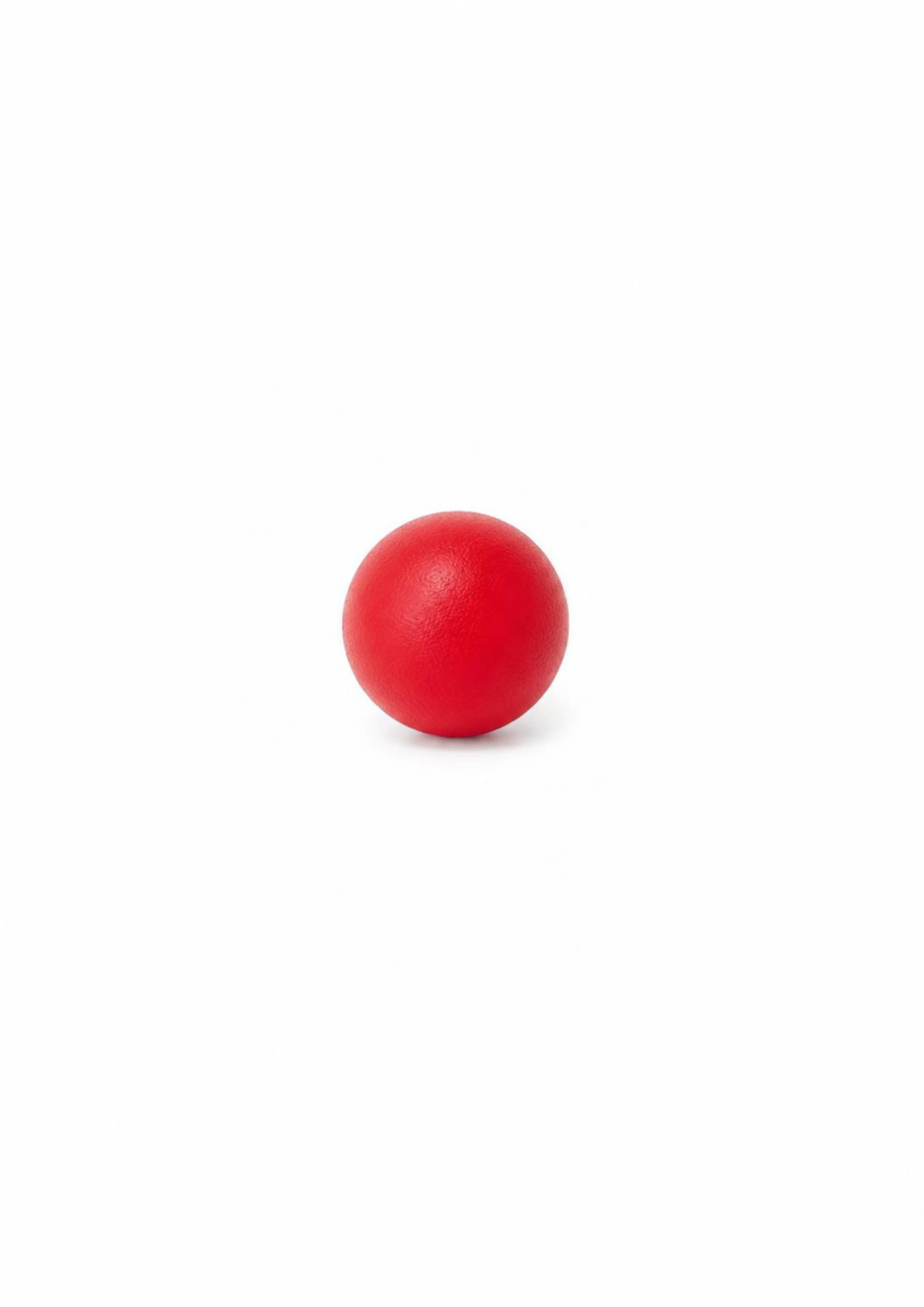
Small is a size word for the tiny end of things — the crumb, the pea, the button. The card shows one small object, and the whisper-voice gives the word a body of its own.
What does it mean?
Small is learned against big, never alone: show the two cards back to back and the comparison does the work. Small things also carry a built-in rule toddlers love — tiny things get tiny voices.
What does the child need to know?
Expect a curled-up curl, a whisper, or a pointed finger at the tiniest thing in sight — all are the word arriving. The hunt matters more than the naming, and tiny treasures get inspected closely.
Why this matters
Small things are a toddler’s favourite currency: buttons, pebbles, crumbs of biscuit. A size word attached to beloved tiny objects gets used with passion.
What it teaches
Size comparison on the second pole, whisper-voice control, and visual searching for tiny targets — fine attention dressed as treasure hunting.
Words to learn
smalllittletinywhispercurlfingers
Say this to your child
“"Small! So tiny — whisper it: sssmall. Can you curl up small like a mouse? Look — a big block, and a small block. Where is the small one? Yes… whisper it with me: small."”
Step by step
- Show the big card first — one big arms-out — then the small card, and shrink everything: curl your body small, squeeze your arms in, whisper smaaall.
- Invite the copy: can you curl up small? A toddler curling into a ball is the concept taking over their whole body.
- Lay out two objects again — the big one, the small one — and let the whisper land on the right one: this one is… smaaall.
- Send the hunt: find something small in this room! Follow the pointing finger and whisper the word over every tiny treasure found.
- Keep the pair alive all week: big bite, small bite; big step, small step. The contrast is the lesson; repeat it wherever two sizes meet.
Look closer at the picture
The card shows a small object demonstrating the concept small for toddlers — one tiny thing, sitting in lots of empty space. Ask your toddler to curl up small next to it, then to point very gently, with one finger.
Ask your child
"Can you curl up small?" "Which one is small?" "Can you whisper the word?" "Where is something tiny in this room?"
What your child can say or do
A body curl, a whisper that is mostly air, or smaaall delivered like a secret — all are answers. Expect small and big to swap houses for a while; the confusion is the comparison being built, and it settles on its own schedule.
Out in the real world
The house is full of small: the button, the pea, the crumb, the sock. Small hunts work at the table, in the garden, on the walk — anywhere tiny things gather.
Try it together
Tiny treasure hunt: scatter a few safe, too-big-to-swallow objects and one genuinely small (but choke-safe) item, and hunt the smallest together — whispering all the way. The whisper keeps the game slow and the eyes sharp.
Understanding check
Show both cards and ask for the small one. A correct point, a curl, or a whisper all pass. Then hold up two real objects — a small win on kitchen goods means the idea has left the cards and settled in.
Parent tips
Whisper the word — the voice-drop is what makes small memorable, and it buys you calm in the middle of any loud day. Keep showing the pair: small means nothing without big standing next to it.
Staying safe
Small is the one concept with a built-in hazard: anything genuinely tiny goes straight in the mouth at this age. The hunt uses choke-safe objects only, and every real small thing stays supervised or out of reach.
This lesson pairs with the Small flashcard in the library — print it, show it, keep it on the fridge. Back to First Concepts (Toddler 2).