
Cricket — a step-by-step lesson for grown-up and child
This lesson teaches with ears instead of eyes: your toddler hears the cricket’s chirp on the card’s behalf, goes quiet on the doorstep on a warm evening, and plays the set’s best detective game — finding the singer without ever needing to.
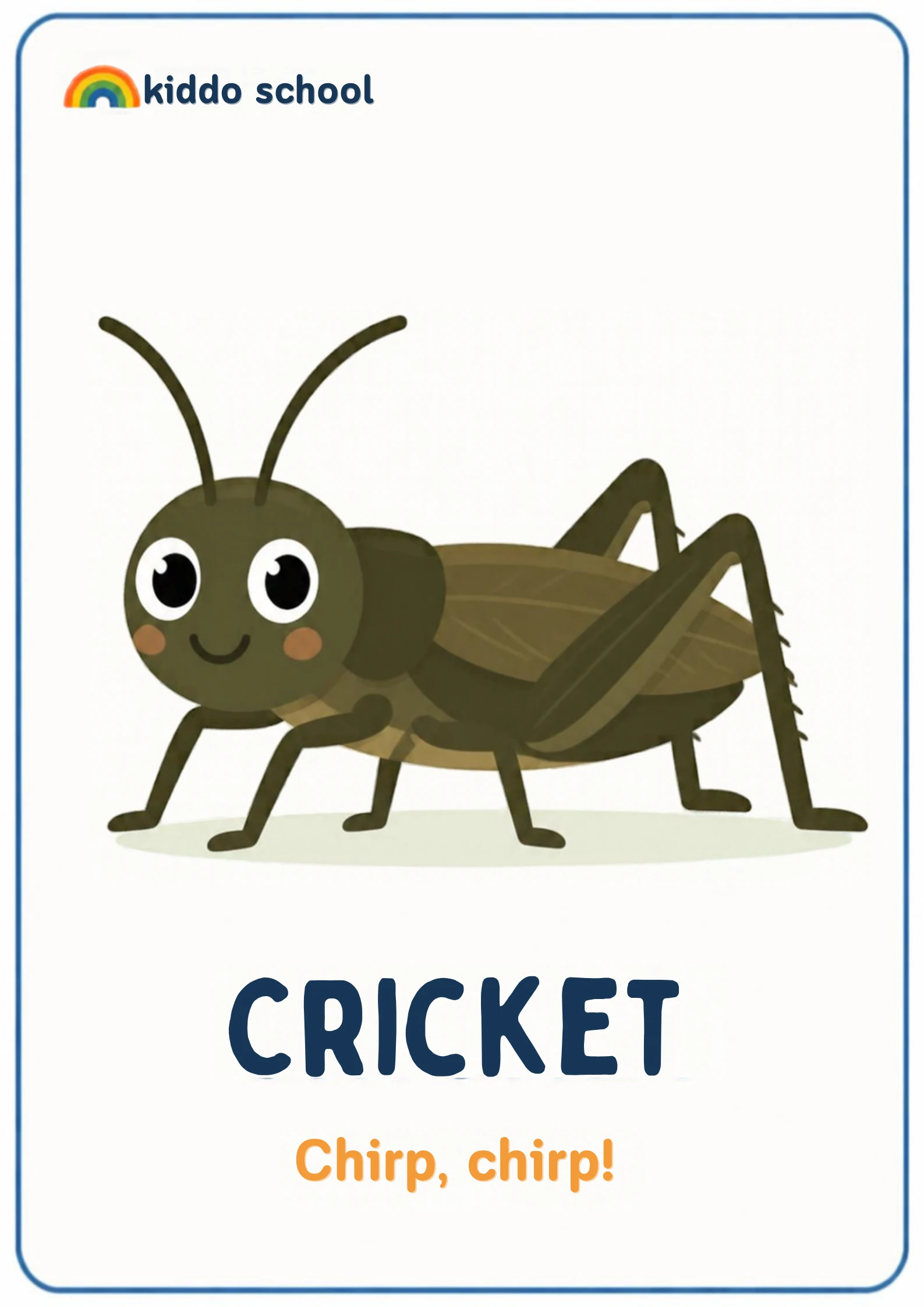
What is this?
A cricket is a small hopping insect that sings on summer evenings by rubbing its wings together — chirp, chirp, chirp. The song says the day is cooling down, and the singer hides beautifully in the grass.
What does it mean?
The cricket is the set’s sound-first card: the word arrives through the ears, and the eyes may never get a turn. That is a genuine milestone — listening on purpose, with a whole body gone still to help.
What does the child need to know?
Crickets chirp on warm evenings and hide in the grass, and finding them is a bonus, never the goal. The game is the listening: ears open, bodies quiet, song enjoyed — the musician stays hidden and unbothered.
Why this matters
Deliberate listening is the foundation under every later skill — words, music, reading. The cricket makes it a treasure hunt for sound, and the doorstep version doubles as the gentlest last-game-before-bed in the set.
What it teaches
Focused listening (ears leading, eyes helping), sound imitation, stillness as a listening tool, and evening vocabulary — cool, quiet, song — that softens the whole end of day.
Words to learn
cricketchirplistenquieteveningsong
Say this to your child
“"Listen... chirp, chirp, chirp! A cricket is singing somewhere in the grass. Can you hear it? Let’s be very quiet and listen with our ears. Can you make the cricket sound too? The cricket sings all evening — and we listen like little detectives."”
Step by step
- Show the card and say cricket — then make the sound together: chirp, chirp, chirp, as fast or slow as your fingers can go.
- Play the singer game: one of you closes their eyes while the other chirps from somewhere in the room — can the listener point to the song?
- Make a cricket of your own: run a fingertip slowly along a comb, or rub two sticks gently — there, that is the cricket’s own instrument.
- On a warm evening, sit together on the doorstep and go very quiet: ears up! Is the cricket singing tonight?
- End with the rule of the game: we listen, we whisper, and we let the singer stay hidden — crickets are heard-and-loved friends.
Look closer at the picture
Say cricket together and give the card a chirp, chirp. This cricket looks like it is singing — ask your toddler to make the chirping sound back, then go completely still and listen for a pretend answer.
Ask your child
"What does the cricket say?" "Can you hear the song?" "Where is the cricket hiding?" "Do we dig for the singer, or listen?" — answered with chirps, a cupped ear and a whispered hiding-in-the-grass.
What your child can say or do
"Chirp chirp!" hummed at bathtime and bedtime, sudden hushes on the doorstep with one finger raised — the family’s new signal for listening — and crickets credited with every evening sound from now on.
Out in the real world
Warm evenings bring the song to gardens, parks and any grassy verge — heard from prams, windows and doorsteps. Each chirp is a rerun: stop, hush, listen together, and walk on without needing to see the star of the show.
Try it together
Doorstep listening minute: one quiet minute on the step or at the open window, collecting every sound you hear — bird, car, cricket? — whispered back and forth. The cricket version of a bedtime wind-down.
Understanding check
On the next warm evening, watch the body when the song starts: if your toddler freezes into their listening pose without being asked, the ears learned the lesson — the quietest victory in the set.
Parent tips
Model the hush yourself; the listening pose is contagious. If the comb is fiddly, two fingers rubbed on a table edge work fine — the point is making the sound, not mastering the tool.
Staying safe
Doorstep and window listening stays with a grown-up and well back from steps and roads. No grass-parting or stone-turning to find the singer — hidden means hidden, and the song comes to you anyway.
This lesson pairs with the Cricket flashcard in the library — print it, show it, keep it on the fridge. Back to Garden Bugs & Friends (Toddler 8).