
Same Balls — a step-by-step lesson for grown-up and child
This lesson opens the thinking deck with its easiest question: two balls, exactly alike, waiting to be spotted. Your toddler points, you say the word, and same begins its long career.
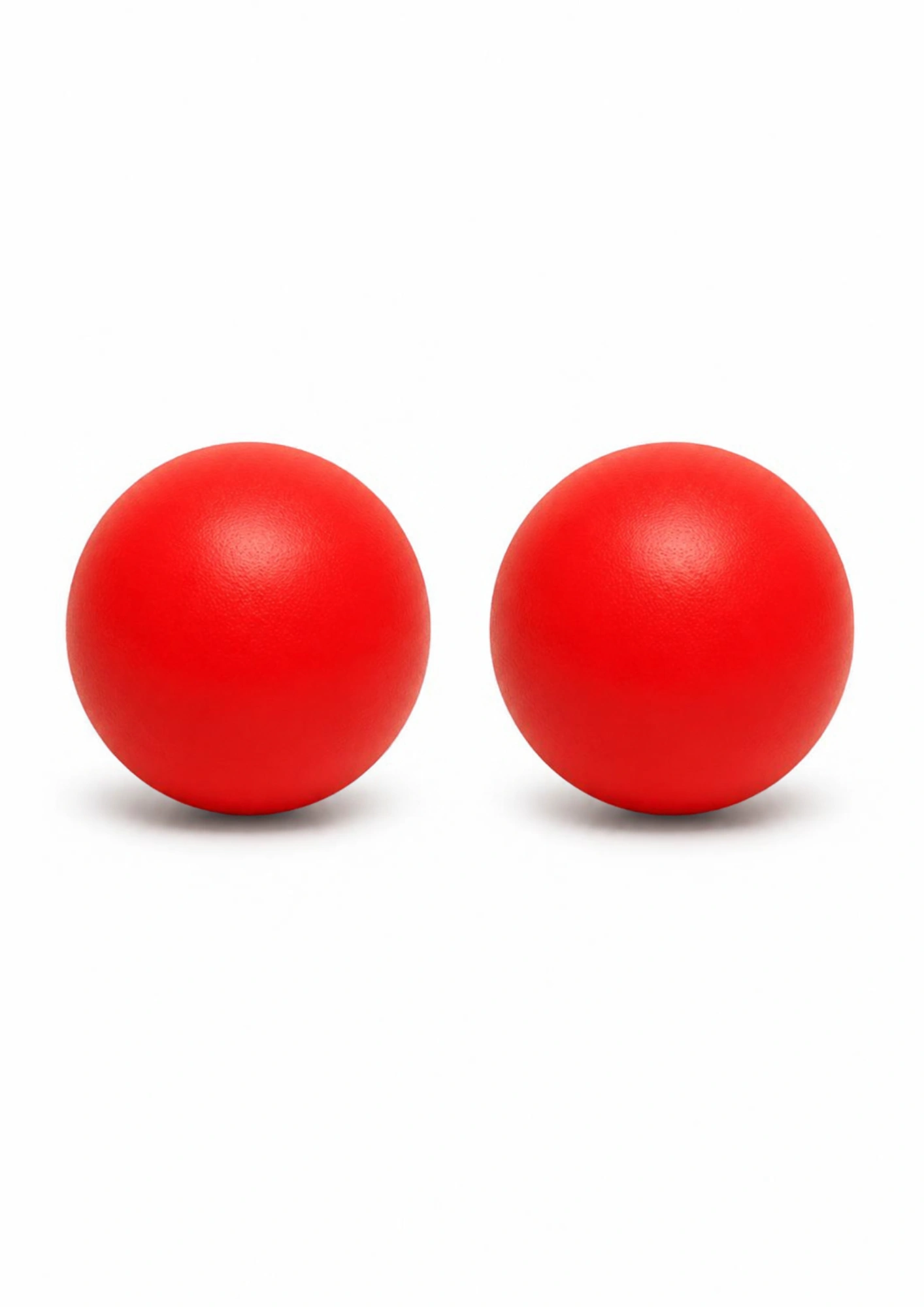
What is this?
Matching means noticing that two things are alike in the way that matters — here, two balls that look like twins. Nothing to add, nothing to fix; the whole job is seeing it.
What does it mean?
At two, thinking is done with eyes and hands before it is done with words. Same is a comparison, and comparisons are the quiet start of maths: your toddler is sorting the world into this one and that one.
What does the child need to know?
Any answer counts: a point at each ball, a tap on both, a shouted same, or a happy grab. If one ball gets all the attention today, say same for both and move on — the word lands through repetition, not through tests.
Why this matters
Twins live all over the house: two socks, two spoons, two shoes. A word with that many hiding places gets practised all day without a single extra minute of lesson time.
What it teaches
Visual discrimination (spotting alike and not alike), early comparison language, and the first stirrings of sorting — the root every matching and maths skill grows from.
Words to learn
samematchtwoballspairtwin
Say this to your child
“"Two balls! Look — this one, and this one. They match. Same! Can you touch both balls? Same… and same. Let’s find two more that match somewhere in this room."”
Step by step
- Put the card flat between you, run one finger from ball to ball, and say the story simply: two balls — same.
- Touch each ball in turn as you say ball, so the count and the match happen under your fingertip where your toddler can see.
- Find one real pair in the room — two spoons, two blocks — and lay them beside the card: same again! Same everywhere.
- Let your toddler lead the second round: whatever they point at, name it and add same if it matches, even if the match is only a rough one.
- Leave the card out where the day can find it, and say same warmly whenever a natural pair turns up — socks at dressing time are tomorrow’s lesson.
Look closer at the picture
The card shows two matching red balls for a same-and-match activity — one red pair, nothing else on the picture to distract the eye. Ask your toddler to touch each ball, then to touch both at once with one hand.
Ask your child
"Can you point to both balls?" "Are they the same?" "Can you find two spoons that match?" "Where is another pair hiding?"
What your child can say or do
A same shouted like a discovery, a solemn point at each ball, or both balls grabbed in one fist — every version is the thinking showing itself. Some toddlers answer by fetching a second object to match the first; that is the idea getting up and walking.
Out in the real world
Dressing time is a matching rally: two socks, two shoes, two mittens. Hand over one and let the hunt for its twin happen on your toddler’s terms — every found pair is the word same doing its job.
Try it together
Pair hunt: scatter four objects — two that match, two that do not — and let your toddler hand you the matching pair. Keep the objects big, the differences obvious, and the applause generous.
Understanding check
Hold the card up tomorrow and ask which two match. An instant point means the idea stuck; a wander first is fine too, because the wandering is the comparing. Two taps on both balls is a pass with honours.
Parent tips
Say same about yourself too — same cup, same chair, same song again — so the word stretches past this one card. If your toddler matches things that are only roughly alike, accept it warmly: categories start loose and tighten on their own.
Staying safe
Keep every matching object bigger than a toilet-roll tube — at two, anything small enough to swallow ends up inspected by mouth. The game lives on the floor, away from stairs and hot drinks.
This lesson pairs with the Same Balls flashcard in the library — print it, show it, keep it on the fridge. Back to Matching & Sorting (Toddler 4).