
Tulip — a step-by-step lesson for grown-up and child
This lesson hands your toddler a shape before a flower: two hands cupped into a tulip, a butterfly coming to drink, and a street full of spring colours to sort afterwards.
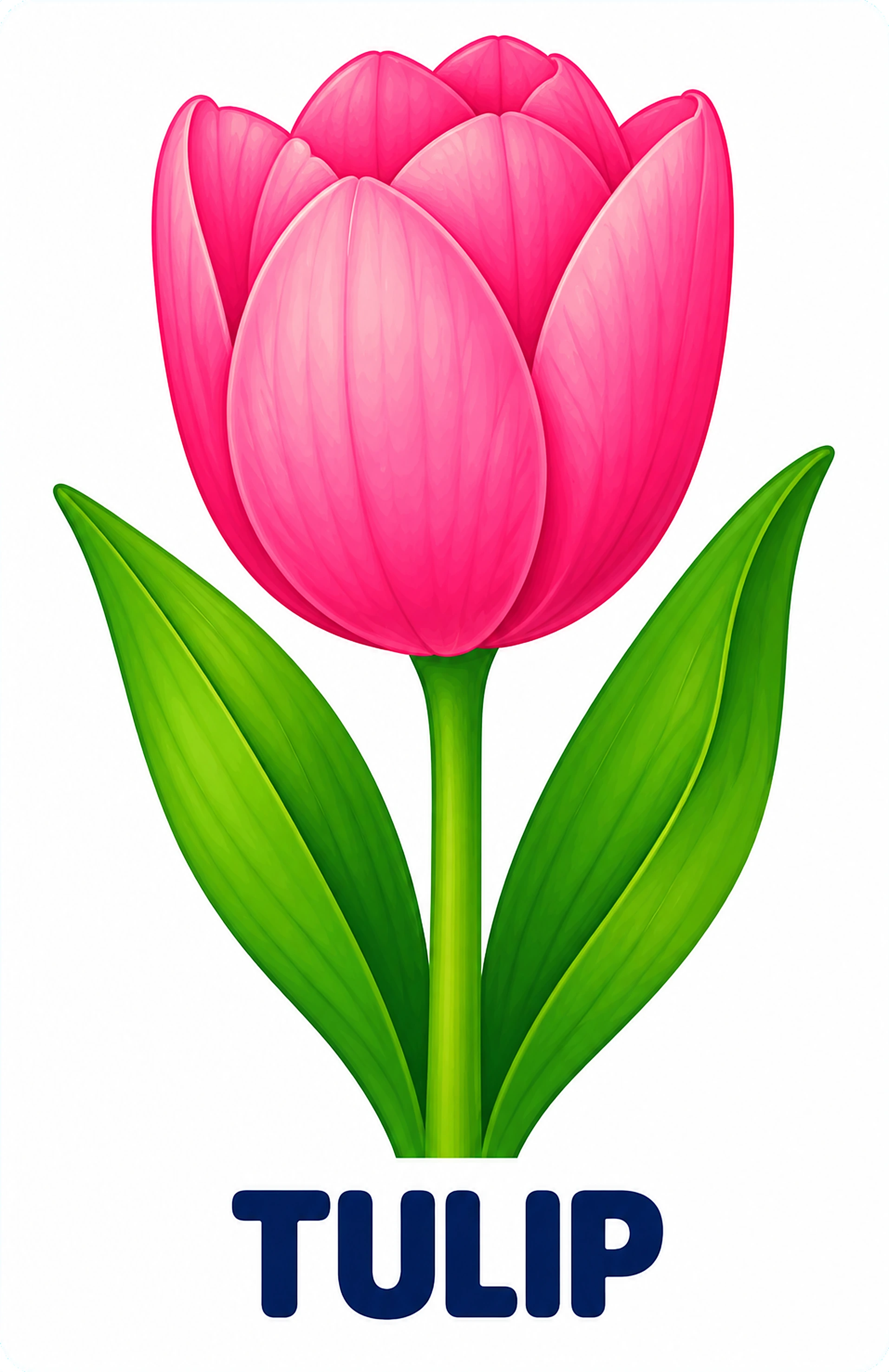
What is this?
A tulip is a spring flower whose petals close into a cup shape on a tall green stem. Tulips come in many colours and open in the morning light.
What does it mean?
The tulip is the set’s shape-flower: cup is a shape your toddler’s hands already know. Naming a flower by what it looks like — a cup on a stem — teaches the best trick in nature-watching: look for the shape.
What does the child need to know?
Tulips look like little cups on stems and bloom in spring, in lots of colours. We cup our hands to be one, we count the colours outside, and tulips in a vase close up at night — a tiny surprise worth checking.
Why this matters
Shape-first naming is how young children learn to see: cup, star, bell. The tulip also carries spring itself — after a winter of grey, a flower your toddler can spot, name and colour-count is a genuine season marker.
What it teaches
Hand shaping (cupping both palms), colour collecting on walks, the spring idea (flowers come back), sipping imitation for pretend play, and early comparison — which tulip is redder, which stem taller.
Words to learn
tulipcuppetalsstemspringcolours
Say this to your child
“"A tulip! Look — it is shaped like a little cup on a stem. Can you make a tulip with your hands? Cup them up... now I am a butterfly, sip sip! Tulips come in spring, in every colour — let us count the colours we see outside today."”
Step by step
- Show the card, say tulip, and cup your two hands together into a flower shape — hold it out for your toddler to smell.
- Be the butterfly: with your tulip-hands waiting, dip a pointing finger in and out, sipping — then swap so your toddler is the tulip and you are the butterfly.
- Ask where the petals are on the card and where the stem is — one flower, two parts, both easy to point at.
- Say the spring story: tulips wake up when the cold months end, which is why parks turn bright all at once.
- On your next walk, collect tulip colours out loud — every bed is a sorting tray of reds, pinks and yellows to name together.
Look closer at the picture
Cup your hands into a tulip shape and say the word into the cup. Ask your toddler to find the petals on the card and the long stem below them — the flower and its stem, two finds in one.
Ask your child
"What shape is the tulip?" "Can you make a cup with your hands?" "Where is the stem?" "How many colours of tulip can we find today?" — answered with cupped hands, a pointing finger and a colour shouted from the buggy.
What your child can say or do
"Tulip cup!" Expect hand-cups offered for sipping at snack time, tulips named from the pram all spring, and colours sorted at every flowerbed. Your toddler may hand you an invisible tulip — smell it and sigh.
Out in the real world
Tulips fill parks, roundabouts and window boxes in spring, and buckets of them stand outside flower shops. Each cup of colour is a rerun — name the shape, name the colour, sip like a butterfly and move on.
Try it together
Tulip colour hunt: pick one colour before you leave the house, then find that tulip outside — or in a book, or out the window. One colour, one walk, one triumphant point and shout.
Understanding check
Say "tulip" cold tomorrow morning: if two hands cup together before any words arrive, the shape and the flower are one — the lesson is in your toddler’s hands now.
Parent tips
Keep the cup-hands handy — they double as a whisper-cup for quiet talk. If a vase of tulips lives at home, check them at night together: closed at dark, open by morning is a daily magic worth a gasp.
Staying safe
Shop tulips are for looking and sniffing, not chewing — stems and petals stay out of mouths, and vase water is strictly not a drink. On tulip beds, feet stay on the path; flowers look but are not picked.
This lesson pairs with the Tulip flashcard in the library — print it, show it, keep it on the fridge. Back to Garden Flowers (School Garden).