
Duck — a step-by-step lesson for grown-up and child
This lesson takes the most-loved pond animal and gives it a body-and-voice routine: waddle, bill hands, quack — then the bank rule that keeps real ducks healthy and your toddler dry.
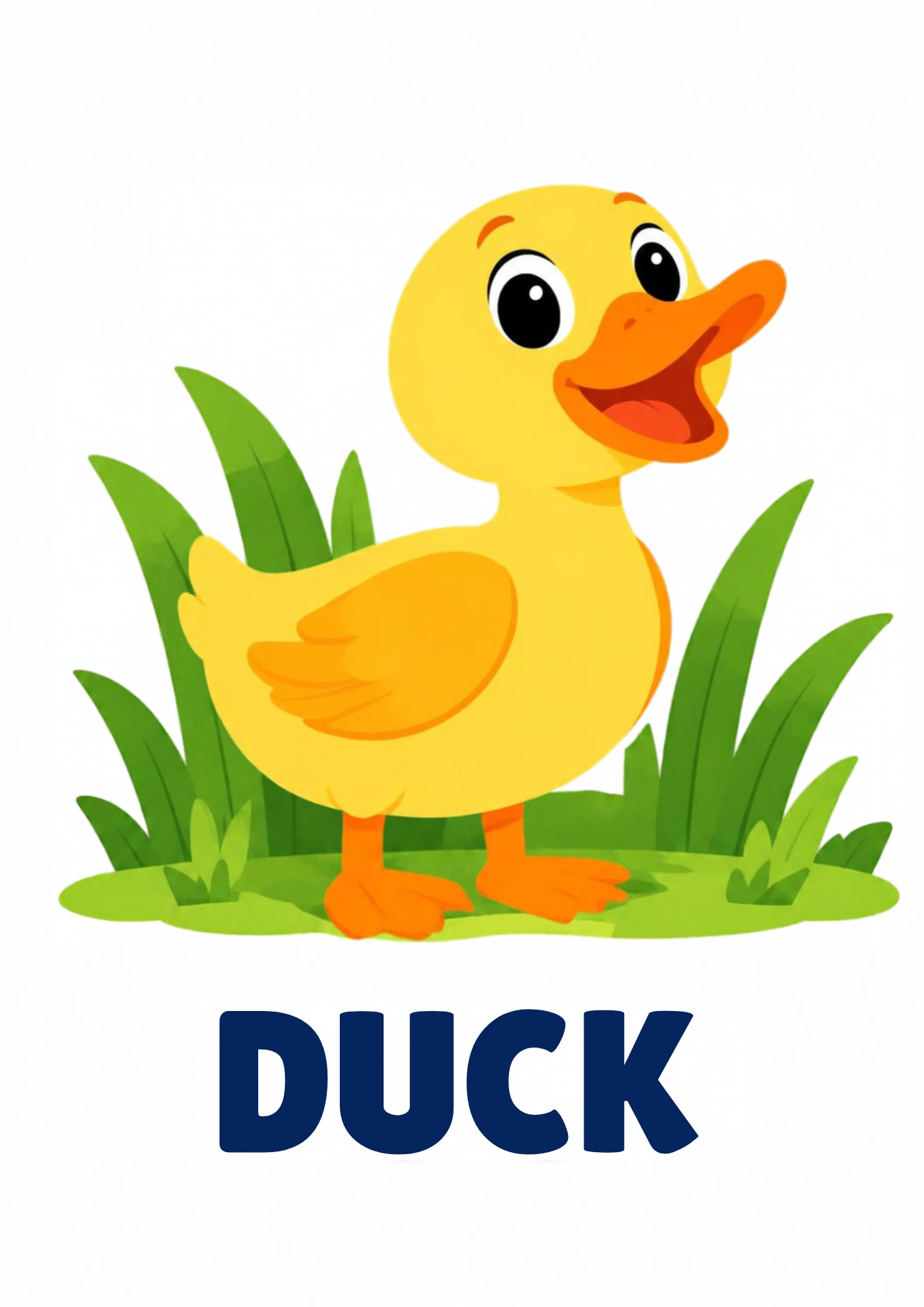
What is this?
A duck is a water bird with a flat bill and webbed feet that paddles on ponds and rivers. It dabbles tail-up in the water looking for plants and little water bugs.
What does it mean?
Ducks are usually the wildest animal a two-year-old gets close to, which makes them the perfect practice ground for every watching rule — close enough to be thrilling, far enough to be safe.
What does the child need to know?
Ducks say quack and paddle with their feet; they stay on the water and we stay on the land. Bread is off the menu — it makes ducks ill — so we bring our eyes and our quacks instead.
Why this matters
The pond edge is a natural boundary your toddler can see and feel: water here, bank there, ducks between. A rule with a visible line is the easiest kind for a two-year-old to keep — and quacking from the bank keeps the fun on the right side of it.
What it teaches
Gross motor comedy (waddling is a genuine balance challenge), sound imitation, the water-and-land idea, caring-from-a-distance behaviour, and first lessons in what different animal homes look like.
Words to learn
duckquackpondwaddlewaterbill
Say this to your child
“"Quack, quack! A duck! Ducks paddle on the water with their flat feet and dabble for their dinner. Can you waddle across the room? At the pond we stand on the bank with me and call quack — the ducks stay in their water, we stay on ours."”
Step by step
- Show the card, say duck, and put your hands together like a flat bill — opening and closing it as you say quack.
- Waddle across the room together, heels together, elbows out — the sillier the waddle, the faster the word sticks.
- Float an empty story: the duck dabbles tail-up for supper, then paddles off — act the dabbling with a bottom wiggle for maximum giggles.
- At a real pond, stand a step back from the edge, hold hands, and quack a hello to the ducks — that is the correct amount of close.
- Explain the bread rule on the walk home: ducks eat their own pond food, and sharing our bread makes their tummies poorly.
Look closer at the picture
Say duck, make bill-hands with your fingers, and quack. Ask your toddler to find the bill on the card, then waddle one slow circuit of the room together before anyone sits back down.
Ask your child
"What does the duck say?" "Can you waddle to the door and back?" "Where do ducks live — the water or the grass?" "Do we feed the ducks bread, or just say hello?" — answered with waddling, quacking and a serious little no.
What your child can say or do
"Quack quack!" at every pond, puddle and bath. Expect bill-hands at dinner, waddle races down the hall, and ducks greeted by name from the buggy — with the bread rule quoted back at any grown-up who pulls out a sandwich.
Out in the real world
Ducks live on almost every pond, canal and river in town — the most reliable wild visit of all. Each one reruns the routine: waddle to the bank, hand held, quack, watch them dabble, wave goodbye.
Try it together
Pond crossing: lay a blue blanket as the pond, and waddle round its edge together — on the grass, never in the water — quacking at any ducks, socks or siblings found floating there.
Understanding check
Ask at the next pond visit who feeds the ducks: if the answer is "nobody — they eat pond food," the rule took root. A waddle on request seals the lesson.
Parent tips
Bring a small bag of defrosted peas or corn if you must feed — but the quack-from-the-bank game is honestly enough. Keep the waddle on grass and rugs; pavements punish falling toddlers.
Staying safe
Pond edges are grown-up territory: one hand stays held the whole visit, prams parked behind you. Never let a toddler dangle feet or hands in duck water, and wash hands after any pond-side visit before snacks.
This lesson pairs with the Duck flashcard in the library — print it, show it, keep it on the fridge. Back to Garden Friends (School Garden).