
Worm — a step-by-step lesson for grown-up and child
This lesson makes the least glamorous card the most important one: your toddler learns the worm’s job, wiggles like one on the rug, and practises the gentlest feet in the garden.
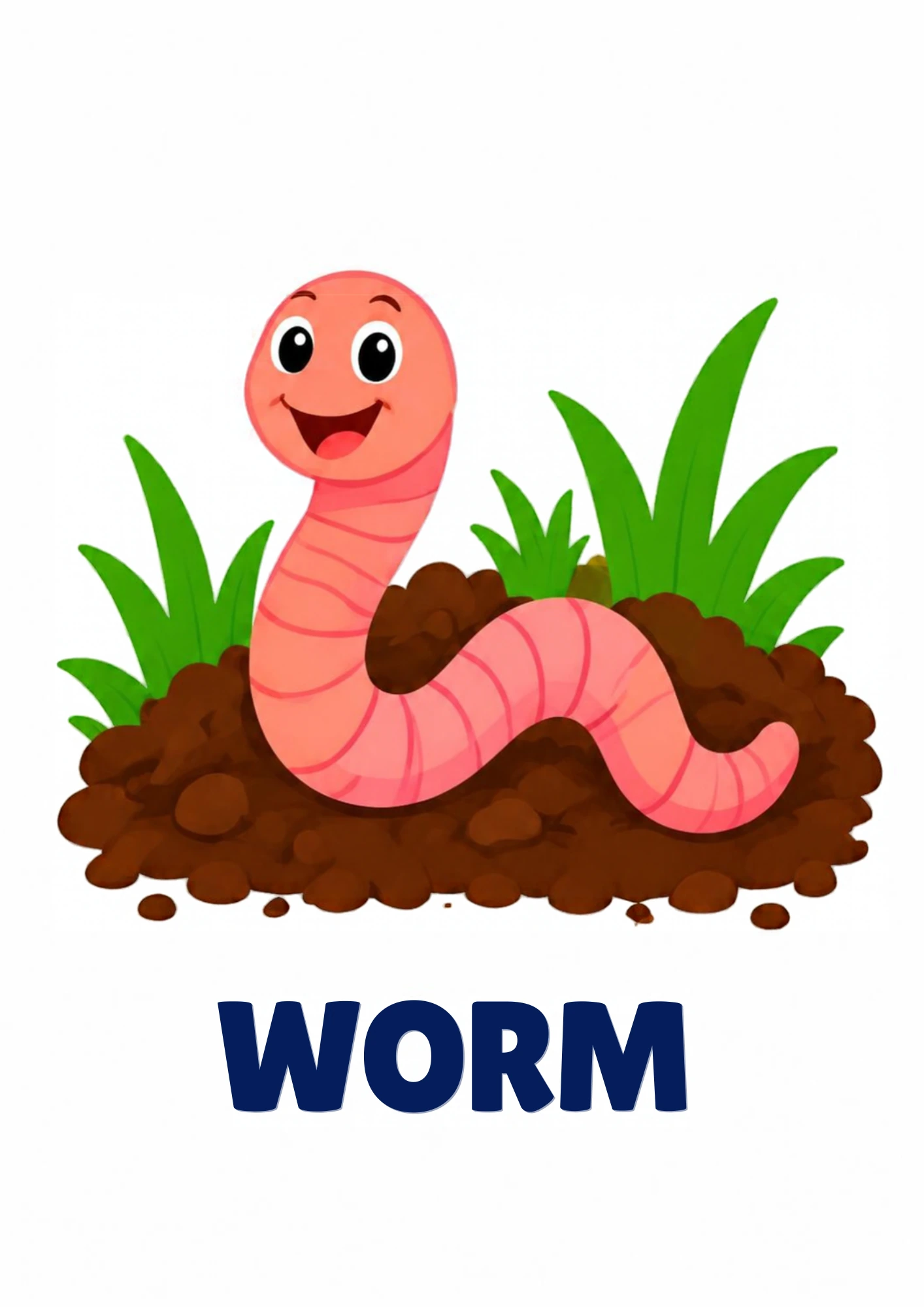
What is this?
A worm is a long, thin, soft creature that lives in the soil. It eats old leaves and turns them into food for plants — the underground gardener, working all day in the dark.
What does it mean?
Worms teach a two-year-old that important things can be quiet and hidden. No worm, no garden — and that idea, tiny as it seems, is the first brick of every ecosystem lesson your child will ever have.
What does the child need to know?
Worms wiggle and live underground; rain brings them up to the path. We look with our eyes and let them be — dry hands hurt their soft skin, so they stay where the wet ground keeps them.
Why this matters
Watching a worm stretch and pull is mesmerising for a toddler and quietly teaches respect for small life. It is also the first time many children grasp that some animals have jobs — and the worm’s job feeds everything else.
What it teaches
Observation of tiny movements, new sensory words (wiggly, squishy, damp), kindness practise at its smallest and safest, and early cause-and-effect: leaves get eaten, plants get fed, garden grows.
Words to learn
wormwigglesoilrainsoftgarden
Say this to your child
“"A worm! Wiggle, wiggle! Worms live down in the dark soil and munch old leaves — they help the flowers grow. After rain they come up to say hello. We look with our eyes, our hands stay down, and the worm keeps digging."”
Step by step
- Show the card, say worm, and wiggle one arm like a wavy noodle — the word should come wiggling out of your mouth too.
- Lie on the rug and wiggle your whole bodies along the floor together, slow and stretchy, from one cushion to another.
- Tell the worm’s job in two sentences: it eats old leaves underground and turns them into plant food — the garden’s own tiny helper.
- After the next shower, go worm-spotting on the path — crouch low, hands clasped behind backs, and watch one stretch and pull.
- Close with the kindness: worms are soft and their skin likes the wet earth, so we look and walk on, leaving it to its work.
Look closer at the picture
Say worm and wiggle an arm like a wavy noodle. Ask what the worm is doing on the card — wiggling somewhere, always — and let your toddler answer with a whole-body wiggle along the rug.
Ask your child
"Where does the worm live?" "Can you wiggle like a worm?" "What came before our walk — rain or sun?" "Do we touch the wormy, or watch?" — answered with a wiggle and a practised hands-behind-back.
What your child can say or do
"Wiggle wiggle!" "Wormy go home!" Expect floor-wiggling races, worms announced at full volume after every shower, and the proudest hands-behind-back crouch you have ever seen at a puddle’s edge.
Out in the real world
Worms arrive after every rain, on paths, patios and driveways. Each sighting is a rerun of the whole lesson in ten seconds: name it, crouch, watch, walk on — kindness complete.
Try it together
Scarf worm: take a scarf or skipping rope and wiggle it along the floor like a worm on the move — then let your toddler hold one end while you hold the other, wiggling together in time.
Understanding check
Watch the next rainy walk: if your toddler crouches, points and keeps both hands firmly behind their back, the watching rule and the worm both landed — no further lesson required.
Parent tips
Keep a mental note of damp worm corners near your home so a sighting is always a two-minute walk away. If the wiggle-game gets too silly for indoors, move it to the grass — wiggling was always an outdoor sport.
Staying safe
Worms are the safest animal on the card precisely because touching is off the table — their skin breathes, and dry little hands harm them. After worm-watching and any garden play, hands get washed before snacks.
This lesson pairs with the Worm flashcard in the library — print it, show it, keep it on the fridge. Back to Garden Friends (School Garden).