
Bicycle — a step-by-step lesson for grown-up and child
This lesson matches the card to the machine in your own hallway: the bell, the pedals, the helmet — the bicycle is the vehicle toddlers can actually ride.
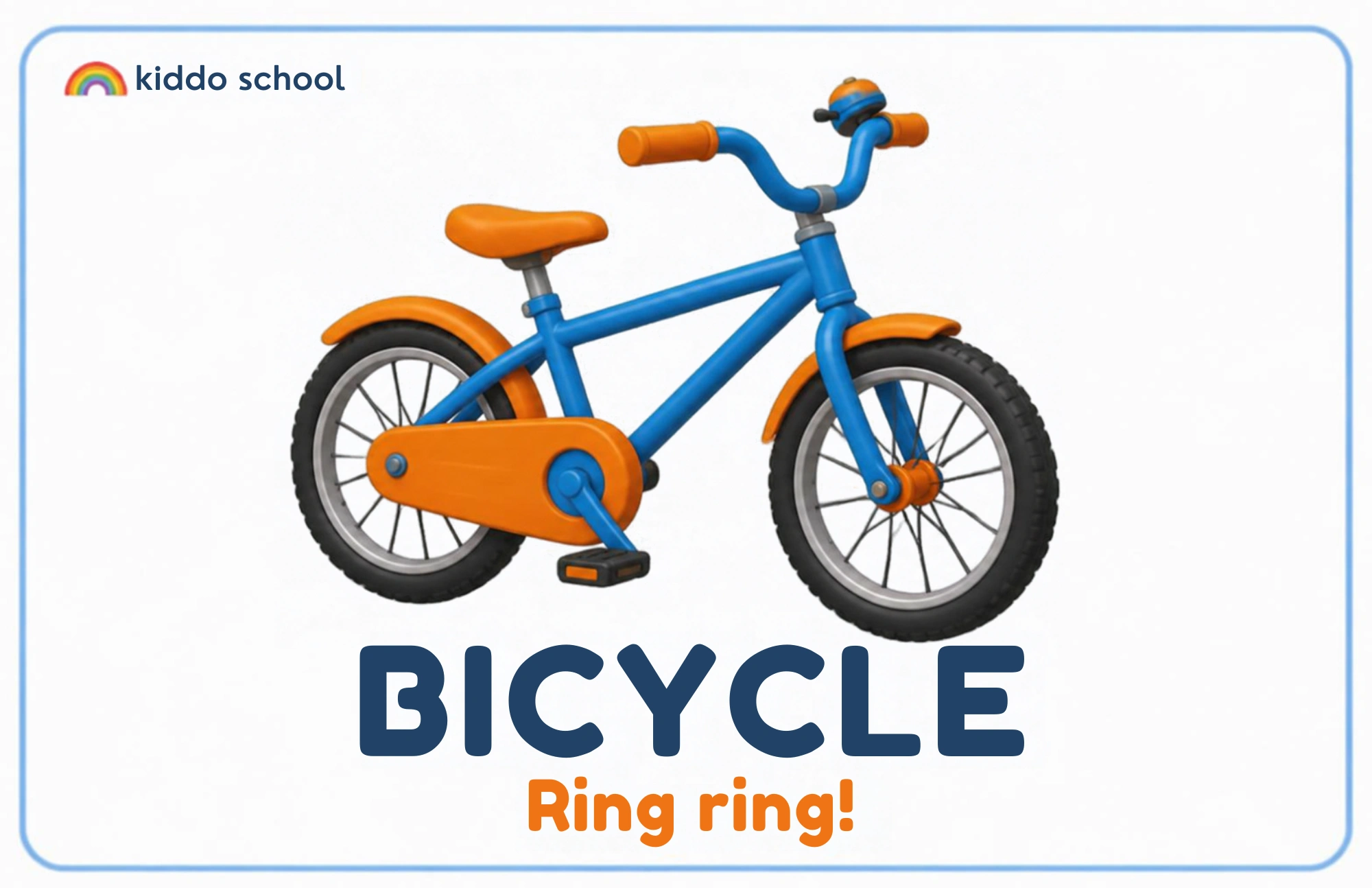
What is this?
A bicycle is a two-wheeled machine you pedal yourself, with a bell that goes ring ring — no engine, just legs.
What does it mean?
Bicycle is a long word and bike is the honest first version — both count fully. The hands-in-the-air pedalling turns the word into a whole-arm action.
What does the child need to know?
No engine makes the bicycle the quiet vehicle — legs and a bell. If there is a real bike or trike at home, this card is its instruction manual.
Why this matters
The bicycle is the set’s do-it-yourself vehicle: your toddler can ring a real bell and turn real pedals, which makes the learning physical instead of pictured.
What it teaches
Action-sound pairing (pedal and ring), ownership of a vehicle they can actually operate, and the helmet rule attached to their own real rides.
Words to learn
bicyclebikeringpedalsbellhelmet
Say this to your child
“"A bicycle! Ring ring! Can you ring the bell? Now pedal with your hands — round and round. Your bike has two wheels, just like this one. Helmet on — ready to ride!"”
Step by step
- Show the card and say bicycle — then bike, and let both words live happily together.
- Pedal the air with your hands while going round and round, then ring ring with an invisible bell. Your toddler will take over the bell.
- Hunt bicycles in books, then bring the card to the real one in the hall and match card to machine, wheel to wheel.
- When bike arrives long before bicycle, celebrate bike — the short word is the door, the long one walks in later.
- Attach the card to real rides all week: helmet on, bell rung, card waved goodbye to at the gate.
Look closer at the picture
On this card the label is Bicycle and the bell words Ring ring sit under it. Find the pedals, find the bell, then count the wheels one more time.
Ask your child
"Where is the bicycle?" "What does the bell say?" "Can you pedal the air?" "What do we put on our head before we ride?"
What your child can say or do
"Ring ring!" with a thumb-flick bell, or bike! announced at the hall cupboard. Expect the bell sound on everything — spoons, doors, your nose. Bells are contagious.
Out in the real world
The park, the school run and the bike shed are bicycle country. Parked bikes show real pedals, real bells, real helmets — a three-point tour every visit.
Try it together
Bell-and-go circuit: your toddler rings, you push the trike or the ride-on one lap, ring again, another lap. The bell becomes the accelerator — and the giggle lever.
Understanding check
Ask what the bell says and what the rider wears. A ring ring plus helmet passes. The real pass: next ride-out, the bell gets rung before the wheels turn.
Parent tips
Say bike and bicycle both, warmly, whenever the machine appears — no correcting, just both versions on offer. Keep the card near the helmet; storage is curriculum.
Staying safe
Helmet on before wheels turn, every ride, no exceptions — and the rule starts with the grown-up’s bike too, because toddlers copy what they see, not what they hear.
This lesson pairs with the Bicycle flashcard in the library — print it, show it, keep it on the fridge. Back to Vehicles & Sounds (Toddler 6).