
Motorcycle — a step-by-step lesson for grown-up and child
This lesson leans into the corners: the vroom, the tilt, the two wheels — with the helmet sentence welded to the fun from the very first ride.
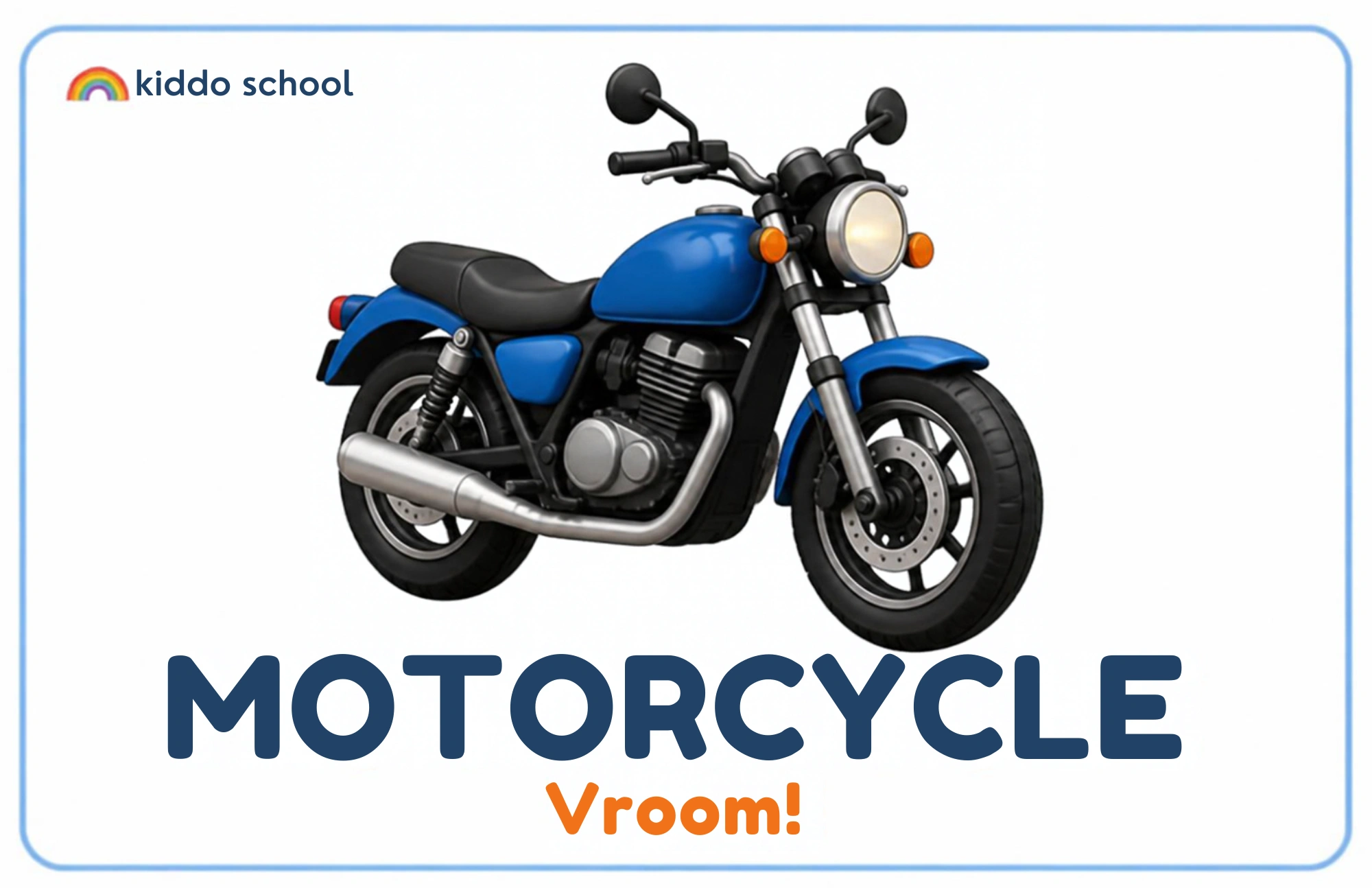
What is this?
A motorcycle is a fast two-wheeled machine with an engine that goes vroom — the loudest vroom in the set, often heard before it is seen.
What does it mean?
Same sound as the car, different body: the motorcycle comparison game (two wheels each, one has an engine) is your toddler’s first gentle vehicle sorting.
What does the child need to know?
The rider wears a helmet — say it in the same breath as the vroom, every time. Rules that arrive riding on excitement stick far better than rules delivered afterwards.
Why this matters
The lean is the hook: tilting your whole body into a corner is a big, satisfying movement that makes the sound impossible to say politely.
What it teaches
Sound imitation with body lean, two-versus-four comparison talk, and rule attachment — pairing one clear safety sentence to one exciting object.
Words to learn
motorcyclevroomfasthelmetleanengine
Say this to your child
“"Motorcycle! Vrooooom! Can you vroom? Lean into the corner — whoooa — and straighten up. Two wheels, fast as anything. And what does the rider wear? A helmet, every ride."”
Step by step
- Show the card and say motorcycle, then vroom — longer and louder than the car’s, with a lean of your whole body into an imaginary corner.
- Ride the rug: vroom down the straight, tilt at the cushion corner, straighten up and vroom on. Hand over the ride.
- Hunt motorcycles in books and from the window — the sound usually arrives first, so ask "what was that?" and go find it.
- When the vroom comes out as a motorboat hum or a yell, accept it and add the lean; the body carries the sound until the mouth catches up.
- Pair the sentence all week: motorcycle — helmet. Card, book, toy or real, the pairing never breaks.
Look closer at the picture
The label reads Motorcycle and the sound word Vroom sits beneath. Count the wheels with one finger — how many does it stand on?
Ask your child
"Where is the motorcycle?" "What does the motorcycle say?" "How many wheels does it have?" "What does the rider wear on their head?"
What your child can say or do
A long "vrrrOOOM" with a body tilt, or pure leaning with arms out. Expect helmet talk to surface at odd moments — at the bike rack, on the trike — the pairing took.
Out in the real world
Motorcycles pass with that unmistakable growl; each one is a listen-and-find game. Parked ones at the shops show off the helmet on the mirror — point at it every time.
Try it together
Ride-and-lean circuit: cushions as corners, a scarf as the finish-line flag, and one vrooming lap after another. The flag-waver job rotates, and so does the exhaustion.
Understanding check
Ask what the motorcycle says and what the rider wears. A vroom plus helmet passes completely. On your toddler’s next trike ride, a requested helmet means the rule rode home.
Parent tips
Never drop the helmet line even when the game is loud — the whole design is that safety words ride on excitement. The comparison with the bicycle card is worth one session; keep it light.
Staying safe
Real motorcycles are fast and quiet-then-loud — hold hands when one approaches, and never let a toddler stand behind a parked one: engines and exhausts stay out of little hands.
This lesson pairs with the Motorcycle flashcard in the library — print it, show it, keep it on the fridge. Back to Vehicles & Sounds (Toddler 6).