
Colander — a step-by-step lesson for grown-up and child
This lesson teaches the colander through its two jobs — washing fruit and draining pasta — with the water-vanishing trick that makes the holes unforgettable.
What is this?
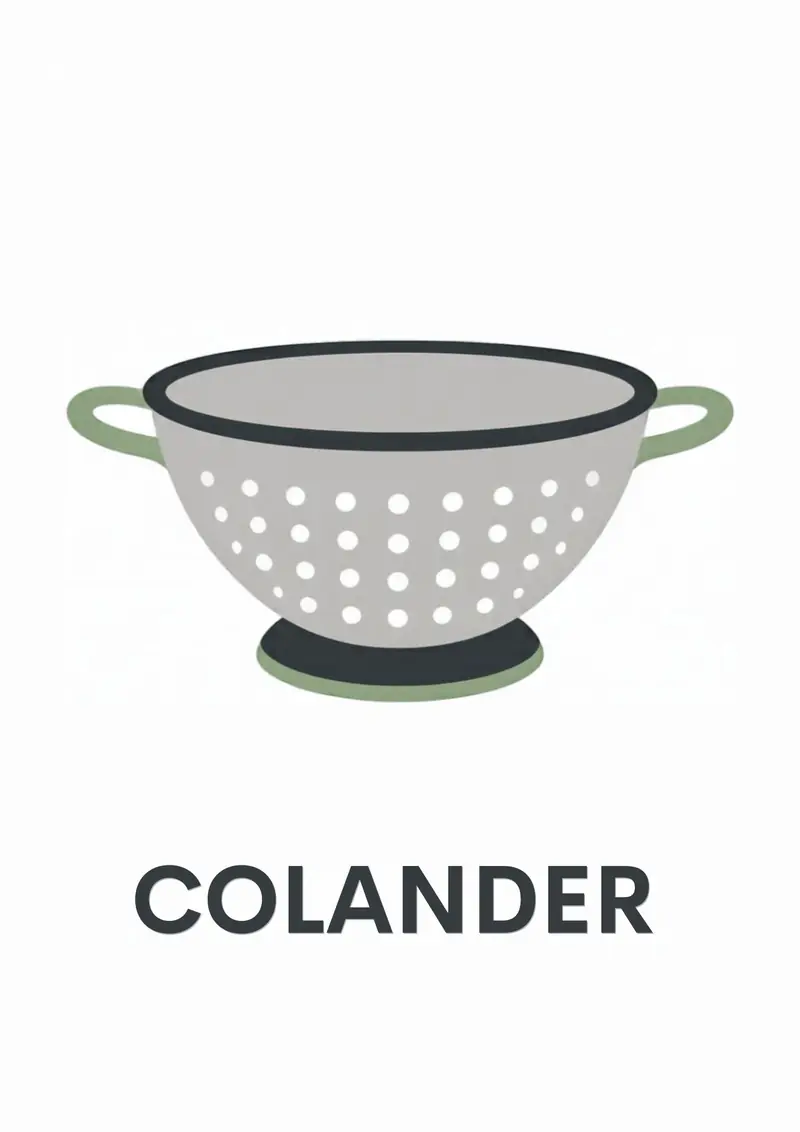
A colander is the bowl full of holes: water runs through, food stays in. It washes berries and drains pasta, and it answers its own mystery — where does the water go?
What does it mean?
The colander teaches filtering: let the liquid pass, keep the solid. The same idea returns in sieves, strainers and tea bags for the rest of life — learned here over grapes.
What does the child need to know?
You need the colander, grapes or berries, and a tap the child can work. The pasta drain is the grand demo — grown-up carries the hot pot, child holds the colander steady.
Why this matters
Fruit washing is a zero-risk job with a delicious result, and pasta draining is the kitchen’s favourite magic trick. Both live in one holey bowl.
What it teaches
Tap control, gentle shaking (draining), cause and effect (holes lose water, keep food), and the fruit-washing hygiene habit.
Words to learn
colanderholeswashdrainwaterthrough
Say this to your child
“"Colander! The holey bowl. Grapes in — water on — the water runs THROUGH the holes and the grapes stay in! And on pasta night: WHOOSH — the pasta water vanishes! Holes that hold food and lose water. Magic — but it is just holes."”
Step by step
- Show the holes: "colander! A bowl FULL of holes — look through it!"
- The wash: "grapes in… water on… woosh!" The child works the tap and watches water thread through.
- The question: "where did the water GO?" (through the holes!) "Where are the grapes?" (still in!)
- The grand demo: pasta night, colander in the sink held steady by the child, hot pot carried by the grown-up — "pour… WHOOSH! The water goes through. The pasta stays!"
- Shake gently to drain: "little shakes… the last drips leave. Dinner is served."
Look closer at the picture
On this card the word "colander" sits over a green colander, its drain holes dotted across every side — the water’s exits, drawn in dots.
Ask your child
"What do the holes do?" (let water through) "Where are the grapes after washing?" (still in the colander) "What does the colander do on pasta night?" (drains!)
What your child can say or do
Your child might inspect every hole, wash everything in the fruit bowl, or hold the colander on pasta night with two hands and total gravity — filtering, owned.
Out in the real world
Colanders hang in kitchens everywhere and pool-side caddies too. Any perforated bowl becomes a demo: "holes — like your colander!"
Try it together
Sieve Science: colander vs plate — pour water on both, which holds? Then sand through the colander at the sandbox: what stays, what falls? Filtering, tested twice.
Understanding check
Ask: "What does a colander do?" (drains water) "What stays in?" (the food) "Where does the water go?" (through the holes!)
This lesson pairs with the Colander flashcard in the library — print it, show it, keep it on the fridge. Back to Kitchen Things.