
Cooking Spoon — a step-by-step lesson for grown-up and child
This lesson teaches the cooking spoon in two promotions: first the dry-bowl practice where stirring is free, then the real batter where the stir becomes the child’s signature.
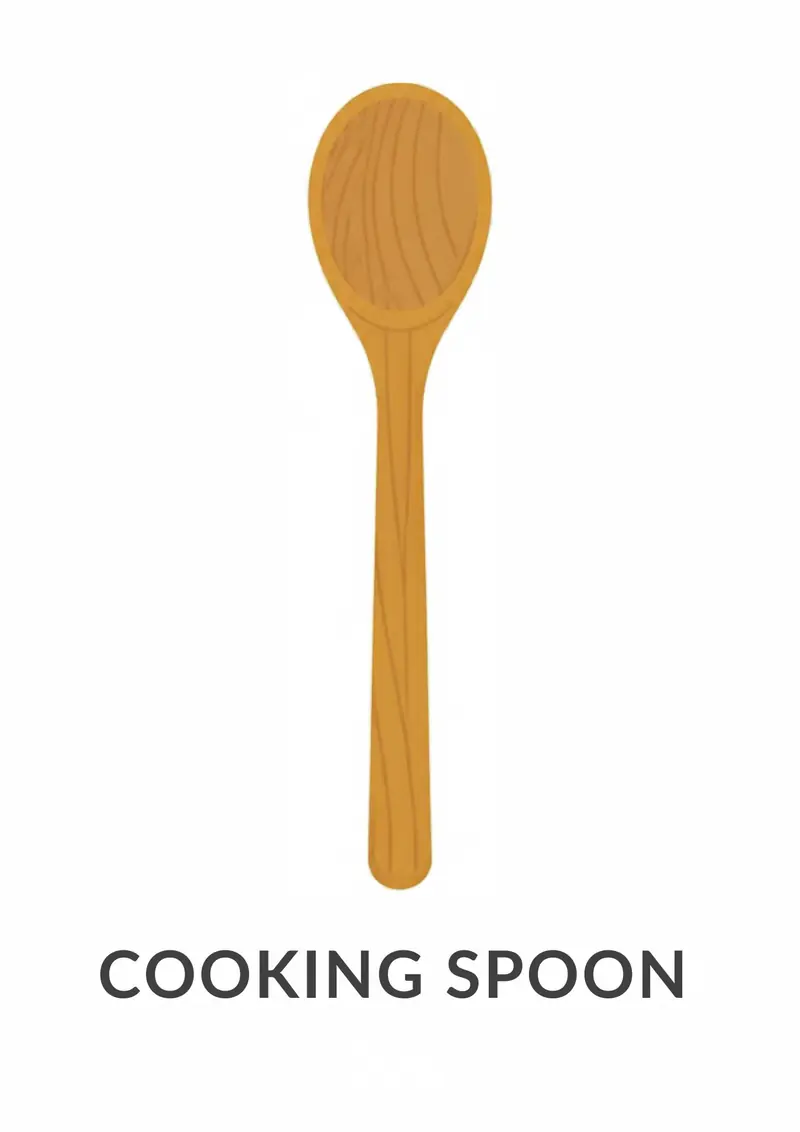
What is this?
A cooking spoon is the big wooden spoon that stirs everything — blunt, strong and the classic first tool of every little helper.
What does it mean?
Stirring is grip, wrist control and patience in one motion. The wooden spoon earns its place because it cannot cut, cannot scratch and forgives every enthusiastic swirl.
What does the child need to know?
You need the spoon, a bowl of dry oats for practice and one promotion to real batter when the circles are steady. The script: "round and round — you are the stirrer!"
Why this matters
A dry bowl lets the wrist learn without waste: no spills, no eggs harmed, endless reps. When the real batter comes, the stir arrives already trained.
What it teaches
Wrist rotation and control, two-hand option for heavy batter, stir-while-holding-the-bowl coordination, and recipe stamina.
Words to learn
cooking spoonstirround and roundbatterwristmix
Say this to your child
“"Cooking spoon! Hold it like a paddle. Round and round — stir the oats! Fast circles… slow circles… now the REAL batter — you stir! Look at that: smooth, no lumps. You are the stirrer today. Spoon-licking rights are yours."”
Step by step
- Meet the spoon: "cooking spoon! The wooden stirrer — hold it like a paddle."
- The practice bowl: dry oats — "stir! Round and round… fast circles… slow circles… figure eights!" Free reps, zero mess.
- The graduation: real batter, bowl held steady by the grown-up or a damp cloth — "your stir now!"
- Narrate the result: "look — no lumps! Your stirring did that."
- Lick-the-spoon rights: the stirrer tastes first. Tradition, earned.
Look closer at the picture
On this card the words "cooking spoon" sit over a wooden spoon — plain, sturdy and slightly worn from a thousand stirs.
Ask your child
"What does the spoon do?" (stirs!) "Show me fast circles… slow circles." "Who licks the spoon?" (the stirrer!)
What your child can say or do
Your child might stir everything (soup, bath, air), demand stirrer status on every bake, or teach a teddy to stir — the tool, beloved.
Out in the real world
Wooden spoons rest in every kitchen drawer on Earth. Each one is a handshake waiting: "that is a cooking spoon — like yours!"
Try it together
Stir-a-Pot Band: pots and spoons as a rhythm section (soft taps only), then the switch to real stirring — music and cooking, one drawer apart.
Understanding check
Ask: "What does the spoon do?" (stirs) "Show me round and round!" "What did your stirring make?" (smooth batter!)
This lesson pairs with the Cooking Spoon flashcard in the library — print it, show it, keep it on the fridge. Back to Kitchen Things.