
Chorus — a step-by-step lesson for grown-up and child
This lesson teaches the chorus — the sound of many voices singing one song together: nobody solo, everybody in, and the result bigger than any single voice.
What is this?
A chorus is a group singing together: a choir on stage, a family in the car, a classroom at assembly. Many voices, one song — voices of different sizes blending into one warm, big sound.
What does it mean?
The chorus is the anti-solo: the point is not WHO is singing but THAT everyone is. Blending means listening as much as singing — the chorus voice is half song, half ear.
What does the child need to know?
Your child needs three chorus ideas: a chorus is MANY voices on ONE song; blending beats starring — listen as much as you sing; and every voice changes the sound — the chorus is bigger BECAUSE nobody is missing.
Why this matters
Group singing is the most inclusive music-making there is — no instrument needed, any age, any size voice — and it teaches listening-while-doing, the deepest ensemble skill.
What it teaches
Group blending, singing-while-listening, shared tempo and pitch (holding the group’s key, not your own), and the belonging that comes from joining in.
Words to learn
choruschoirmany voicestogetherblendjoin inbig sound
Say this to your child
“"A chorus is many voices singing ONE song — a choir on stage, a family in the car, our whole room right now! The trick is blending: listen as much as you sing, until the voices melt into one big warm sound. And the best part: nobody is the star — the SONG is the star, and every single voice carries a piece of it."”
Step by step
- Show the card: "This is a chorus — many voices, one song."
- The blend: hum the same note as a partner — listen more than you hum — until two voices sound like one warm voice. That is blending.
- The size of us: hum alone, then hum with three more voices — the sound DOUBLES in warmth without getting louder. That is the chorus trick.
- Nobody lost: in a chorus no voice is the star — the song is the star, and everyone carries it.
- Play the join-in games below and close: "many voices, one song."
Look closer at the picture
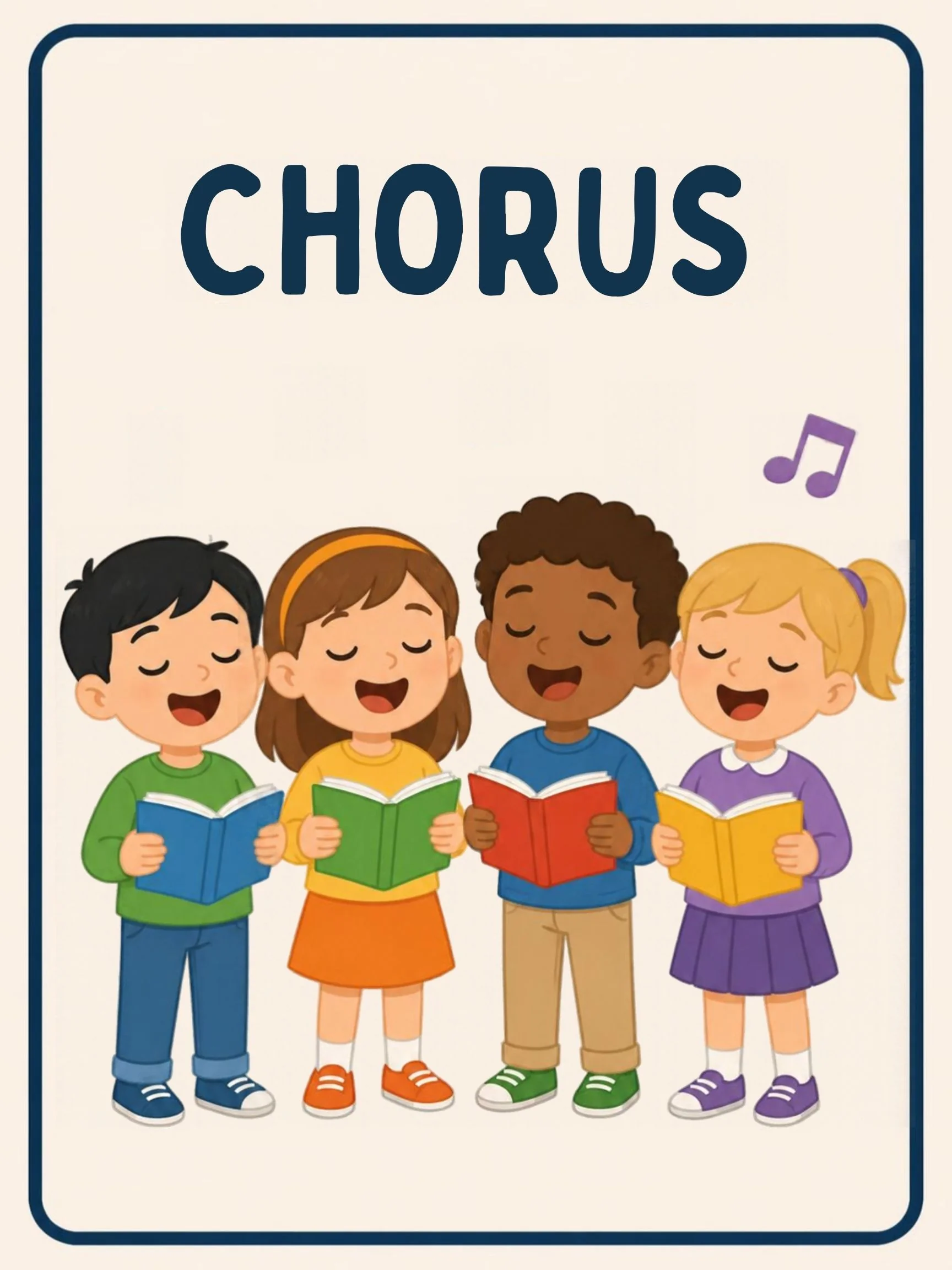
On this card the word "Chorus" stands in big navy capitals inside the rounded frame, with a friendly group-singing illustration below — exactly as the many voices look.
Ask your child
"How many voices sing in a chorus? What do we listen for while singing? Who is the star of a chorus?"
What your child can say or do
Your child might say: "Many voices, one song!" "Listen as much as you sing!" or the blender: "Our two voices melted into one!"
Out in the real world
Choruses sing in every church, school assembly, stadium and car — and the blend test works anywhere: hum with the radio, match the note, feel two voices become one. Joining in is the oldest music there is.
Try it together
The Join-In Round: one voice starts a familiar song alone. On the leader’s nod, one more voice joins — then another, then the whole room — each joiner matching the FIRST voice’s pitch, not their own. Listen to the sound grow warm with every voice. Then the reverse: voices drop out one by one until the first singer is alone again — hear how big WE were. Many voices, one song, nobody lost.
Understanding check
Ask: "What is a chorus? What beats starring? What happens to the sound with every voice that joins?" Many voices one song, blending, it grows warm — three answers and the room joins in.
Parent tips
Match-the-first-voice is the blend rule — the group follows the starter, not their memory. And praise listening louder than singing: a chorus of ears makes a chorus of voices.
This lesson pairs with the Chorus flashcard in the library — print it, show it, keep it on the fridge. Back to Music Room (Class 23).