
Play — a step-by-step lesson for grown-up and child
This lesson teaches the word that names the whole place: PLAY — and the three quiet rules that make play good: fair turns, real rules, all-in hearts.
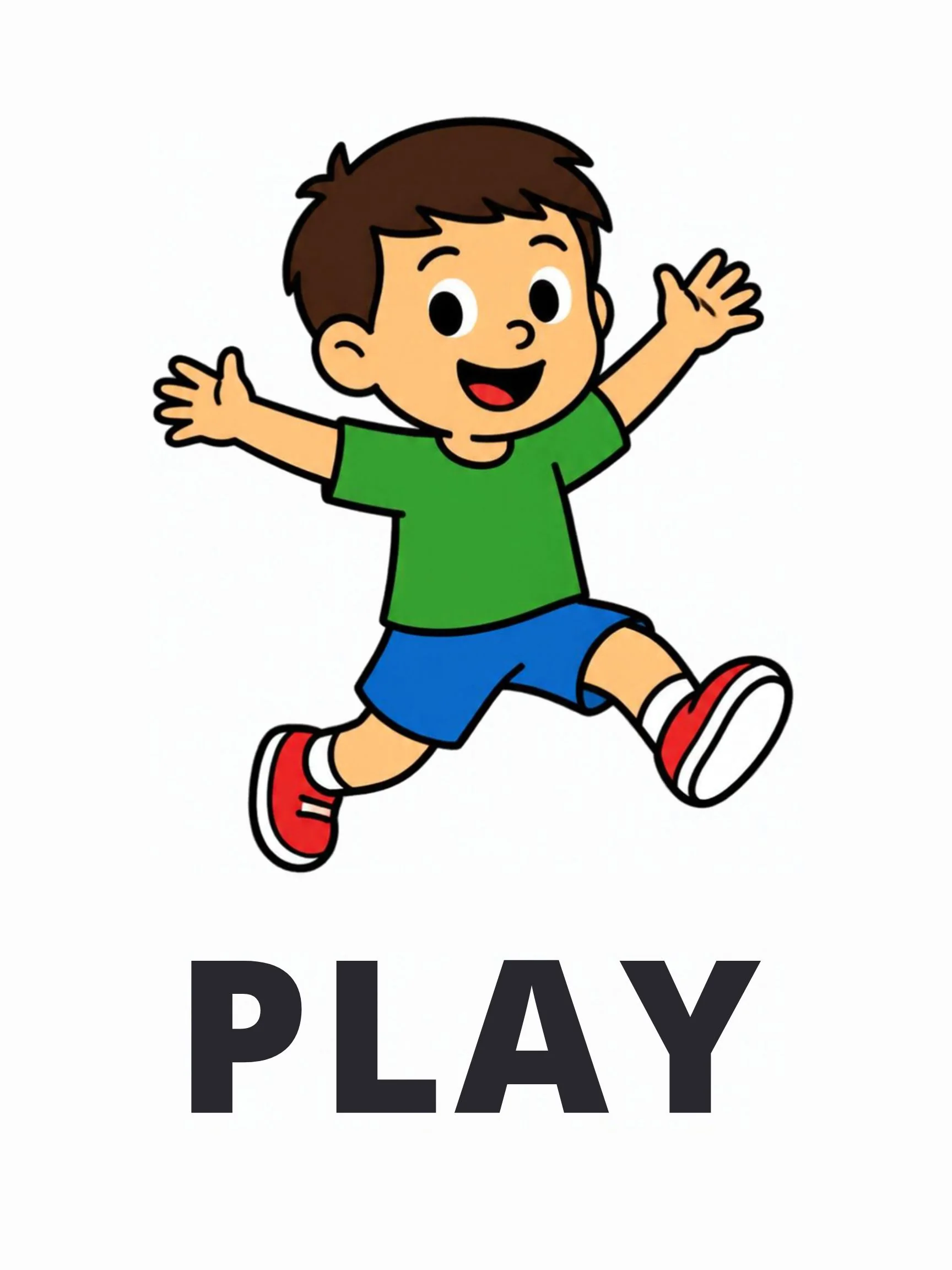
What is this?
Play is games done for joy: chasing, building, pretending, ball games — alone or together. Good play has everyone joining, rules that hold and fun that does not need a winner.
What does it mean?
Play is childhood’s work and the playground’s constitution: turns are shared, rules are kept, and the kid who plays ALL IN makes every game better. Teaching play-as-a-skill makes the whole playground friendlier.
What does the child need to know?
Your child needs three play ideas: turns are the tax every game pays — everyone gets one; rules are what make it a GAME — changed mid-game, they break it; and all-in is the spirit — half-hearted play is lonely, full-hearted play is contagious.
Why this matters
Play is the container for every other card on this wall — and naming its rules early (turns, rules, all-in) is the kindest thing a grown-up can do for every game that follows.
What it teaches
Turn-taking, rule-keeping, inclusive inviting (asking the lonely kid in), and wholehearted participation — the social engine of the playground.
Words to learn
playgameturnrulesfairall ininvite
Say this to your child
“"PLAY is the whole playground in one word! Good play has three rules: everyone gets a TURN — your turn, my turn; the RULES hold — agree first, then play; and everybody plays ALL IN — with your whole heart! And if someone stands alone, play invites them in: ‘Come play with us!’ That is what play means."”
Step by step
- Show the card: "This is play — the whole playground in one word!"
- The turn tax: every game has turns — whose turn is next? Practise saying "your turn, my turn" out loud.
- The rule shield: rules make it a game — agree on them BEFORE starting, and the game holds. Change rules mid-game? The game breaks — restart, re-agree.
- All-in hearts: half-play is lonely play — jump in with your whole heart, and invite the watcher: "come play!"
- Play the make-a-game activity below and close: "turns, rules, all in."
Look closer at the picture
On this card the word "Play" stands in big navy capitals inside the rounded frame, with a friendly playing illustration below — exactly as the happy game looks.
Ask your child
"What does every game pay in? What holds a game together? What do we say to someone standing alone?"
What your child can say or do
Your child might say: "Your turn, my turn!" "Rules first, then play!" or the inviter: "Come play with us!"
Out in the real world
Play happens in every yard, class and waiting room — and its three rules are the same everywhere: turns, rules, all-in. The invitation line is the playground’s most powerful sentence.
Try it together
Make-a-Game: the family invents a brand-new game in five minutes — pick a ball, agree two rules ("bounce it twice, then pass"), decide the turns, and PLAY it all-in for ten minutes. Then the invitation drill: one player sits out looking lonely — the players must invite them in with the line. Turns, rules, all-in: a game made and played by its own constitution.
Understanding check
Ask: "Name the three rules of good play. What breaks a game mid-way? What invites a watcher in?" Turns-rules-all-in, changed rules, "come play" — three answers and the playground is kind.
Parent tips
Two rules maximum for home-made games — playable beats clever. And rehearse the invitation line until it is automatic: it is the skill that fills empty playground minutes.
This lesson pairs with the Play flashcard in the library — print it, show it, keep it on the fridge. Back to Playground.