
Bench — a step-by-step lesson for grown-up and child
This lesson teaches the bench — the playground’s quiet wooden plank with three jobs: a seat for resting, a beam for balancing, and a stage for pretending.
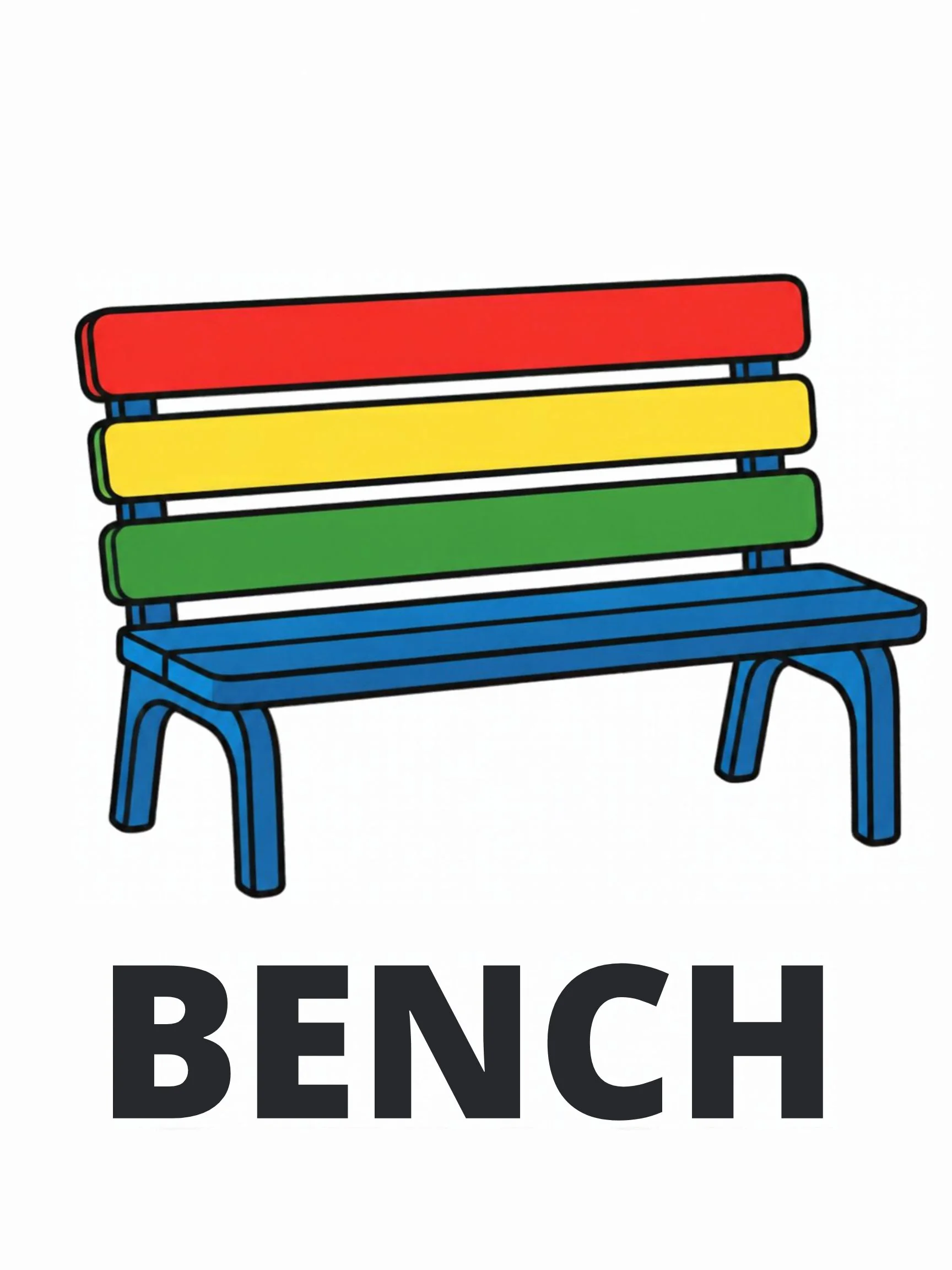
What is this?
A bench is a long wooden or metal seat: built for resting, but the playground’s best improvisers use it as a balance beam, a shop counter, a pirate ship rail, a stage.
What does it mean?
The bench teaches the playground’s deepest idea: equipment is what you MAKE of it. The same plank that rests the tired legs walks the tightrope for the brave ones — imagination is the only upgrade it needs.
What does the child need to know?
Your child needs three bench ideas: the bench is a RESTING spot — tired bodies sit, breathe and watch; it is a BALANCE beam — walk it slow, wings out (from the balance lesson); and it is a STAGE — up top for shows, but jump down with bent knees.
Why this matters
Open-ended play — one object, many uses — is the creative core of playground culture, and the bench is its friendliest example: every child can rest on it, walk it or crown themselves on it.
What it teaches
Imaginative transformation (one object, many jobs), balance-beam walking, rest-spot self-regulation (knowing when to sit), and safe dismounts.
Words to learn
benchseatbeamstagerestwalk the plankpretend
Say this to your child
“"The bench is one wooden plank with three jobs! Tired? It is a SEAT — sit, breathe, watch. Brave? It is a BALANCE BEAM — wings out, walk it slow. Imaginative? It is a STAGE — up top, ‘welcome to the show!’ — and jump down with bent knees, frog-style. One bench, three jobs, your choice!"”
Step by step
- Show the card: "This is a bench — a seat with three jobs!"
- Job one, rest: tired legs sit here — breathe, watch the playground, rejoin when refuelled. Resting is playing too.
- Job two, beam: walk the bench edge slow — wings out, eyes ahead — the bench is the beginner’s tightrope.
- Job three, stage: stand UP TOP and announce — "welcome to the show!" Then dismount with bent knees: jump down like a frog, not a statue.
- Play the bench games below and close: "rest, beam, stage."
Look closer at the picture
On this card the word "Bench" stands in big navy capitals inside the rounded frame, with a friendly bench illustration below — exactly as the wooden plank looks.
Ask your child
"Name the bench’s three jobs. How do we walk the beam? How do we come down from the stage?"
What your child can say or do
Your child might say: "Seat, beam, stage!" "Wings out — walking the plank!" or the show-off: "Welcome to the show — frog-dismount!"
Out in the real world
Benches line every park, bus stop and garden — and the three jobs travel with them: rest on the bus-stop bench, beam on the garden edge, stage on the picnic table. Imagination included free.
Try it together
Bench Three-Jobs Circuit: rest thirty seconds (breathe, watch), then walk the beam slow with wings out, then the stage: announce a tiny show — a joke, a bow, a song line — and frog-dismount. Three rounds, rotating who announces. One plank, all three jobs, the whole playground in miniature.
Understanding check
Ask: "Name the three jobs. What walks the beam? What dismounts the stage?" Seat-beam-stage, wings out, bent knees — three answers and the bench performs.
Parent tips
Beam before stage: balance earns the height. And the frog-dismount rule is stated every stage round — bent knees catch what straight legs jolt.
This lesson pairs with the Bench flashcard in the library — print it, show it, keep it on the fridge. Back to Playground.