
Stop — a step-by-step lesson for grown-up and child
This lesson teaches stop — the strongest word on the playground, with two jobs: it stops MY body when I say it, and it stops ME when someone else says it.
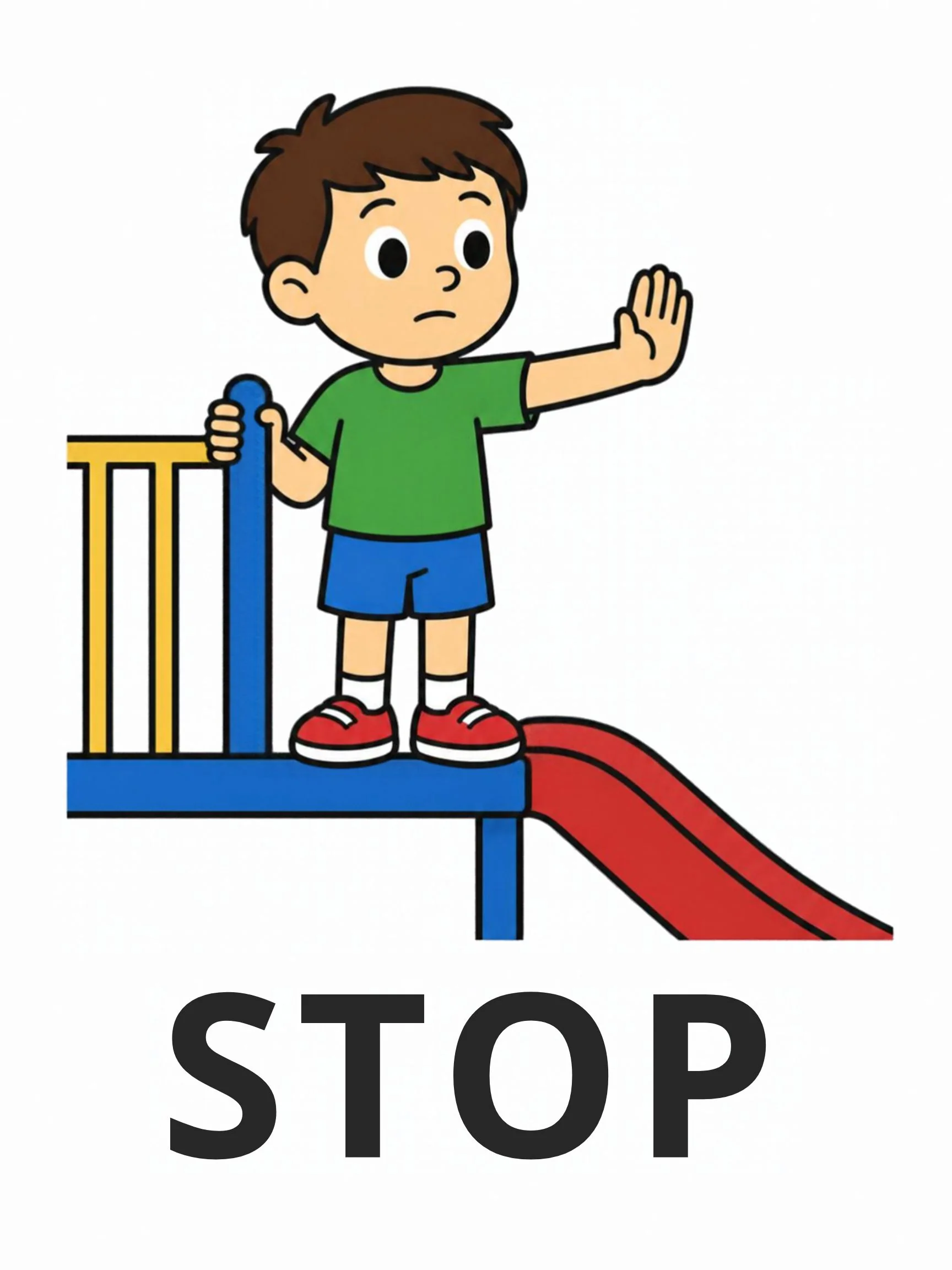
What is this?
Stop is a full brake, said out loud: "STOP!" freezes a game, a chase, a tickle-fight — and the rule is simple: stop means stop, first time, every time, whoever says it.
What does it mean?
Stop is the playground’s safety word and its fairness word at once: the child who can stop ON COMMAND can play wilder games safely — and the child who RESPECTS others’ stop is trusted with bigger play.
What does the child need to know?
Your child needs three stop ideas: saying STOP is a power everyone has — your own word, your own brake; respecting STOP is the rule — when anyone says it, everything pauses, first time; and the freeze proves it — a full stop is a statue, not a slowing-down.
Why this matters
Games get wilder and braver when everyone trusts the brake — stop is literally the skill that UNLOCKS rough-and-tumble play, taught as a power and a respect at once.
What it teaches
Impulse control (the freeze on command), respecting others’ boundaries instantly, voice as a safety tool, and the trust that follows a kept stop.
Words to learn
stopfreezebrakerespectpausesafestatue
Say this to your child
“"STOP is the strongest word on the playground — and it has two jobs! Your job: say STOP and your body freezes — statue, mid-game, mid-giggle. Everyone’s job: when anyone says stop, EVERYTHING pauses — first time, no arguing, stop means stop. A playground where stops are honoured is a playground where wild games are safe!"”
Step by step
- Show the card: "This is stop — the strongest word on the playground!"
- Your brake: practise saying STOP and freezing your own body — mid-run, mid-dance, mid-giggle. Statue! Your word brakes your body.
- The respect rule: when ANYONE says stop — a friend, a small sibling, a grown-up — everything pauses. First time. No bargaining. Stop means stop.
- The freeze check: a real stop is a statue — feet planted, hands still. A slowing-down is not a stop.
- Play the stop games below and close: "my brake, your brake, stop means stop."
Look closer at the picture
On this card the word "Stop" stands in big navy capitals inside the rounded frame, with a friendly stop illustration below — exactly as the frozen moment looks.
Ask your child
"What are the two jobs of stop? When someone says stop, how many times do we need? What does a real stop look like?"
What your child can say or do
Your child might say: "My word brakes my body!" "First time — stop means stop!" or the frozen one: "Statue! Feet planted, hands still!"
Out in the real world
Stops keep every chase, tackle and tickle-fight safe — and the respect rule travels to every game, classroom and family moment after: stop means stop is the treaty of all wild play.
Try it together
Red Light Freeze: run and dance freely until the call — "STOP!" — full statue: feet planted, hands still, three seconds. Vary the caller: sometimes the CHILDREN call stop and the grown-ups freeze too — the rule is for everyone. Then the respect drill: a gentle game (a soft chase) stops the instant ANY player says stop — honoured in one beat, praised by name. My brake, your brake: the strongest word, kept strong.
Understanding check
Ask: "Name stop’s two jobs. How many warnings before stop means stop? What does a real stop look like?" My brake and your brake, zero warnings, a statue — three answers and the games get braver.
Parent tips
The grown-up freezing too is the secret — children believe in stop when they see it honoured upward. And never use stop as a punisher: it is a safety tool and must stay glamorous.
This lesson pairs with the Stop flashcard in the library — print it, show it, keep it on the fridge. Back to Playground.