
Wait — a step-by-step lesson for grown-up and child
This lesson teaches waiting — the brave pause: holding still while the good thing comes, with a trick that makes the waiting smaller: watching.
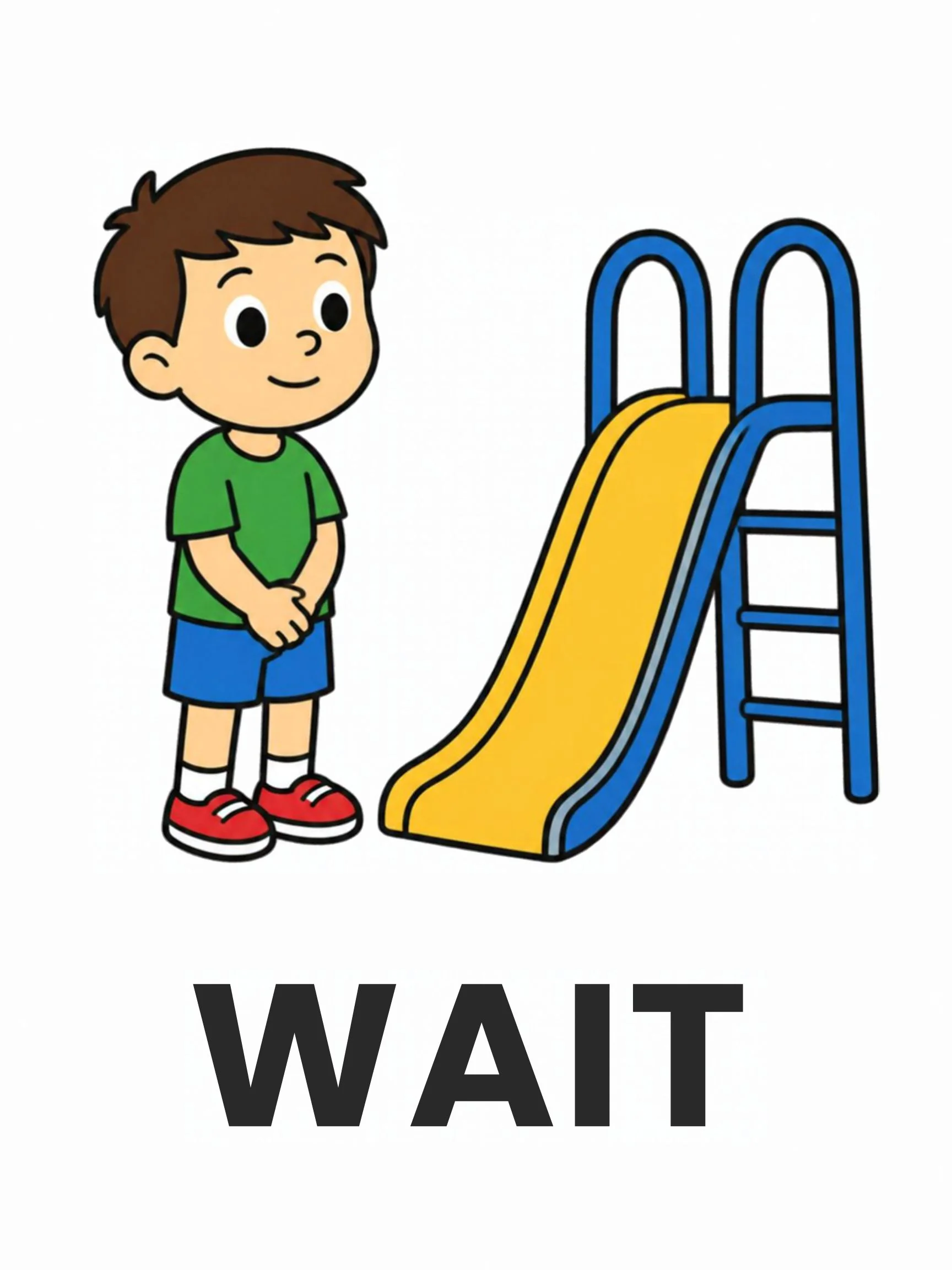
What is this?
Wait is pausing with patience: the queue, the count-down, the pause before the story starts — hands and feet that hold while the good thing comes closer.
What does it mean?
Waiting is the hardest and most useful skill on the playground — and it shrinks when it is COUNTABLE (how long?) and WATCHABLE (what is happening?). The brave pause is not empty time; it is time with a shape.
What does the child need to know?
Your child needs three wait ideas: waiting has a SHAPE — a count, a number of whooshes, a song’s length — shaped waiting is small waiting; the body holds — hands busy (counting, squeezing) and feet planted; and watching shrinks waiting — the waiter who watches is already half-playing.
Why this matters
Waiting is the gateway skill to classrooms, queues and conversations for life — and the count-and-watch trick makes it a game the child can win today.
What it teaches
Patience with shape (countable waits), stillness with busy hands, watching-as-participation, and the celebration of waited-for things.
Words to learn
waitpausecountshapeholdwatchpatience
Say this to your child
“"Waiting is the brave pause — and it has tricks! Give the wait a SHAPE: count the whooshes, sing the waiting song, count down from ten. Give the hands a job and the feet a spot. And watch the game you’re waiting for — the waiter who watches is already half-playing! Shaped waiting is small waiting. The good thing always comes."”
Step by step
- Show the card: "This is wait — the brave pause!"
- The shape: waiting shrinks when it has a shape — count the whooshes, sing the song, count down from ten. Name the shape before waiting starts.
- The body holds: hands get a JOB (count on fingers, squeeze a pocket) and feet get a SPOT (planted, planted, planted).
- Watching trick: watch the rider, the builder, the game — the waiter who watches is half-playing already, and the wait halves.
- Play the wait games below and close: "shape, hold, watch."
Look closer at the picture
On this card the word "Wait" stands in big navy capitals inside the rounded frame, with a friendly waiting illustration below — exactly as the brave pause looks.
Ask your child
"What shrinks a wait — a shape or empty time? What jobs do the hands get? What does watching do to waiting?"
What your child can say or do
Your child might say: "I counted the whooshes!" "My hands counted, my feet planted!" or the watcher: "I watched — the wait halved!"
Out in the real world
Waits fill every day: the kettle, the traffic light, the turn at the tap — and the count-and-watch trick works on all of them. Children who can wait at four can learn anything at five.
Try it together
Count-Down Waits: at the swing, slide or any queue — the waiter picks the shape (ten pushes, three whooshes, one song) and the count is public. Hands count on fingers, feet hold the spot, eyes watch the game. When the turn arrives — big cheer, because WAITED-FOR things are the best things. Three waits, three shapes, one brave pauser. The good thing comes — every time.
Understanding check
Ask: "What gives a wait its shape? What are the hands’ and feet’s jobs? What does the watcher become?" The count, count-and-plant, half-playing — three answers and the pause is brave.
Parent tips
Always name the shape BEFORE the wait starts — unshaped waiting is where meltdowns live. And celebrate the waited-for arrival loudly: waiting earns the best applause.
This lesson pairs with the Wait flashcard in the library — print it, show it, keep it on the fridge. Back to Playground.