
Cat — a step-by-step lesson for grown-up and child
This lesson teaches Cc and its click sound with the cat card: your child traces the letter, knocks on an imaginary castle door one c-word at a time, and discovers that the sound lives at the very back of the mouth.
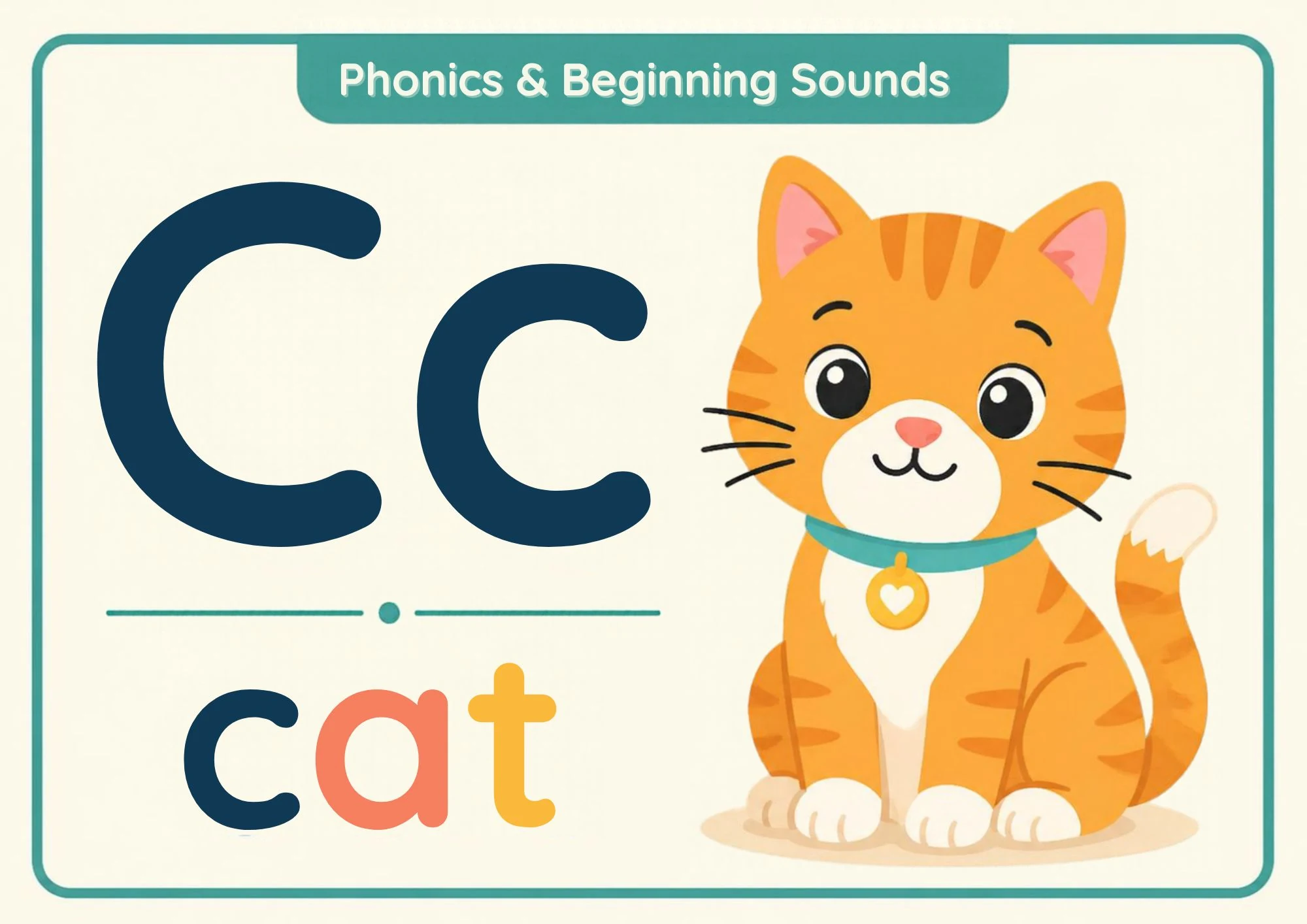
What is this?
Cc is the letter that stands for the first sound in cat — a clean, short /k/ click made when the back of the tongue lets go of the roof of the mouth.
What does it mean?
C introduces a listening challenge: the click happens where no eye can see it. So this lesson teaches ears-first learning — the same skill every later sound lesson will reuse.
What does the child need to know?
Your child needs to hear the click as a tiny door shutting, say it cleanly (no "kuh-uh" drag), and collect a small family of c-words — cat, cup, car — so the sound detaches from one picture.
Why this matters
/c/ is everywhere in a child’s day — cup, coat, car, cake, colour. It is also the first letter with a hidden second job (soft c, as in circus), and knowing the hard click first keeps that later surprise small.
What it teaches
Back-of-mouth tongue control, careful listening (the click is invisible), and word-family building — one sound, many words.
Words to learn
ccatcupcarcoatclick
Say this to your child
“"Knock knock — who is at the door? C! C says k, a tiny click like a door shutting: cat. Say it like a secret knock: c, c, cat."”
Step by step
- Show the card: "Cc. It says the cat sound — a little click at the back: c!"
- Finger-trace the Cc on the canvas — the open curve matches the open back of the mouth.
- Play the castle-knock game below; the click IS the knock.
- Collect c-things: a cup, a carrot, a coat. Say each with one clean click.
- Finish with three fast clicks — c, c, cat — and a victory meow.
How to say it
Open the mouth slightly, lift the back of the tongue and let it drop: "k". Keep it dry and short — one click, no vowel hanging on. If "kuh-uh" appears, say it like a whisper-tick.
Look closer at the picture
On this card the big navy pair Cc sits beside a smiling orange tabby cat, with the word "cat" printed underneath — the most classic of all first phonics words.
Ask your child
"Can you feel the click at the back of your mouth?" "What did the cat say at the door?" "Name a c-word in this room."
What your child can say or do
Your child might say: "c-c-c-cat!" with three knocks, or invent the best game of all: knocking on the actual table for every c-word they can find.
Out in the real world
The kitchen is a c-museum: cups, cabinets, carrots, cake tins. Car rides supply car, seat, clunk-click. And every story with a cat in it re-opens the door for one more knock.
Try it together
Castle knock: build a pillow fortress, and the only way in is the password — a c-word said with a proper click. Knock knock: "cat!" — the gate opens. Inside, the royal cat demands three more c-words before bed.
Understanding check
Ask "what sound does C make?" and listen for a clean click, not the letter name "see". Then test the family: cup, car, coat — three clicks in a row means the sound travels.
Parent tips
Do not mention soft c (circus, celery) yet — one job per card. And if c and k blur together, say honestly: "they are twins, same sound, two coats" — the honesty saves tears later.
This lesson pairs with the Cat flashcard in the library — print it, show it, keep it on the fridge. Back to Phonics & Beginning Sounds (Class 28).