
Skating — a step-by-step lesson for grown-up and child
This lesson teaches skating where the ice is the hallway floor: the marching steps, the magical glide when the feet stop moving, and the soft fall every skater keeps in their pocket.
What is this?
Skating is gliding on blades across ice: little marching steps first, then standing still while the ice carries you — the glide — then pushes and swoops and eventually spins, all on the shiniest, slipperiest floor there is.
What does it mean?
Skating flips walking’s rules: the floor MOVES. The skill is trusting the glide — feet still, body tall, momentum doing the work. Every skater remembers their first true glide the way other children remember their first bike.
What does the child need to know?
Your child needs three skating ideas: the march is small steps with toes turned slightly out; the glide is feet parallel, knees soft, NO stepping — let the ice (or floor) carry you; and falling is a SKILL: knees down, hands on knees, soft and giggly, always planned never feared.
Why this matters
Falling safely might be the most reusable skill in this whole class — skaters, judoka and playground kids all borrow it. And slipper-skating on the hallway floor builds the glide with zero cold, zero ice and zero bruises.
What it teaches
Dynamic balance on a low-friction surface, the stillness-while-moving glide, planned falling (a confidence skill as much as a safety one), and small-step bravery on new ground.
Words to learn
skatingiceglidemarchwobblefall softblades
Say this to your child
“"Skating is gliding on ice! Little marching steps first — toes out, wings out. Then the magic: stop stepping, knees soft, and LET THE ICE CARRY YOU. That glide is the best feeling in sport. And when we wobble — we fall SOFT: knees down, hands on knees, giggle, up again. Every skater falls; the good ones make friends with it."”
Step by step
- Show the card: "This is skating — gliding on the shiny ice."
- The march: little steps, toes out slightly, arms out like aeroplane wings. March a hallway lap.
- The glide: feet together-ish, knees soft, and STOP stepping — let the floor carry you. Count the glide: one… two… three! Every glide longer than the last.
- The soft fall: practise ON PURPOSE — sink to the knees, hands on knees, giggle. "Every skater falls; good skaters fall soft." Do it three times so it is a friend, not a fear.
- Play the slipper-rink game below and close: "march, glide, fall soft."
Look closer at the picture
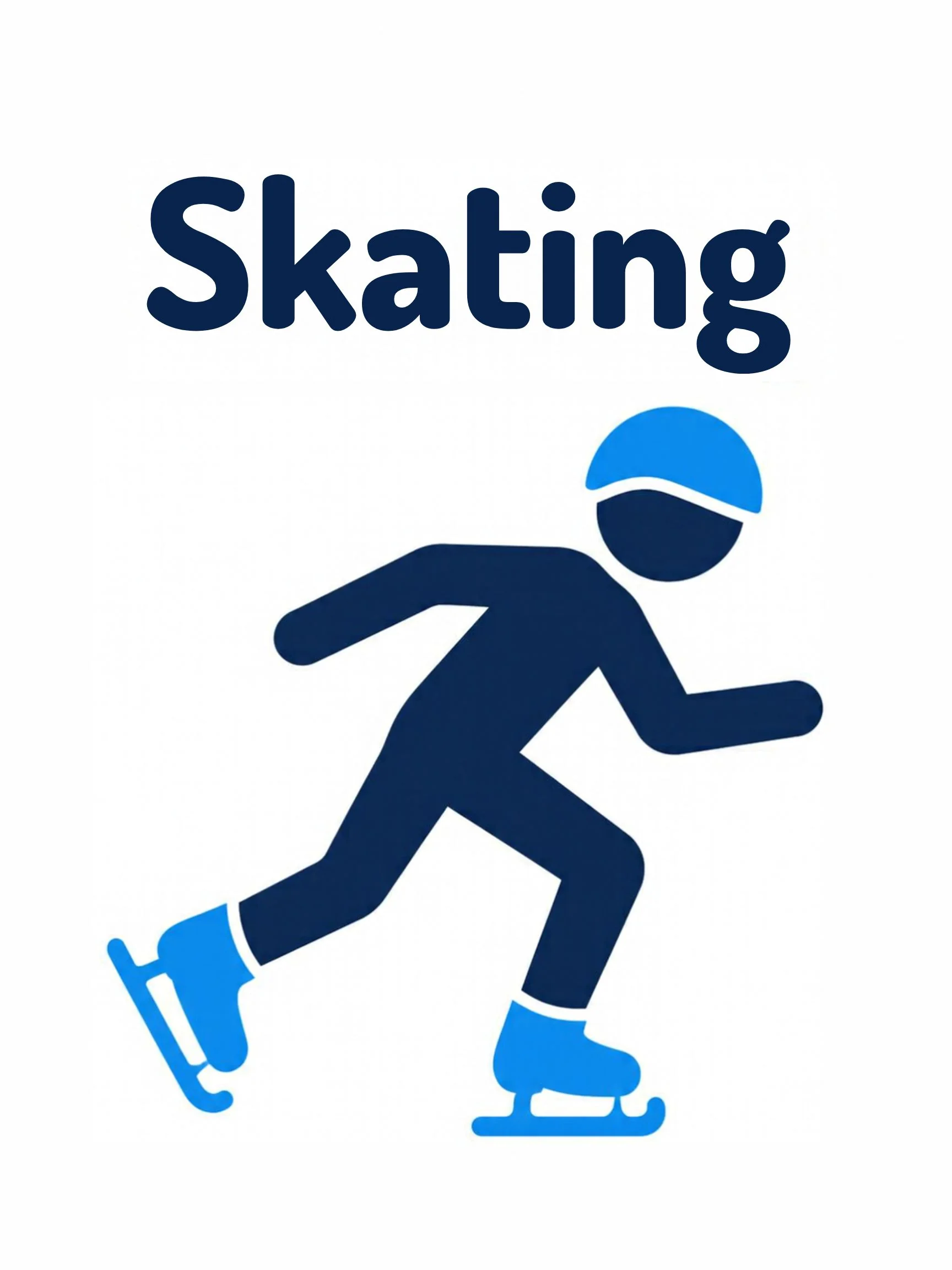
On this card the word "skating" is printed large at the top with the rink’s scene below — the skater on shining blades exactly as a lap of the ice looks.
Ask your child
"What do our feet do first — march or glide?" "What do the knees do in a glide?" "What do we practise so falling is not scary?"
What your child can say or do
Your child might say: "I glided three whole counts!" "Wings out, toes out!" or the proud skater’s vow: "I fall soft — knees down, giggle!"
Out in the real world
Skating lives at every ice rink and winter festival — and in socks on every polished hallway floor. At the rink, hunt for glides: which skaters step-step-step forever, and which ones stand still and FLY?
Try it together
Slipper-Rink: socks on a smooth floor, the hallway is the rink. March the length, then glide — count it out loud. Add "hoops" (taped squares) to glide THROUGH, and the planned soft fall on a rug at the end, giggling. Helmet on if the floor is extra slippery — real rinks say yes to helmets for beginners, always.
Understanding check
Ask: "What comes first, march or glide? What do the knees do? What do we practise on purpose?" March, soft, the soft fall — three answers and the hallway is an ice rink.
Parent tips
Play glide contests, not speed races — stillness is the skill and counting the glide makes it visible. And do the deliberate soft fall until it is BORING: a fall that is boring is a fall that never scares.
This lesson pairs with the Skating flashcard in the library — print it, show it, keep it on the fridge. Back to Sports & Movement (Class 37).