
Sailing — a step-by-step lesson for grown-up and child
This lesson teaches sailing’s invisible engine: the wind. Where it comes from, how the sail catches it, and the wonderful zigzag turn sailors use to keep catching it.
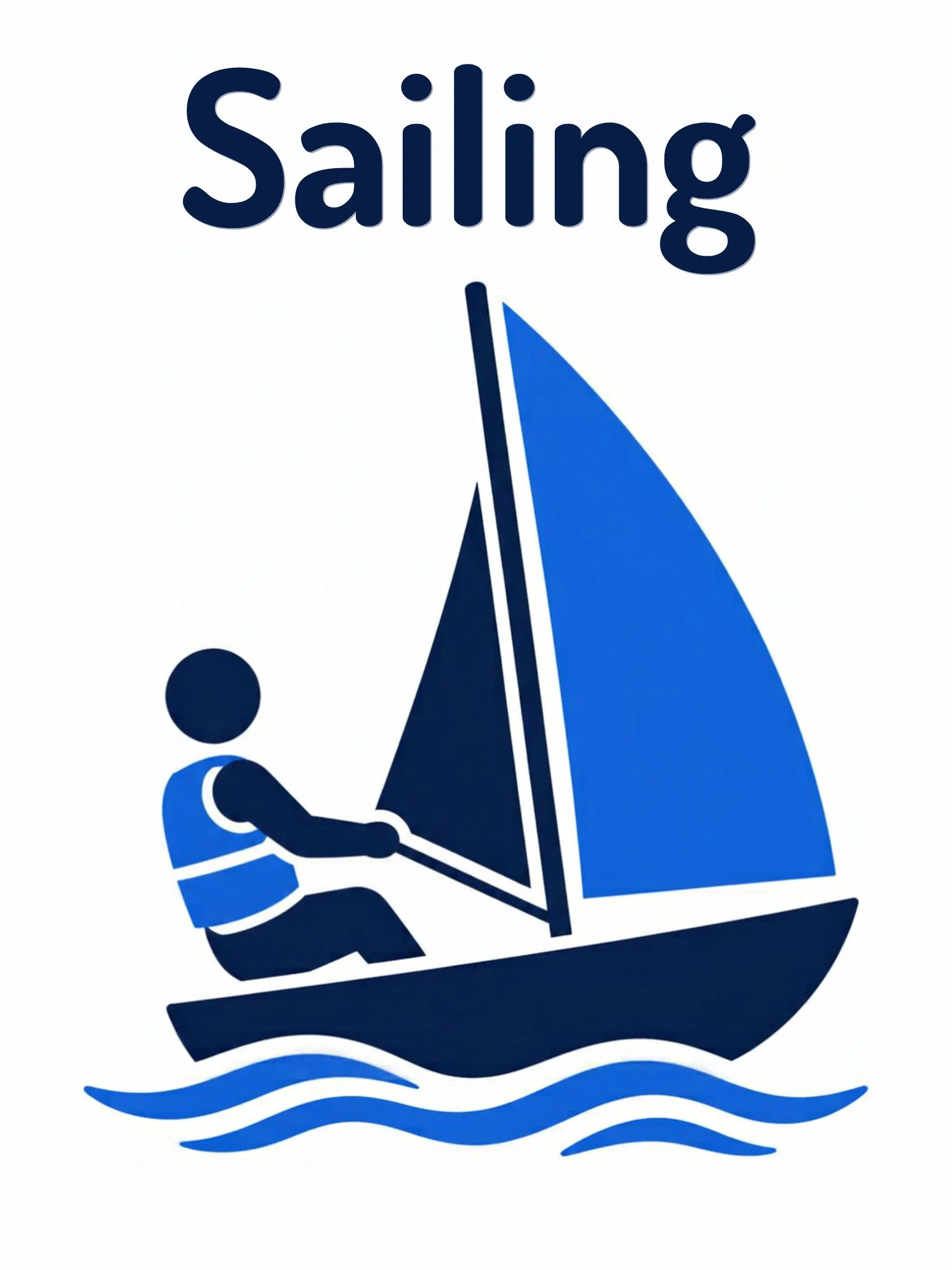
What is this?
Sailing is moving a boat with wind: the sail catches the breeze, the boat slides forward, and by steering at angles the sailor rides wind that cannot be sailed straight into.
What does it mean?
Sailing is the wall’s only sport powered by something invisible. The sailor reads wind they cannot see — on their face, in the sail’s belly, on the water’s ripples — and that reading is a whole science taught by a towel and a fan.
What does the child need to know?
Your child needs three sailing ideas: the sail is a kite on a stick — wind fills it like a balloon and the boat slides; you cannot sail STRAIGHT into wind — sail must zigzag at angles (tacking); and the life jacket goes on first, because the wind does not ask permission.
Why this matters
The fan-and-sail game turns wind — invisible, abstract — into a toy the child can aim and feel. It is physics, weather and sport in one afternoon, and it ends with a zigzag race across the living room.
What it teaches
Sensing an invisible force (wind on face, sail fill), angle thinking — the zigzag path — cause-and-effect steering, and the jacket-first water ritual.
Words to learn
sailingwindsailcatchtackzigzaglife jacket
Say this to your child
“"Sailing has no engine and no paddles — the WIND is the engine! The sail catches it like a kite, and the boat slides across the water. But here is the secret: wind will not push a boat head-on. Sailors zigzag — one angle, then the other, tacking back and forth all the way to where they want to go. And life jacket first, always — the wind does not ask permission."”
Step by step
- Show the card: "This is sailing — the wind pushes, the boat glides."
- Feel the wind: blow on the back of the hand, fan the face — wind is moving air, and moving air PUSHES.
- The sail test: hold a towel or pillow up like a sail and walk — nothing. Now a partner FANS it — the sail fills, the "boat" wants to slide. Wind caught!
- The zigzag rule: try to walk straight INTO the fan — the sail flaps dead. Step sideways at an angle — full power! Sailors zigzag because wind only pushes from the side.
- Say the jacket rule, then play the fan-sail race below: "catch the wind, tack, glide."
Look closer at the picture
On this card the word "sailing" stands big at the top with the water’s scene below — the small boat and the full white sail exactly as a breeze-day on the bay looks.
Ask your child
"What pushes a sailing boat?" "Can we sail straight into the wind?" "What do sailors do instead?"
What your child can say or do
Your child might say: "The wind is the engine!" "I caught the wind in my sail!" or the sailor’s plan: "Zigzag — tack tack tack!"
Out in the real world
Sailing lives at every yacht club, harbour and breezy lake — and kids’ sailing courses start with exactly this: feel the wind, fill the sail, tack. On windy walks, find the flags and ripples together: the wind is writing its address all over the water.
Try it together
Fan-Sail Race: one player is the WIND with a paper fan; the other is the BOAT holding a towel-sail. The wind fan-blasts from different spots; the boat must keep the sail angled to catch it — never head-on! — and zigzag from sofa to sofa. Swap roles. The invisible force becomes a game piece, and tacking becomes the family’s new favourite word.
Understanding check
Ask: "What is the engine of a sailboat? Why do sailors zigzag? What goes on first?" The wind, wind will not push head-on, the life jacket — three answers and the bay is open.
Parent tips
Let the head-on failure HAPPEN — the flapping dead sail is the moment the angle rule makes sense; no diagram teaches it faster. And on real water days, the jacket rule is said out loud every single time, without exceptions to negotiate.
This lesson pairs with the Sailing flashcard in the library — print it, show it, keep it on the fridge. Back to Sports & Movement (Class 37).