
Taekwondo — a step-by-step lesson for grown-up and child
This lesson teaches taekwondo, the kicking art of Korea: springy feet, one-leg balance, front kick and roundhouse at pads only — the wall’s best one-leg balance training wearing a black belt.
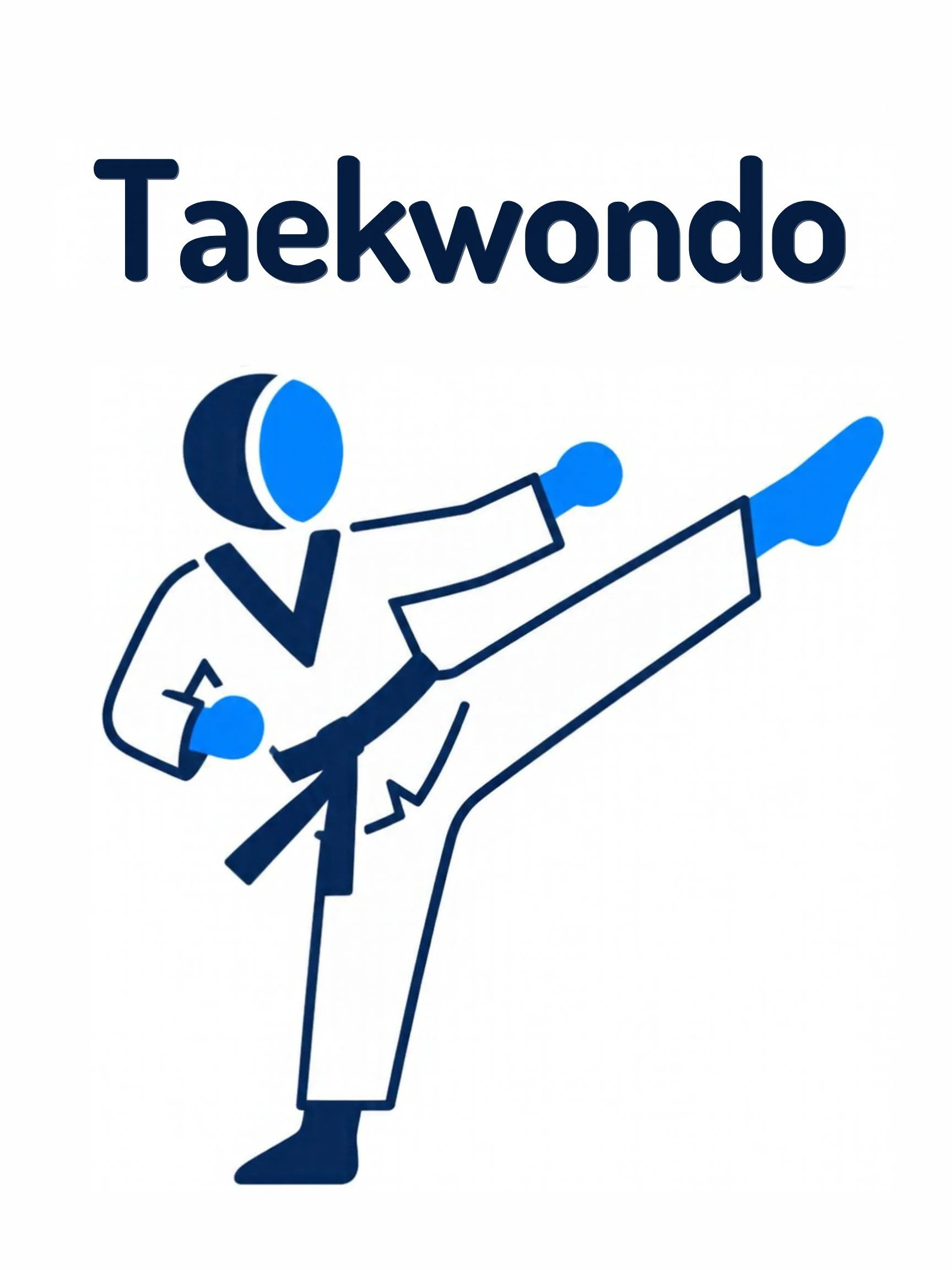
What is this?
Taekwondo is Korea’s martial art, famous for kicks: front kicks, side kicks and the spinning roundhouse, all drilled at pads and targets. Fast feet, flexible legs, and balance that holds on one leg while the other one works.
What does it mean?
Kicking is the wall’s finest one-leg balance challenge: the kicking leg swings while the standing leg owns the ground. Taekwondo trains that split — work and stand — a hundred times a class, which is why taekwondo kids hop like herons.
What does the child need to know?
Your child needs three taekwondo ideas: the stance is springy — feet apart, knees soft, hands up; the front kick is knee UP, foot OUT, foot BACK — a snap, not a stomp; and every kick lands on a PAD held by the grown-up — pads, never people, same rule as boxing’s.
Why this matters
One-leg balance is the quiet king of this whole class — every skater, batter and kicker borrows it — and taekwondo drills it with more joy per minute than anything else on the wall.
What it teaches
Single-leg dynamic balance, hip flexibility (the knee-up is a real stretch), kicking mechanics in snaps, and the pad-only discipline shared by every striking art.
Words to learn
taekwondoKoreakickfront kickroundhousepadbalance
Say this to your child
“"Taekwondo is the kicking sport from Korea! Springy stance, knees soft — then the front kick: knee UP, foot snaps OUT, foot comes BACK. Snap! And the roundhouse swings round like a door. Every kick lands on a PAD the grown-up holds — pads, never people. Ten kicks each leg, counting loud — and your standing leg learns to be a tree while the other one flies."”
Step by step
- Show the card: "This is taekwondo — the kicking art from Korea."
- The stance: feet apart, knees soft, fists up — springy like a kangaroo waiting for a joke.
- The front kick: knee UP high first, foot snaps OUT, foot comes BACK down — knee, out, back. Practise in slow motion five times, then fast.
- The roundhouse: same knee-up, but the foot swings ROUND sideways — a door swinging on the hip hinge. Slow-motion first, always.
- Play the pad-kick drill below and close: "knee up, snap out, pads only."
Look closer at the picture
On this card the word "taekwondo" stands at the top in big letters with the dojang’s scene below — the high kick toward the pad exactly as a kicking drill looks.
Ask your child
"Which country’s art is taekwondo? What comes up first — the foot or the knee? What do kicks land on?"
What your child can say or do
Your child might say: "Knee up, snap out!" "My roundhouse went THWACK!" or the pad rule: "Kicks on pads, never people!"
Out in the real world
Taekwondo is an Olympic sport and a school-club staple across the US, Canada, Australia and NZ — the belts and the pad-thwacks are everywhere. Watch one kids’ class: the heron-leg balance is the quiet skill behind every loud kick.
Try it together
Pad-Kick Drill: a cushion held at knee height by the grown-up — front kick, kick, kick, ten each leg, counted loud. Then the roundhouse cushion, swung gently sideways — five each side. Balance challenge to finish: standing-leg tree pose while the other foot "kicks the air" three slow times. Wobbles are the training; the pad is the target; the counting is the music.
Understanding check
Ask: "Where does the kick start? What order — knee, out, back? What do kicks land on?" The knee, knee-out-back, pads — three answers and the dojang is springy.
Parent tips
Slow-motion kicks first — the knee-up order is the whole technique, and speed arrives on its own. And swap which leg kicks first: both legs deserve to learn, and balance grows twice as fast.
This lesson pairs with the Taekwondo flashcard in the library — print it, show it, keep it on the fridge. Back to Sports & Movement (Class 37).