
Hide — a step-by-step lesson for grown-up and child
This lesson teaches hiding as three quiet skills: get small, get silent, hold still — the most delicious self-control game ever invented.
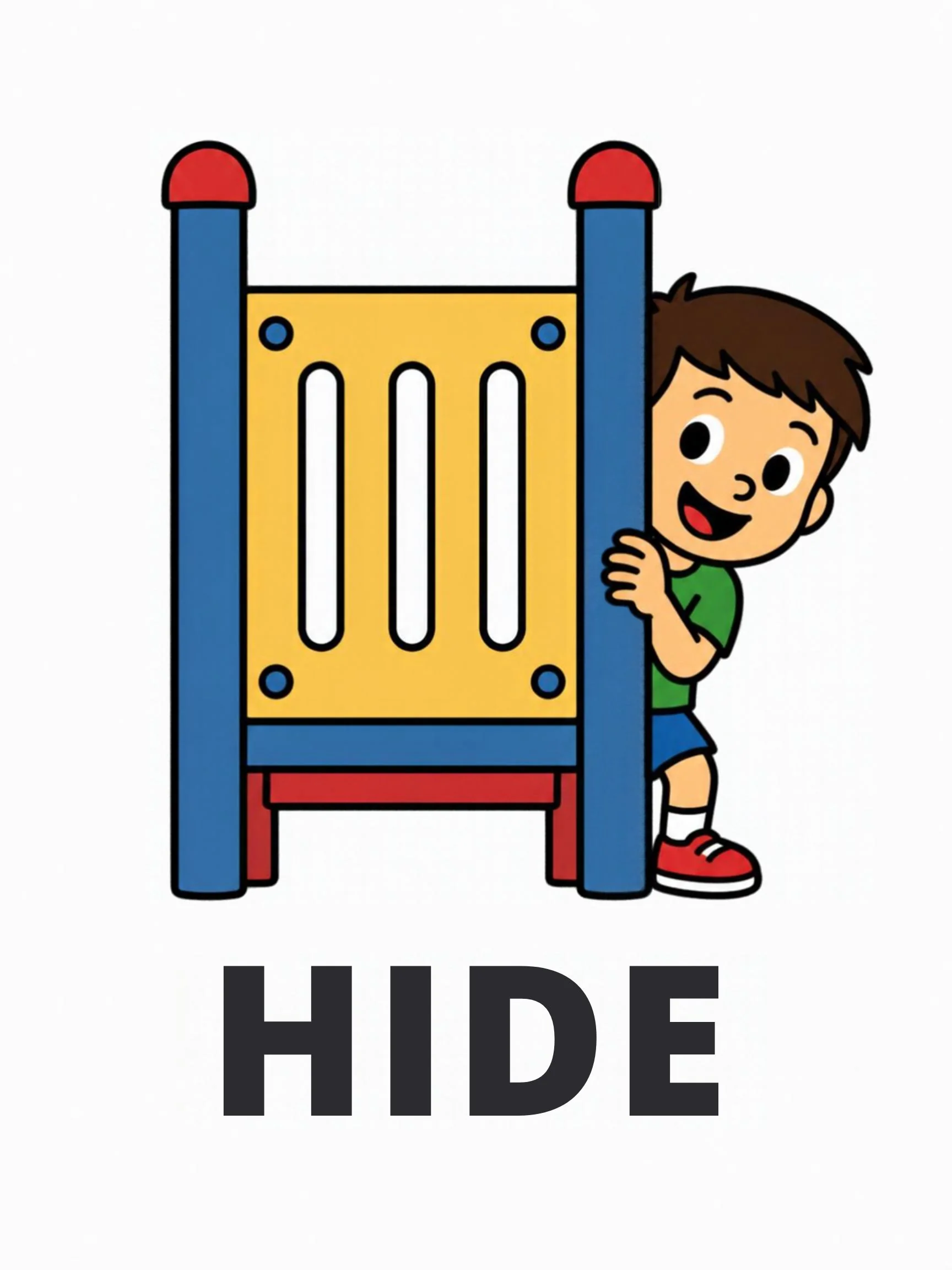
What is this?
Hide is putting yourself or a thing where it cannot be seen: squeeze small, move quiet, then FREEZE — and the hiding is only as good as the stillness that follows.
What does it mean?
Hiding is self-control wearing a game: the urge to giggle, peek and dash is enormous, and holding still through it is a genuine regulation workout — the most fun a four-year-old will ever have doing nothing.
What does the child need to know?
Your child needs three hide ideas: get SMALL — curl, crouch, tuck into the space; get QUIET — quiet feet going out, no giggles on the way; and STILL is the third skill — the hider holds still until found, no matter the itch.
Why this matters
Hide-and-seek trains impulse control, spatial thinking (where would a seeker look first?) and the social joy of taking turns being lost and found — all in one game.
What it teaches
Self-control (stillness, silence), spatial perspective-taking (what can the seeker see?), quiet movement, and the emotional rollercoaster of being found.
Words to learn
hidesmallquietstillseekcountfound
Say this to your child
“"Hiding is three quiet skills! Get SMALL — curl up like a cat. Get QUIET — tip-toe feet, no giggles till you’re hidden. Then get STILL — a statue that cannot giggle, cannot wiggle, until you’re found! And being found is the best part: FOUND! — and now it’s your turn to seek."”
Step by step
- Show the card: "This is hide — small, quiet, and still!"
- Get small: curl behind a chair — knees up, arms in, a smaller shape than usual. Practise the curl.
- Get quiet: walk on quiet feet to the spot — tip-toes, no giggles UNTIL hidden. Giggles after found, never before.
- Hold still: once hidden — statue! No peeking, no wiggling. Count five slow breaths.
- Play the seek games below and close: "small, quiet, still."
Look closer at the picture
On this card the word "Hide" stands in big navy capitals inside the rounded frame, with a friendly hiding illustration below — exactly as the tucked-in shape looks.
Ask your child
"What three things make a good hide? When are giggles allowed? What does the seeker’s count give us time for?"
What your child can say or do
Your child might say: "Small, quiet, still!" "I held still for ten breaths!" or the found joy: "FOUND ME — now I seek!"
Out in the real world
Hides happen in every hallway, garden and furniture gap — and the stillness skill shows up later at picture time, assembly time and library time. Hide-and-seek is regulation practice in a costume.
Try it together
Hide-and-Seek Classic: seeker counts to ten at the wall (loud, proud counting gives hiders their runway), hiders get small-quiet-still, the seek begins. Rule for hiders: still until FOUND — being found means a big "FOUND!" shout and a giggle release. Swap every round so everyone seeks once. Ten breaths of stillness per hide: the best self-control gym in childhood.
Understanding check
Ask: "Name the three hide skills. When do the giggles come out? What is being found called?" Small-quiet-still, after found, FOUND — three answers and the seek is on.
Parent tips
Give the seeker a real counting voice — the hiders need the runway. And let the youngest hide FIRST and nearest: early success builds the stillness appetite.
This lesson pairs with the Hide flashcard in the library — print it, show it, keep it on the fridge. Back to Playground.