
Canoeing — a step-by-step lesson for grown-up and child
This lesson teaches canoeing’s quiet physics: dip on the left, dip on the right, and the boat goes straight — paddle one side only, and the boat spins. Steering, discovered by playing.
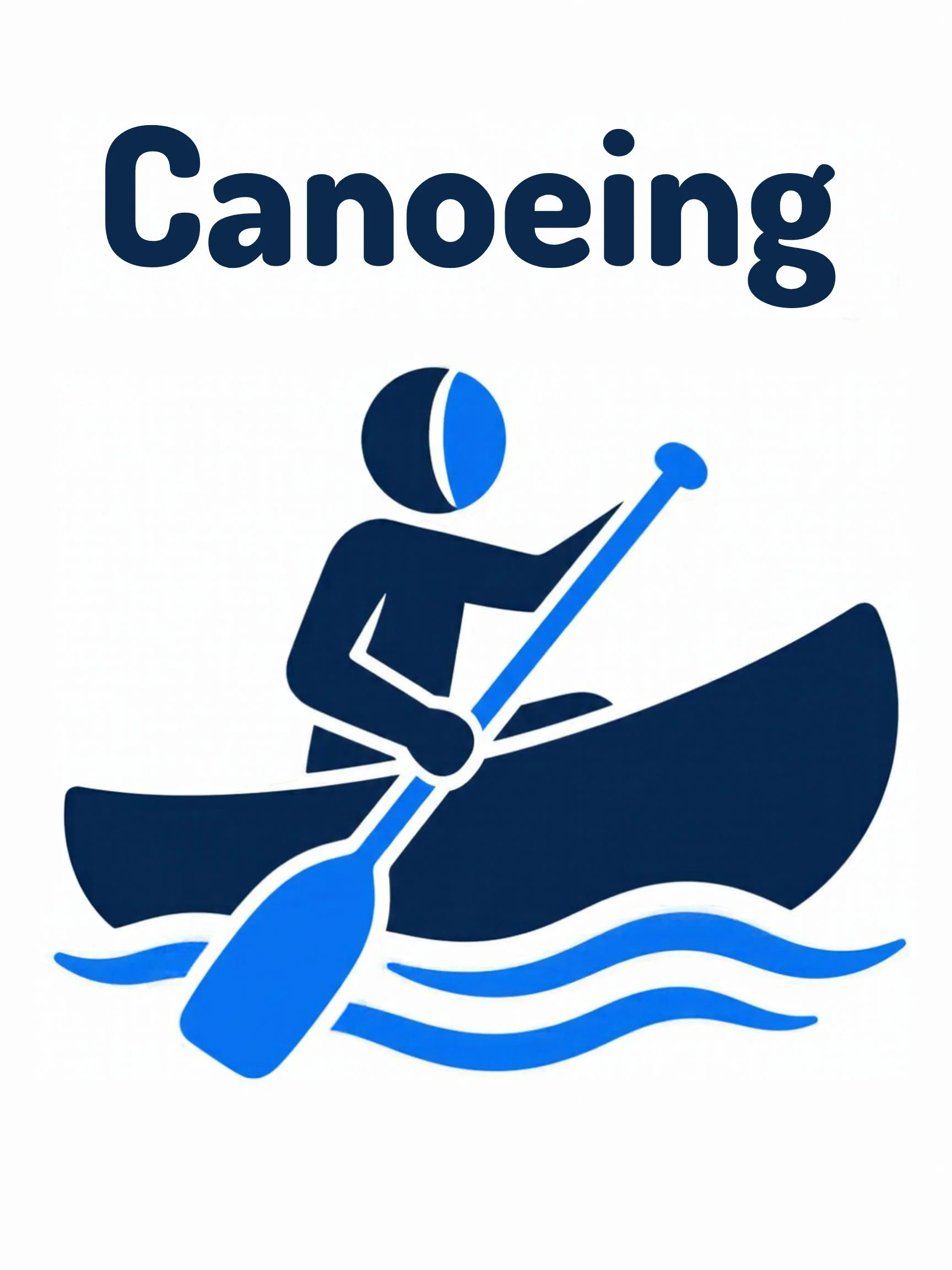
What is this?
Canoeing is paddling an open boat with a single-bladed paddle, usually kneeling: dip, pull, switch sides, and the canoe glides ahead on calm water.
What does it mean?
The canoe is a physics lesson in disguise: every paddle stroke turns the boat a little, so going straight means SHARING the strokes between sides. One side only spins you in a circle — and four-year-olds adore proving it.
What does the child need to know?
Your child needs three canoeing ideas: the paddle dives on one side, pulls the water BACK, and lifts out — reach, pull, lift; strokes take turns — left, right, left, right; and the life jacket goes on before the canoe touches water, buckles clicked.
Why this matters
Canoeing teaches the calm version of water play: slow boat, quiet lake, big teamwork. And the left-right discovery is real cause-and-effect science a four-year-old can steer with their own arms.
What it teaches
Alternating-side reaching and pulling, kneeling balance, the cause-and-effect of steering (one side = spin), and the safety routine — jacket first, calm water, grown-up boat.
Words to learn
canoepaddlestrokeleftrightsteerlife jacket
Say this to your child
“"Canoeing is paddling an open boat on quiet water! Reach far, plant the paddle, pull the water back, lift out — then do the other side. Left, right, left, right keeps the boat straight. And if you paddle just ONE side — round and round you spin! That is the steering secret hiding in the game. Life jacket first, buckles clicked, every single time."”
Step by step
- Show the card: "This is canoeing — one paddle, one boat, calm water."
- The stroke: reach far, plant the paddle, pull the water BACK toward you, lift out. Pulling the boat past the water — that is the secret of every paddle.
- The left-right rule: paddle left three times — watch the boat nose drift right! Now three on the right. Straight boats share their strokes.
- The spin experiment: paddle ONE side only, five strokes — round and round! The boat becomes a carousel. This is not a mistake; it is steering.
- Say the jacket rule, then play the rug-boat game below: "reach, pull, switch sides."
Look closer at the picture
On this card the word "canoeing" stands at the top in big letters with the water’s scene below — the paddler kneeling in the open canoe exactly as a calm-water trip looks.
Ask your child
"What does the paddle pull — the water or the sky?" "Which sides share the strokes?" "What happens if we paddle one side only?"
What your child can say or do
Your child might say: "Left, right, left — straight!" "I paddled one side and went SPINNY!" or the safety vow: "Jacket first, buckles clicked!"
Out in the real world
Canoes live on lakes, slow rivers and holiday parks everywhere — and the calm-water rule lives with them. At the lake, watch the paddlers’ sides: left, right, left. The straight canoes are the ones sharing.
Try it together
Rug-Boat: sit on a rug or cushion "canoe" holding a mop or rolled poster as a paddle. Paddle the carpet sea: three strokes left, three right, straight across the room. Then the spin test — one side only, five strokes, round and round, giggles guaranteed. Finish with the jacket ceremony: life jacket on, buckles clicked, paddler respected.
Understanding check
Ask: "How does the paddle move the boat? Which sides take turns? What happens with one side only? What goes on before the water?" Pulling back, left and right, a spin, the life jacket — four answers and the lake is calm.
Parent tips
The spin is the lesson — never correct one-side paddling, REWARD it: "you discovered steering!" And kneel in the rug-boat for real: kneeling is the canoe’s own balance secret, and carpets are kind to knees.
This lesson pairs with the Canoeing flashcard in the library — print it, show it, keep it on the fridge. Back to Sports & Movement (Class 37).